THE ADVENTURE COLLECTIVE® · Independent discovery and booking for outdoor travel

Spend an afternoon paddling Cam Thanh’s coconut channels in a round bamboo boat, learning local net-casting and craft skills, then stroll the UNESCO-listed streets of Hoi An. This half-day pairing blends hands-on village life with a guided cultural walk through an intact trading port.
Spend an afternoon paddling Cam Thanh’s coconut channels in a round bamboo boat, learning local net-casting and craft skills, then stroll the UNESCO-listed streets of Hoi An. This half-day pairing blends hands-on village life with a guided cultural walk through an intact trading port.
The river pulls you into the mangrove mouth before the village appears: palm trunks slap the water like slow drumbeats, and a circle of thatch boats bobs ready for riders. You step into a bamboo basket boat—light, alive—and the boatman’s paddle teases the current as you glide through channels lined with nipa palms.
Verified experiences and guided adventures in the surrounding area.
Operated by My Son Tours · Hoi An, Quang Nam Province
The river pulls you into the mangrove mouth before the village appears: palm trunks slap the water like slow drumbeats, and a circle of thatch boats bobs ready for riders. You step into a bamboo basket boat—light, alive—and the boatman’s paddle teases the current as you glide through channels lined with nipa palms.
This stretch of Cam Thanh has long fed Hoi An. The coconut forest and tidal channels are part of a coastal wetland system shaped by the Thu Bon River’s shifting sediments; sand and silt create the sheltered lagoons where villagers fish and palm fronds are still woven into everyday tools. Hoi An itself is a former port town whose preserved trading houses, Chinese assembly halls, and the covered Japanese Bridge reflect centuries of Southeast Asian maritime exchange and craft culture.
On this combined afternoon tour you’ll watch local net casting and try crab-fishing from a basket boat, and see coconut-leaf handicrafts made by village artisans. Later, a guided walk through Hoi An’s UNESCO-listed core highlights timber merchant homes, market life, and the riverside lanterns that animate the night.
Practical guidance: the outing runs about 6–7 hours with short walks and boat balance required; expect muddy edges and a damp microclimate. Bring quick-dry shoes, sun protection, and a lightweight rain layer in the wet months. Travel through the coconut canals in the late afternoon for cooler light and quieter lanes, then finish in Hoi An with time for market stalls and lantern-lit river views.
moderate.
6–7 hours.
Moderate fitness; able to step into small boats, stand for short periods, and walk uneven cobbled streets.
Typical duration is 6–7 hours; pick-up is mid-afternoon from Da Nang or Hoi An hotels, with return to your hotel after the Hoi An portion.
Children can join but must be supervised; the activity requires low balance and is not recommended for travelers with serious heart issues or mobility limitations.
Yes—if your hotel is in Da Nang you can opt to remain in Hoi An after the guided walk to enjoy the night market and dinner independently.
Yes, an English-speaking guide and private transport are included in the tour package.
Hoi An developed as a regional trading port from the 15th to 19th centuries; its architecture preserves Chinese, Japanese and European merchant influences. The Cam Thanh coconut villages traditionally protected the coastline and supported small-scale fishing.
Mangrove restoration projects and community-based tourism aim to reduce erosion and provide alternative incomes; visitors should avoid trampling saplings and minimize plastic waste.
My Son Tours operates guided outdoor trips and adventures with an emphasis on safety, stewardship, and memorable experiences.
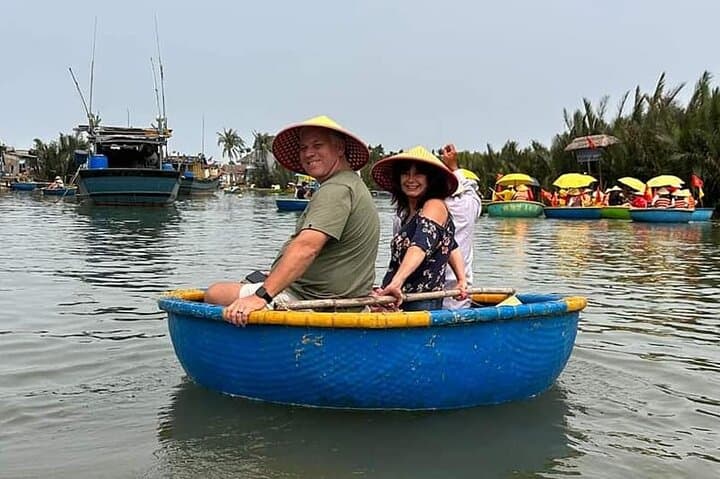
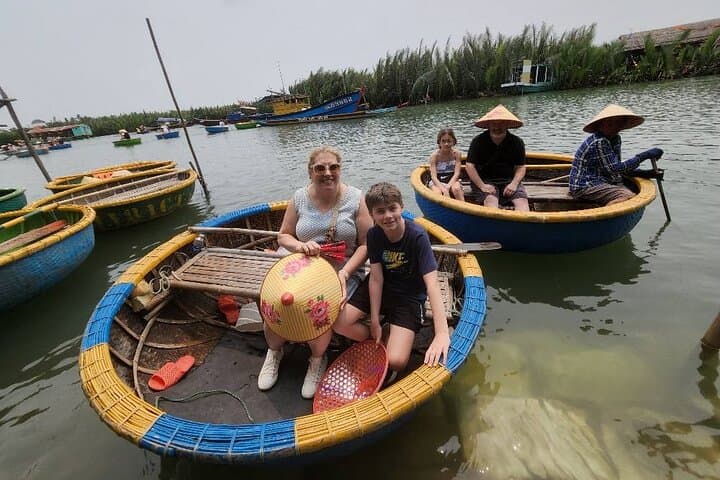
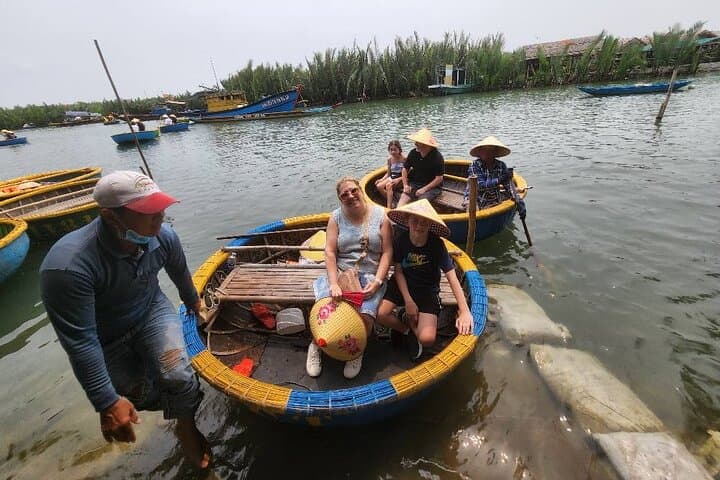
The river pulls you into the mangrove mouth before the village appears: palm trunks slap the water like slow drumbeats, and a circle of thatch boats bobs ready for riders. You step into a bamboo basket boat—light, alive—and the boatman’s paddle teases the current as you glide through channels lined with nipa palms.
The river pulls you into the mangrove mouth before the village appears: palm trunks slap the water like slow drumbeats, and a circle of thatch boats bobs ready for riders. You step into a bamboo basket boat—light, alive—and the boatman’s paddle teases the current as you glide through channels lined with nipa palms.
This stretch of Cam Thanh has long fed Hoi An. The coconut forest and tidal channels are part of a coastal wetland system shaped by the Thu Bon River’s shifting sediments; sand and silt create the sheltered lagoons where villagers fish and palm fronds are still woven into everyday tools. Hoi An itself is a former port town whose preserved trading houses, Chinese assembly halls, and the covered Japanese Bridge reflect centuries of Southeast Asian maritime exchange and craft culture.
On this combined afternoon tour you’ll watch local net casting and try crab-fishing from a basket boat, and see coconut-leaf handicrafts made by village artisans. Later, a guided walk through Hoi An’s UNESCO-listed core highlights timber merchant homes, market life, and the riverside lanterns that animate the night.
Practical guidance: the outing runs about 6–7 hours with short walks and boat balance required; expect muddy edges and a damp microclimate. Bring quick-dry shoes, sun protection, and a lightweight rain layer in the wet months. Travel through the coconut canals in the late afternoon for cooler light and quieter lanes, then finish in Hoi An with time for market stalls and lantern-lit river views.