THE ADVENTURE COLLECTIVE® · Independent discovery and booking for outdoor travel

Cross the Thu Bon delta to Cam Kim Island and cycle quiet village lanes past boatyards, rice fields and handicraft workshops. This half-day trip blends gentle riding with hands-on cultural stops and a home-cooked lunch.
Cross the Thu Bon delta to Cam Kim Island and cycle quiet village lanes past boatyards, rice fields and handicraft workshops. This half-day trip blends gentle riding with hands-on cultural stops and a home-cooked lunch.
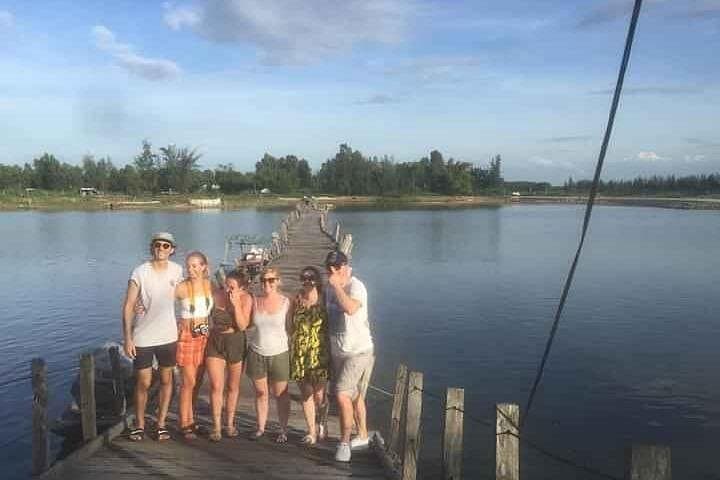
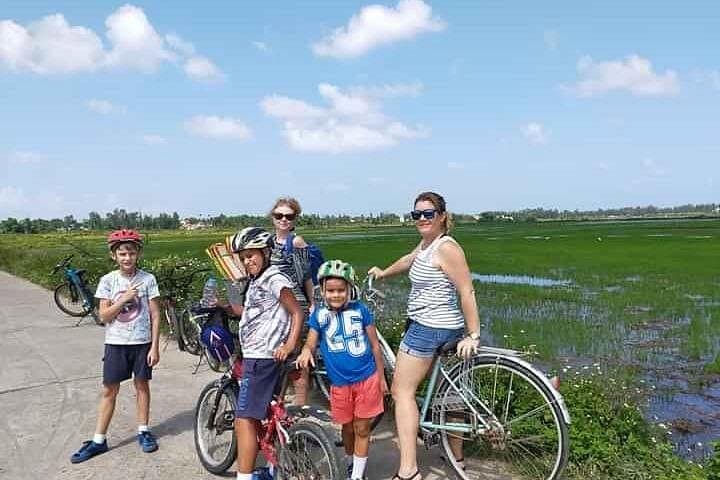
You push off from a small wharf as the Thu Bon River nudges the boat away from Hoi An, and the city’s scooters shrink into a low hum. Rice paddies fan out like patchwork below low clouds, wooden boats row against a lazy current, and lane after lane of cracked concrete invites a steady pedal.
Verified experiences and guided adventures in the surrounding area.
Operated by Hoi An Student Tours · Hoi An, Quang Nam
You push off from a small wharf as the Thu Bon River nudges the boat away from Hoi An, and the city’s scooters shrink into a low hum. Rice paddies fan out like patchwork below low clouds, wooden boats row against a lazy current, and lane after lane of cracked concrete invites a steady pedal.
Cam Kim sits in the river delta just south of historic Hoi An, an area shaped by alluvial deposits and centuries of trade between Cham, Chinese and later European merchants. The island’s economy grew from boat-building, mat-weaving and small-scale rice farming; those crafts are still visible in family workshops and village yards. Geologically the landscape is flat and young — sediment, channels and tidal creeks — which makes for gentle cycling and constant water views.
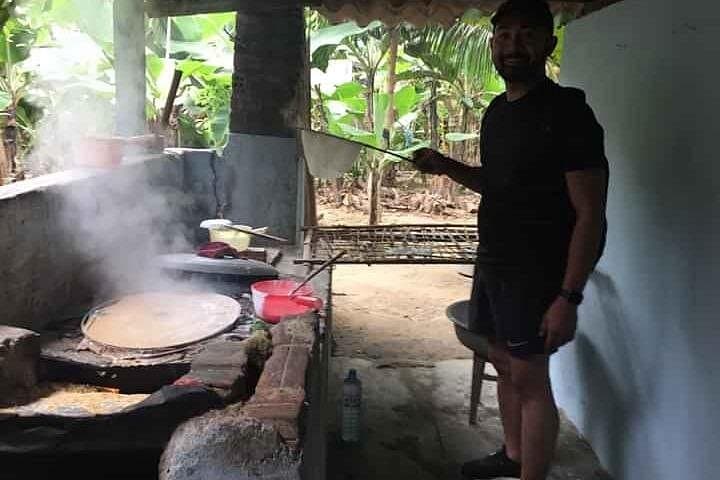
Cultural touches arrive between fields: hand-woven sleeping mats drying in the sun, vats used for rice alcohol distillation, and the friendly insistence of villagers offering a story or demonstration. You’ll stop at a boatyard to see traditional wooden-boat construction, then sit down with a local family for a straightforward Vietnamese lunch that highlights fresh herbs and river prawns.
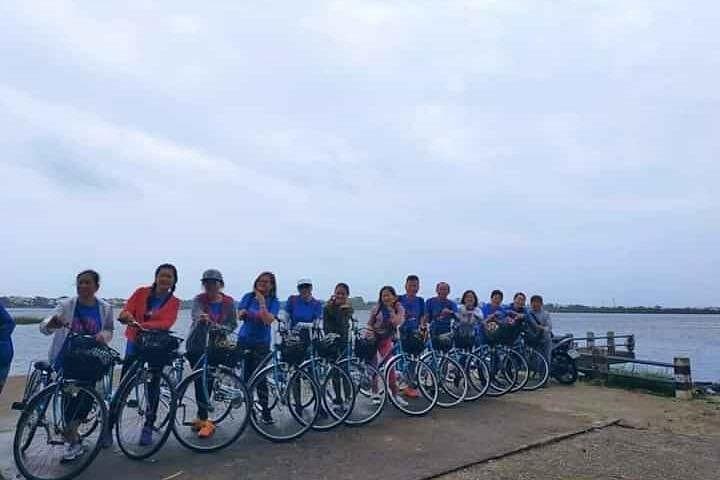
Practical details: expect about 3–4 hours total on this tour, with roughly 10–15 km of mostly flat riding on paved and packed-earth lanes. Wear closed shoes, bring sunscreen and a refillable water bottle, and be ready for short stretches of gravel or muddy ruts after rain. Morning departures avoid heat and afternoon storms; travel respectfully — ask before photographing people and support local vendors directly. This ride is low on elevation but high on cultural payoff: an intimate, manageable way to see the working life of Hoi An’s river islands.
easy.
3–4 hours.
Suitable for most people with basic cycling fitness; expect several hours of low-elevation riding on mixed-paved and packed-earth lanes.
The tour runs about 3–4 hours total with roughly 10–15 km of cycling on mostly flat lanes and short boardwalks.
Yes — the route is low-elevation and mostly gentle, but children should be comfortable riding 1–2 hours and remain supervised.
Local guides typically speak basic English; itinerary notes indicate a student-led local company so expect friendly, conversational English.
Yes — the operator usually accepts special-diet requests if noted at booking; bring specifics and necessary details in advance.
Hoi An’s river islands were part of a trading landscape influenced by Cham culture and centuries of maritime commerce; local handicrafts reflect that continuity.
The delta’s productivity depends on clean water and traditional farming; reduce plastic waste, avoid disturbing fields, and support family-run workshops to keep income local.
Hoi An Student Tours operates guided outdoor trips and adventures with an emphasis on safety, stewardship, and memorable experiences.
You push off from a small wharf as the Thu Bon River nudges the boat away from Hoi An, and the city’s scooters shrink into a low hum. Rice paddies fan out like patchwork below low clouds, wooden boats row against a lazy current, and lane after lane of cracked concrete invites a steady pedal.
You push off from a small wharf as the Thu Bon River nudges the boat away from Hoi An, and the city’s scooters shrink into a low hum. Rice paddies fan out like patchwork below low clouds, wooden boats row against a lazy current, and lane after lane of cracked concrete invites a steady pedal.
Cam Kim sits in the river delta just south of historic Hoi An, an area shaped by alluvial deposits and centuries of trade between Cham, Chinese and later European merchants. The island’s economy grew from boat-building, mat-weaving and small-scale rice farming; those crafts are still visible in family workshops and village yards. Geologically the landscape is flat and young — sediment, channels and tidal creeks — which makes for gentle cycling and constant water views.
Cultural touches arrive between fields: hand-woven sleeping mats drying in the sun, vats used for rice alcohol distillation, and the friendly insistence of villagers offering a story or demonstration. You’ll stop at a boatyard to see traditional wooden-boat construction, then sit down with a local family for a straightforward Vietnamese lunch that highlights fresh herbs and river prawns.
Practical details: expect about 3–4 hours total on this tour, with roughly 10–15 km of mostly flat riding on paved and packed-earth lanes. Wear closed shoes, bring sunscreen and a refillable water bottle, and be ready for short stretches of gravel or muddy ruts after rain. Morning departures avoid heat and afternoon storms; travel respectfully — ask before photographing people and support local vendors directly. This ride is low on elevation but high on cultural payoff: an intimate, manageable way to see the working life of Hoi An’s river islands.