THE ADVENTURE COLLECTIVE® · Independent discovery and booking for outdoor travel

An hour in a Cali studio strips salsa down to its kinetic essentials: rapid footwork, precise turns, and the social etiquette that makes Caleña salsa unique. Expect hands-on instruction, a community focus, and practical tips to get you dancing.
An hour in a Cali studio strips salsa down to its kinetic essentials: rapid footwork, precise turns, and the social etiquette that makes Caleña salsa unique. Expect hands-on instruction, a community focus, and practical tips to get you dancing.
You step into a warm studio in Cali and the room already has a pulse — claves clicking, the bass of a son montuno underlining an instructor’s call. Wooden floors, posters of local champions, and a half-circle of eager learners set the scene; for one hour you move through the rapid footwork and compact turns that define salsa caleña.
Verified experiences and guided adventures in the surrounding area.
Operated by CALI TRAVEL · Cali, Valle del Cauca
You step into a warm studio in Cali and the room already has a pulse — claves clicking, the bass of a son montuno underlining an instructor’s call. Wooden floors, posters of local champions, and a half-circle of eager learners set the scene; for one hour you move through the rapid footwork and compact turns that define salsa caleña.
Cali sits in the Cauca River valley between the Western and Central Andes, a city shaped by steep surrounding foothills and a humid, tropical climate that keeps salsa rhythms alive year-round. Salsa in Cali evolved from Afro-Caribbean and Cuban styles into a local language of speed and showmanship; local schools also serve as community projects offering youth alternatives to street life. The city’s musical culture and social fabric are as important as the steps.
In a typical one-hour class expect a brief warm-up, step-by-step breakdowns of core patterns, mirrored partner work, and a short combination to practice. The pace is friendly to beginners but will challenge your coordination and cardio. Instructors often emphasize musicality and social etiquette — when to lead, when to follow, and how to read a crowded dance floor.
Practical tips: wear flexible, low-profile shoes with a smooth sole, bring water and a small towel, and arrive 10–15 minutes early to meet your instructor and warm up. Most studios accept walk-ins and are accessible; classes may highlight the social programs behind local salsa schools, so consider tipping or asking how to support those initiatives. Whether you leave with cleaner footwork or just a bigger smile, the class gives a compact, authentic taste of Cali’s living dance tradition.
easy.
1 hour.
Light cardio and balance; suitable for most fitness levels though some stamina helps for continuous turns.
No — most Caleña classes accommodate beginners with step-by-step instruction; instructors often offer variations to challenge more experienced dancers.
Classes are usually small to medium-sized (often under 12 participants), allowing hands-on corrections and partner rotations.
Many studios in Cali are accessible but facilities vary; check the specific studio’s accessibility information before booking.
Yes — classes regularly rotate partners and teach both leading and following so solo participants are welcome.
Cali developed its distinct salsa style through local orchestras and dance schools in the mid-20th century; salsa became an integral social outlet and later a recognized element of Colombian cultural heritage.
Many schools operate community programs that use dance for social development; support local studios directly to contribute to these grassroots efforts and reduce tourism leakage.
CALI TRAVEL operates guided outdoor trips and adventures with an emphasis on safety, stewardship, and memorable experiences.
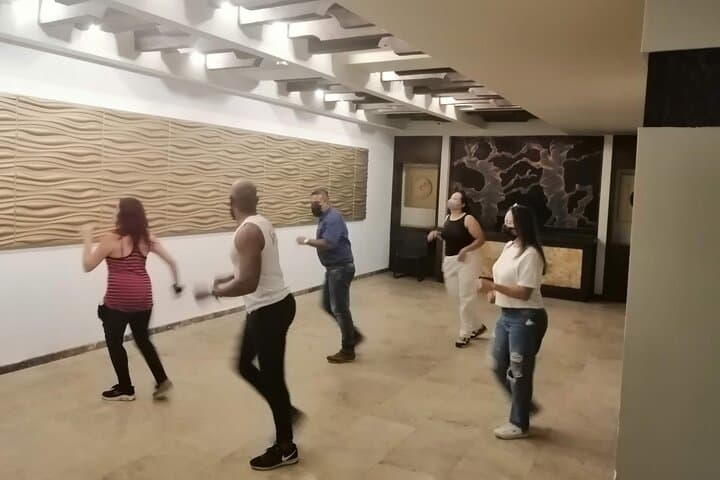

You step into a warm studio in Cali and the room already has a pulse — claves clicking, the bass of a son montuno underlining an instructor’s call. Wooden floors, posters of local champions, and a half-circle of eager learners set the scene; for one hour you move through the rapid footwork and compact turns that define salsa caleña.
You step into a warm studio in Cali and the room already has a pulse — claves clicking, the bass of a son montuno underlining an instructor’s call. Wooden floors, posters of local champions, and a half-circle of eager learners set the scene; for one hour you move through the rapid footwork and compact turns that define salsa caleña.
Cali sits in the Cauca River valley between the Western and Central Andes, a city shaped by steep surrounding foothills and a humid, tropical climate that keeps salsa rhythms alive year-round. Salsa in Cali evolved from Afro-Caribbean and Cuban styles into a local language of speed and showmanship; local schools also serve as community projects offering youth alternatives to street life. The city’s musical culture and social fabric are as important as the steps.
In a typical one-hour class expect a brief warm-up, step-by-step breakdowns of core patterns, mirrored partner work, and a short combination to practice. The pace is friendly to beginners but will challenge your coordination and cardio. Instructors often emphasize musicality and social etiquette — when to lead, when to follow, and how to read a crowded dance floor.
Practical tips: wear flexible, low-profile shoes with a smooth sole, bring water and a small towel, and arrive 10–15 minutes early to meet your instructor and warm up. Most studios accept walk-ins and are accessible; classes may highlight the social programs behind local salsa schools, so consider tipping or asking how to support those initiatives. Whether you leave with cleaner footwork or just a bigger smile, the class gives a compact, authentic taste of Cali’s living dance tradition.