THE ADVENTURE COLLECTIVE® · Independent discovery and booking for outdoor travel

Turn your phone into a private guide through Calgary’s Beltline: 23 audio stops, historic architecture and parkland, self‑paced and downloadable for offline use. Ideal for a 1–2 hour exploration of central Calgary’s culture and built history.
Turn your phone into a private guide through Calgary’s Beltline: 23 audio stops, historic architecture and parkland, self‑paced and downloadable for offline use. Ideal for a 1–2 hour exploration of central Calgary’s culture and built history.
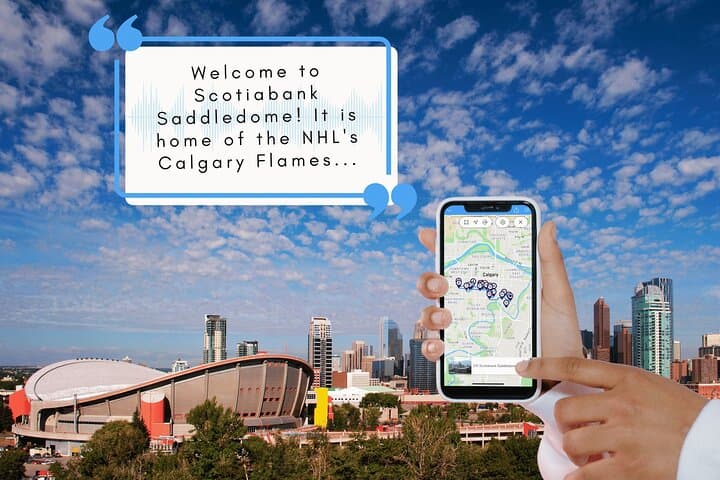
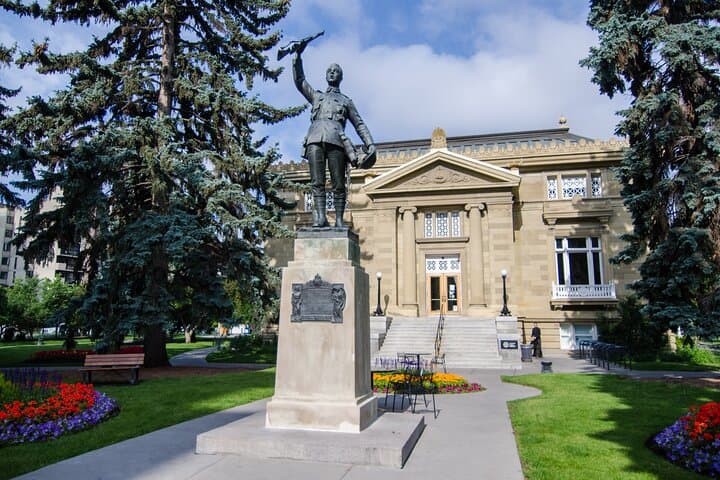
The street hum fades to a steady rhythm as you step off 17th Avenue and into Calgary’s Beltline—brick facades, park benches, and the curved profile of the Saddledome punctuating the skyline. Your phone becomes the guide: GPS pings, short stories and local trivia triggering as you approach each stop, directing you from St. Mary’s Cathedral to Central Memorial Park and past early 20th‑century rowhouses.
Verified experiences and guided adventures in the surrounding area.
Operated by Tripvia Tours · Calgary, Alberta
The street hum fades to a steady rhythm as you step off 17th Avenue and into Calgary’s Beltline—brick facades, park benches, and the curved profile of the Saddledome punctuating the skyline. Your phone becomes the guide: GPS pings, short stories and local trivia triggering as you approach each stop, directing you from St. Mary’s Cathedral to Central Memorial Park and past early 20th‑century rowhouses.
The Beltline grew as Calgary’s first dense residential district during the city’s boom years; many buildings here preserve Beaux‑Arts and Edwardian details while newer interventions press modern geometry against old stone. Geology is subtle—this is built land on glacial outwash above the Bow and Elbow rivers—but culture is layered: francophone enclaves, veterans’ memorials and the annual pull of the Stampede Grounds nearby.
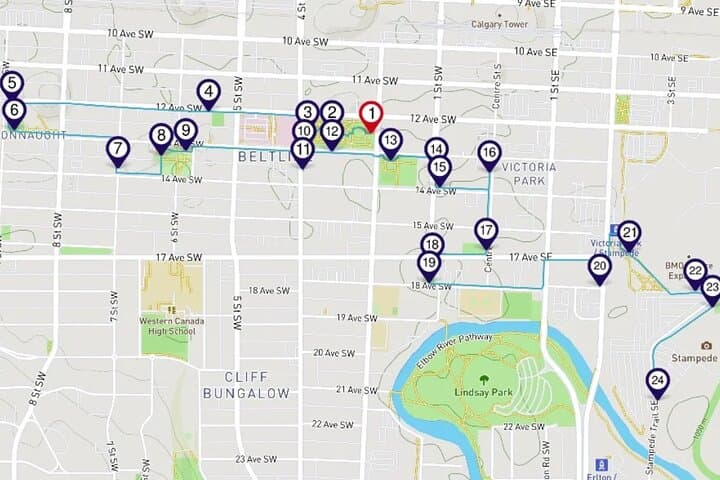
Practically, the tour covers roughly 2–4 km depending on detours and runs 60–120 minutes at a casual pace with minimal elevation change. There are 23 audio points highlighting architecture, public art and civic history; download the files over Wi‑Fi before you go. Accessibility is strong—many sidewalks and parks are wheelchair and stroller friendly—but note that Stampede week may require paid admission for the grounds.
Bring a fully charged phone and headphones, wear comfortable shoes, and time your walk for morning or late afternoon to avoid rush hours and event crowds. Use the built‑in map to reorient if a street detour sends you off route. This is an urban stroll that reads the city aloud—efficient, flexible, and ideal for curious walkers who prefer their own pace over scheduled groups.
easy.
1–2 hours.
Light walking fitness—suitable for most people who can handle several kilometers on flat urban terrain
No — the tour is self‑guided and can be started anytime; GPS and automatic playback guide you from any point along the route.
No — download the tour and map over Wi‑Fi before you start to avoid using mobile data while walking.
Yes — many sidewalks, parks and stops are wheelchair and stroller accessible, though some heritage sites may have steps to enter buildings.
Yes, but note that admission is required for Stampede Grounds during event days and large crowds may affect timing and access.
The Beltline developed rapidly in the late 19th and early 20th centuries as Calgary expanded; many surviving houses and apartment blocks reflect that growth and shifting demographics.
Heritage designation protects many buildings while city initiatives promote greener streetscapes—stick to paths and respect park signage to minimize impact.
Tripvia Tours operates guided outdoor trips and adventures with an emphasis on safety, stewardship, and memorable experiences.

The street hum fades to a steady rhythm as you step off 17th Avenue and into Calgary’s Beltline—brick facades, park benches, and the curved profile of the Saddledome punctuating the skyline. Your phone becomes the guide: GPS pings, short stories and local trivia triggering as you approach each stop, directing you from St. Mary’s Cathedral to Central Memorial Park and past early 20th‑century rowhouses.
The street hum fades to a steady rhythm as you step off 17th Avenue and into Calgary’s Beltline—brick facades, park benches, and the curved profile of the Saddledome punctuating the skyline. Your phone becomes the guide: GPS pings, short stories and local trivia triggering as you approach each stop, directing you from St. Mary’s Cathedral to Central Memorial Park and past early 20th‑century rowhouses.
The Beltline grew as Calgary’s first dense residential district during the city’s boom years; many buildings here preserve Beaux‑Arts and Edwardian details while newer interventions press modern geometry against old stone. Geology is subtle—this is built land on glacial outwash above the Bow and Elbow rivers—but culture is layered: francophone enclaves, veterans’ memorials and the annual pull of the Stampede Grounds nearby.
Practically, the tour covers roughly 2–4 km depending on detours and runs 60–120 minutes at a casual pace with minimal elevation change. There are 23 audio points highlighting architecture, public art and civic history; download the files over Wi‑Fi before you go. Accessibility is strong—many sidewalks and parks are wheelchair and stroller friendly—but note that Stampede week may require paid admission for the grounds.
Bring a fully charged phone and headphones, wear comfortable shoes, and time your walk for morning or late afternoon to avoid rush hours and event crowds. Use the built‑in map to reorient if a street detour sends you off route. This is an urban stroll that reads the city aloud—efficient, flexible, and ideal for curious walkers who prefer their own pace over scheduled groups.