THE ADVENTURE COLLECTIVE® · Independent discovery and booking for outdoor travel

Walk a historic levada from Queimadas into Madeira’s laurel forest, pass four hand-carved tunnels, and arrive at the Caldeirão Verde waterfall — a roughly 100m plunge into a green basin. This guided route combines engineering history, volcanic geology, and lush biodiversity.
Walk a historic levada from Queimadas into Madeira’s laurel forest, pass four hand-carved tunnels, and arrive at the Caldeirão Verde waterfall — a roughly 100m plunge into a green basin. This guided route combines engineering history, volcanic geology, and lush biodiversity.
A narrow stone path slides along the levada like an old handrail, the laurel forest pressing close: leaves dripping, birds calling from the understorey. On the Caldeirão Verde walk, the trail begins at Queimadas Forestry Park and threads through four carved tunnels, each a cool, echoing doorway into the island’s mountainous interior. At the end, water finally lets go — a curtain falling roughly 100 meters into a green basin that feels both sudden and inevitable.
Verified experiences and guided adventures in the surrounding area.
Operated by Madeira Island Tours · Santana, Madeira
A narrow stone path slides along the levada like an old handrail, the laurel forest pressing close: leaves dripping, birds calling from the understorey. On the Caldeirão Verde walk, the trail begins at Queimadas Forestry Park and threads through four carved tunnels, each a cool, echoing doorway into the island’s mountainous interior. At the end, water finally lets go — a curtain falling roughly 100 meters into a green basin that feels both sudden and inevitable.
Geology here is volcanic and rugged; the levadas were dug into basalt and ash to tame the island’s uneven rainfall for agriculture. The laurisilva forest you pass through is a remnant of subtropical woodlands and is protected for its biodiversity. Culturally, levadas are Madeira’s engineering answer to water scarcity — centuries-old irrigation routes now repurposed as some of the island’s best trails.
Practical guidance: expect an out-and-back that experienced operators list at roughly 8 hours door-to-door with moderate elevation changes and narrow, sometimes wet footpaths. Tunnels require a headlamp and steady footing; rain is frequent, so quick-drying layers are essential. There’s little shade variation — morning light through the laurel is best for photos and cooler temperatures. Guides often include pickup from Santana or nearby towns; check whether the tour returns to the same point.
Carry water, rain protection, and a basic first-aid kit. Respect the levada’s agricultural role by staying on the path and leaving no trace. With hands steady on the rock and lungs full of wet forest air, the waterfall’s plunge rewards the persistence of the walk.
moderate.
8 hours.
Good general fitness with comfort on narrow, uneven terrain and several short climbs; suitable for regular hikers.
The guided experience is typically scheduled as an 8-hour outing including transfers; on-trail sections are moderate with narrow paths and short climbs, suitable for hikers in good general fitness.
Yes, but tunnels are damp, uneven and unlit — bring a headlamp, watch your step, and follow your guide’s instructions.
Not ideal: narrow sections, steps along the levada, and wet tunnels present challenges; people with serious mobility limits should avoid this route.
Santana is the closest town for access and pickups; many travelers base in Funchal and join a guided transfer to Queimadas.
Levada networks date to the 16th–19th centuries and were engineered to distribute scarce mountain water to agricultural terraces below.
The laurisilva is a protected UNESCO-listed habitat; stay on trails, avoid disturbing vegetation, and pack out waste to help preserve fragile moss and fern communities.
Madeira Island Tours operates guided outdoor trips and adventures with an emphasis on safety, stewardship, and memorable experiences.
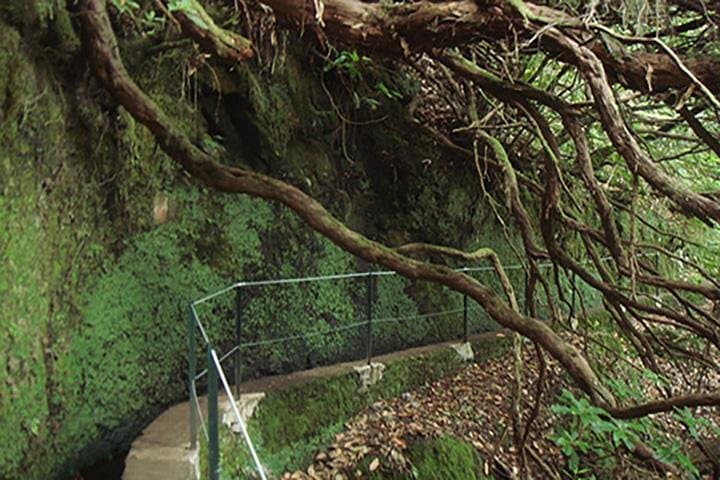
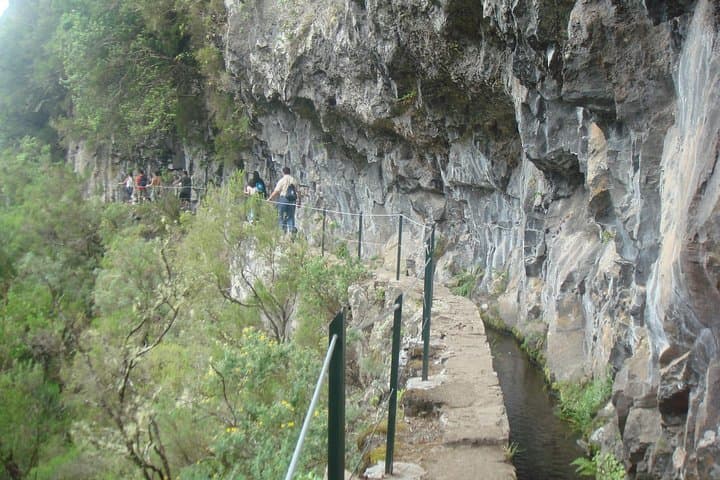
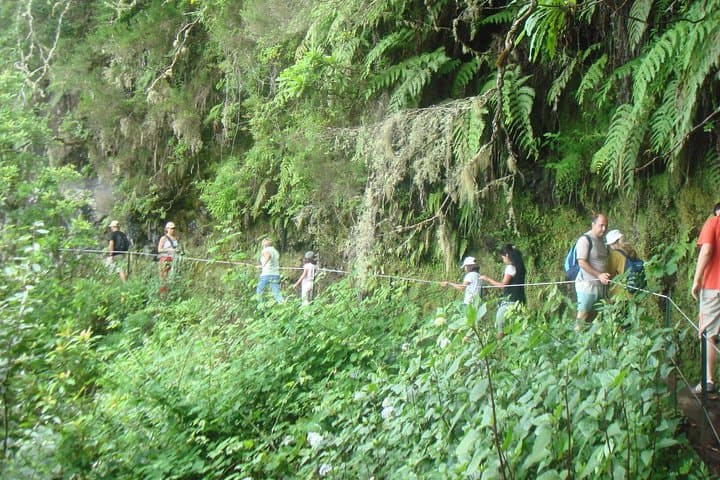

A narrow stone path slides along the levada like an old handrail, the laurel forest pressing close: leaves dripping, birds calling from the understorey. On the Caldeirão Verde walk, the trail begins at Queimadas Forestry Park and threads through four carved tunnels, each a cool, echoing doorway into the island’s mountainous interior. At the end, water finally lets go — a curtain falling roughly 100 meters into a green basin that feels both sudden and inevitable.
A narrow stone path slides along the levada like an old handrail, the laurel forest pressing close: leaves dripping, birds calling from the understorey. On the Caldeirão Verde walk, the trail begins at Queimadas Forestry Park and threads through four carved tunnels, each a cool, echoing doorway into the island’s mountainous interior. At the end, water finally lets go — a curtain falling roughly 100 meters into a green basin that feels both sudden and inevitable.
Geology here is volcanic and rugged; the levadas were dug into basalt and ash to tame the island’s uneven rainfall for agriculture. The laurisilva forest you pass through is a remnant of subtropical woodlands and is protected for its biodiversity. Culturally, levadas are Madeira’s engineering answer to water scarcity — centuries-old irrigation routes now repurposed as some of the island’s best trails.
Practical guidance: expect an out-and-back that experienced operators list at roughly 8 hours door-to-door with moderate elevation changes and narrow, sometimes wet footpaths. Tunnels require a headlamp and steady footing; rain is frequent, so quick-drying layers are essential. There’s little shade variation — morning light through the laurel is best for photos and cooler temperatures. Guides often include pickup from Santana or nearby towns; check whether the tour returns to the same point.
Carry water, rain protection, and a basic first-aid kit. Respect the levada’s agricultural role by staying on the path and leaving no trace. With hands steady on the rock and lungs full of wet forest air, the waterfall’s plunge rewards the persistence of the walk.