THE ADVENTURE COLLECTIVE® · Independent discovery and booking for outdoor travel

Follow the PR9 levada from Queimadas Forest Park to the emerald Caldeirão Verde lagoon. This 13 km self-guided walk through UNESCO Laurissilva offers tunnels, waterfalls, and volcanic ridgelines—perfect for hikers with steady footing and an appetite for wild Madeira.
Follow the PR9 levada from Queimadas Forest Park to the emerald Caldeirão Verde lagoon. This 13 km self-guided walk through UNESCO Laurissilva offers tunnels, waterfalls, and volcanic ridgelines—perfect for hikers with steady footing and an appetite for wild Madeira.
You step from the high road into a cloak of green: ferns brushing your calves, the levada—a narrow irrigation ribbon—whispering alongside the path as it guides you inland. Mist drifts through the Laurissilva, and light filters in shafts between laurel trunks, giving the forest the slow heartbeat of something alive and ancient.
Verified experiences and guided adventures in the surrounding area.
Operated by Hiking Transfers · Santana, Madeira
You step from the high road into a cloak of green: ferns brushing your calves, the levada—a narrow irrigation ribbon—whispering alongside the path as it guides you inland. Mist drifts through the Laurissilva, and light filters in shafts between laurel trunks, giving the forest the slow heartbeat of something alive and ancient.
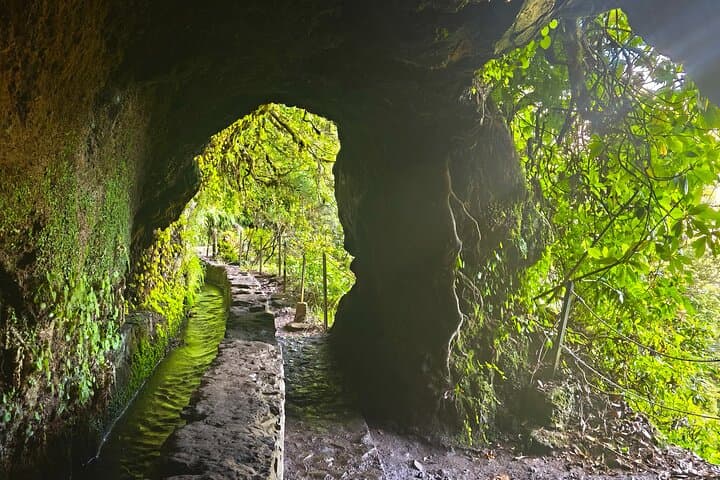
This is the PR9 route from Queimadas Forest Park to Caldeirão Verde, a 13 km round-trip that threads tunnels cut into volcanic rock and edges carved into steep valley walls. The levadas themselves are engineering relics of Madeira’s early irrigation era, built to carry mountain water to fields and villages; the forest around them is a surviving remnant of the Tertiary laurel woods now protected as UNESCO Laurissilva.
Geology here is volcanic: hardened flows and deep ravines funnel waterfalls into emerald pools. Culturally, the northeast villages—Santana and São Jorge—showcase traditional thatched houses and a rural island way of life shaped by steep slopes and the hunt for water.
Practical guidance: allow 5–8 hours, bring a headlamp for tunnels and waterproof layers for quick mountain showers. Stick to the levada edge where flagged and avoid narrow sections in wet conditions. Respect signage—some tunnels are single-file and have low ceilings. Water is scarce on the trail; carry 1.5–2 liters and snacks to maintain energy on uneven terrain.
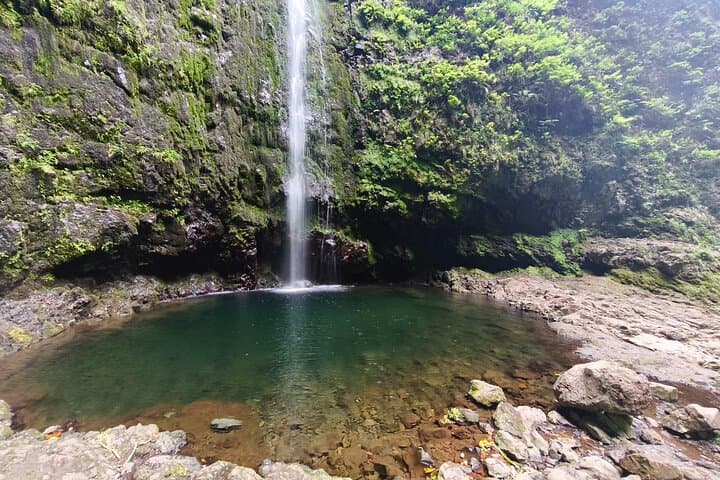
Finish at the Caldeirão Verde lagoon and waterfall: a place where the forest’s voice finally pauses and the water answers with a steady roar—reward enough for the steady pace it asks of you.
moderate.
5–8 hours.
Moderate fitness: comfortable walking 13 km on uneven terrain with some sustained narrow sections and tunnel passages.
The full PR9 round-trip is about 13 km and generally rated moderate—expect narrow levada paths, tunnels, and uneven footing; allow 5–8 hours depending on pace.
Tunnels are stable but unlit and sometimes low; a headlamp and caution are required—some sections are single-file and wet underfoot.
This self-guided product often includes pickup and drop-off depending on booking details—confirm your booking for included transport and pickup point.
No permit is required and many hikers do it self-guided; however, local weather and trail conditions can be variable—if unfamiliar with levada trails, consider guided options.
The levada network dates back centuries and was expanded through the 18th–19th centuries to irrigate steep agricultural terraces; the surrounding Laurissilva is a remnant of subtropical laurel forests once widespread across Europe.
Stay on designated paths and avoid disturbing endemic plants; the Laurissilva is fragile and erosion from off-trail traffic damages rare species.
Hiking Transfers operates guided outdoor trips and adventures with an emphasis on safety, stewardship, and memorable experiences.


You step from the high road into a cloak of green: ferns brushing your calves, the levada—a narrow irrigation ribbon—whispering alongside the path as it guides you inland. Mist drifts through the Laurissilva, and light filters in shafts between laurel trunks, giving the forest the slow heartbeat of something alive and ancient.
You step from the high road into a cloak of green: ferns brushing your calves, the levada—a narrow irrigation ribbon—whispering alongside the path as it guides you inland. Mist drifts through the Laurissilva, and light filters in shafts between laurel trunks, giving the forest the slow heartbeat of something alive and ancient.
This is the PR9 route from Queimadas Forest Park to Caldeirão Verde, a 13 km round-trip that threads tunnels cut into volcanic rock and edges carved into steep valley walls. The levadas themselves are engineering relics of Madeira’s early irrigation era, built to carry mountain water to fields and villages; the forest around them is a surviving remnant of the Tertiary laurel woods now protected as UNESCO Laurissilva.
Geology here is volcanic: hardened flows and deep ravines funnel waterfalls into emerald pools. Culturally, the northeast villages—Santana and São Jorge—showcase traditional thatched houses and a rural island way of life shaped by steep slopes and the hunt for water.
Practical guidance: allow 5–8 hours, bring a headlamp for tunnels and waterproof layers for quick mountain showers. Stick to the levada edge where flagged and avoid narrow sections in wet conditions. Respect signage—some tunnels are single-file and have low ceilings. Water is scarce on the trail; carry 1.5–2 liters and snacks to maintain energy on uneven terrain.
Finish at the Caldeirão Verde lagoon and waterfall: a place where the forest’s voice finally pauses and the water answers with a steady roar—reward enough for the steady pace it asks of you.