THE ADVENTURE COLLECTIVE® · Independent discovery and booking for outdoor travel

Take an independent walk through Calais with an offline app that guides you from the Grand Théâtre to Fort Risban. This 2–4 hour self‑paced tour mixes UNESCO architecture, maritime monuments, and local stories with offline maps and narrated stops.
Take an independent walk through Calais with an offline app that guides you from the Grand Théâtre to Fort Risban. This 2–4 hour self‑paced tour mixes UNESCO architecture, maritime monuments, and local stories with offline maps and narrated stops.
Morning light slices across the Channel as you start at the Grand Théâtre; the city exhales salt and history, and the app puts Calais’ stories in your pocket. Follow plane‑tree boulevards toward the Town Hall’s red‑brick clock tower, pause for a close look at Rodin’s Burghers, then let the sea wind tug you toward Fort Risban and the marina where boats creak like old storytellers.
Verified experiences and guided adventures in the surrounding area.
Operated by Trippy Tour Guide · Calais, Hauts-de-France
Morning light slices across the Channel as you start at the Grand Théâtre; the city exhales salt and history, and the app puts Calais’ stories in your pocket. Follow plane‑tree boulevards toward the Town Hall’s red‑brick clock tower, pause for a close look at Rodin’s Burghers, then let the sea wind tug you toward Fort Risban and the marina where boats creak like old storytellers.
Calais wears its past visibly: medieval walls and the 13th‑century Tour du Guet rub shoulders with Belle Époque façades and post‑war reconstructions that rebuilt whole streets. Geology here is coastal chalk and reclaimed marshes, the same white cliffs that shepherd ships across the Channel. Lace, fishing, and courage—memorials and museums frame a city shaped by trade and siege, from the 1347 surrender to 20th‑century resilience.
Cultural notes arrive in small details: café counters, a fishing monument, and a municipal belfry listed with other Flemish towers as UNESCO heritage. The app’s offline maps and 30+ narration points let you move without data, turning every square into a mini‑exhibit while the sea keeps time.
Practical guidance: expect roughly 2–4 hours of walking—about 4–6 km—on paved city streets and park paths. Wear supportive shoes, bring a charged phone and power bank, and download the tour fully before you go. Mornings are quieter at the marina; late afternoon delivers warmer light on façades. Stay aware near the waterfront, respect memorial sites, and let the wind do the guiding when the day asks for a slower pace.
easy.
2–4 hours.
Suitable for most fitness levels; able to walk continuously for several hours with brief stops.
No—this tour includes a fully offline map and downloadable audio, but download before you arrive to ensure functionality.
Most streets and parks are paved and generally accessible, though some historic sites include steps; check specific stops in the app for accessibility notes.
Plan 2–4 hours depending on how long you linger at museums, monuments, and cafes; the app lists estimated times per stop.
Yes—it's self‑guided and flexible; starting at the Grand Théâtre is suggested for narrative flow, but you can pick any point and follow the app.
Calais grew as a strategic Channel port—site of medieval sieges, a long lace‑making tradition, and extensive post‑WWII rebuilding that reshaped much of the cityscape.
Respect coastal habitats and historic sites by staying on paths, avoiding cliff edges, and taking trash with you; local efforts focus on preserving belfries and shoreline ecosystems.
Trippy Tour Guide operates guided outdoor trips and adventures with an emphasis on safety, stewardship, and memorable experiences.


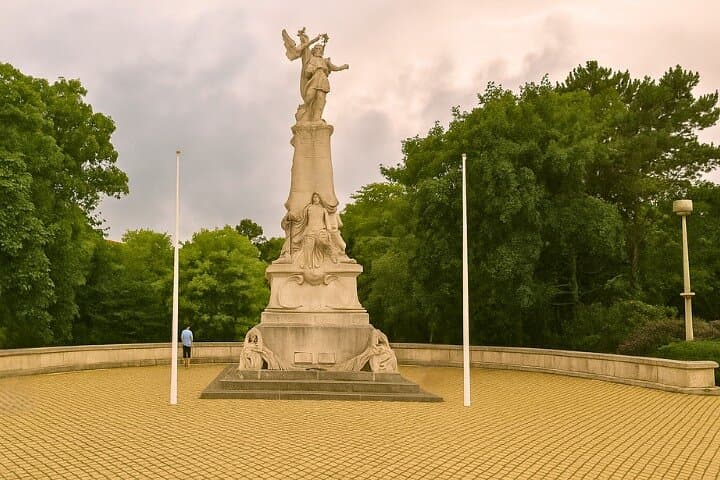

Morning light slices across the Channel as you start at the Grand Théâtre; the city exhales salt and history, and the app puts Calais’ stories in your pocket. Follow plane‑tree boulevards toward the Town Hall’s red‑brick clock tower, pause for a close look at Rodin’s Burghers, then let the sea wind tug you toward Fort Risban and the marina where boats creak like old storytellers.
Morning light slices across the Channel as you start at the Grand Théâtre; the city exhales salt and history, and the app puts Calais’ stories in your pocket. Follow plane‑tree boulevards toward the Town Hall’s red‑brick clock tower, pause for a close look at Rodin’s Burghers, then let the sea wind tug you toward Fort Risban and the marina where boats creak like old storytellers.
Calais wears its past visibly: medieval walls and the 13th‑century Tour du Guet rub shoulders with Belle Époque façades and post‑war reconstructions that rebuilt whole streets. Geology here is coastal chalk and reclaimed marshes, the same white cliffs that shepherd ships across the Channel. Lace, fishing, and courage—memorials and museums frame a city shaped by trade and siege, from the 1347 surrender to 20th‑century resilience.
Cultural notes arrive in small details: café counters, a fishing monument, and a municipal belfry listed with other Flemish towers as UNESCO heritage. The app’s offline maps and 30+ narration points let you move without data, turning every square into a mini‑exhibit while the sea keeps time.
Practical guidance: expect roughly 2–4 hours of walking—about 4–6 km—on paved city streets and park paths. Wear supportive shoes, bring a charged phone and power bank, and download the tour fully before you go. Mornings are quieter at the marina; late afternoon delivers warmer light on façades. Stay aware near the waterfront, respect memorial sites, and let the wind do the guiding when the day asks for a slower pace.