THE ADVENTURE COLLECTIVE® · Independent discovery and booking for outdoor travel

Step from the bustle of Cairo into the shadow of the Great Pyramid and the gallery-lined halls of the Egyptian Museum. This full-day private tour pairs desert vistas with millennia of artifacts and practical, skip-the-line service.
Step from the bustle of Cairo into the shadow of the Great Pyramid and the gallery-lined halls of the Egyptian Museum. This full-day private tour pairs desert vistas with millennia of artifacts and practical, skip-the-line service.
The morning light slices across the Giza Plateau and the desert wind pushes warm grit against your jacket as you step from a private vehicle into view of three stone giants. The Great Pyramid of Khufu looms, its angled faces catching early sun; the Sphinx watches like a patient host. Back in central Cairo, the Egyptian Museum opens into a different kind of vastness—corridors of bronzes, coffins and the compact, dazzling treasures of Tutankhamun.
Verified experiences and guided adventures in the surrounding area.
Operated by Egypt Legends Tours · Cairo, Cairo Governorate
The morning light slices across the Giza Plateau and the desert wind pushes warm grit against your jacket as you step from a private vehicle into view of three stone giants. The Great Pyramid of Khufu looms, its angled faces catching early sun; the Sphinx watches like a patient host. Back in central Cairo, the Egyptian Museum opens into a different kind of vastness—corridors of bronzes, coffins and the compact, dazzling treasures of Tutankhamun.
The plateau’s limestone and mortar tell a 4,500-year-old engineering story: quarry stone heaved into place, temples aligned to celestial markers and a valley temple once used for purification and mummification rituals. The museum, rebuilt in visitor memory by its holdings, traces continuity from Predynastic tools to New Kingdom gold. Street life and market calls frame visits—Cairo’s living culture complements the monuments rather than interrupting them.
Practically: plan an early start to avoid midday heat and crowds; expect roughly 2–3 km of uneven, sandy walking across the Giza Plateau and 1–2 km inside the museum. Wear sturdy closed shoes, sun protection and carry water—the tour provides bottled water and a private Egyptologist guide who navigates lines and context. Pyramid interior access is limited and may require extra tickets; confirm details when booking. Bring a camera, but respect signage around fragile artifacts and the Sphinx. For a full day, allow 6–8 hours including transit and photo stops—this is a compact cultural leg with a tactile, physical edge: stone, sand and human scale intersecting history.
moderate.
6–8 hours.
Basic walking fitness—able to manage several kilometers on uneven ground and stairs inside some monuments.
This listing notes taxes and fees but marks admission as 'not applicable'; confirm with the operator whether museum and pyramid entry fees (and any extra-site tickets) are covered at booking.
Interior access to pyramids is limited, often sold separately and subject to daily quotas; the Sphinx itself is viewed from outside—check availability and any extra charges in advance.
The tour is suitable for most ages, but walking on uneven surfaces and some steps can be challenging; travelers with spinal injuries or mobility limits should exercise caution and consult the operator.
Expect roughly 2–3 km on the Giza Plateau with uneven terrain plus 1–2 km inside the museum; the tour includes private transfers to minimize additional walking between sites.
The Great Pyramids were built around 2600–2500 BCE as royal tombs during Egypt’s Old Kingdom; the Egyptian Museum houses over 250,000 artifacts spanning millennia, including Tutankhamun’s funerary treasures.
Heavy visitor traffic stresses ancient stone and museum displays—stay on marked paths, avoid touching artifacts and support licensed guides and conservation fees when available.
Egypt Legends Tours operates guided outdoor trips and adventures with an emphasis on safety, stewardship, and memorable experiences.


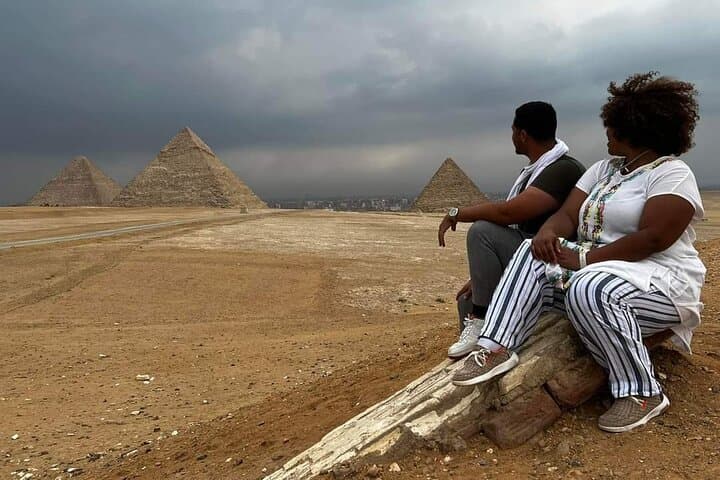
The morning light slices across the Giza Plateau and the desert wind pushes warm grit against your jacket as you step from a private vehicle into view of three stone giants. The Great Pyramid of Khufu looms, its angled faces catching early sun; the Sphinx watches like a patient host. Back in central Cairo, the Egyptian Museum opens into a different kind of vastness—corridors of bronzes, coffins and the compact, dazzling treasures of Tutankhamun.
The morning light slices across the Giza Plateau and the desert wind pushes warm grit against your jacket as you step from a private vehicle into view of three stone giants. The Great Pyramid of Khufu looms, its angled faces catching early sun; the Sphinx watches like a patient host. Back in central Cairo, the Egyptian Museum opens into a different kind of vastness—corridors of bronzes, coffins and the compact, dazzling treasures of Tutankhamun.
The plateau’s limestone and mortar tell a 4,500-year-old engineering story: quarry stone heaved into place, temples aligned to celestial markers and a valley temple once used for purification and mummification rituals. The museum, rebuilt in visitor memory by its holdings, traces continuity from Predynastic tools to New Kingdom gold. Street life and market calls frame visits—Cairo’s living culture complements the monuments rather than interrupting them.
Practically: plan an early start to avoid midday heat and crowds; expect roughly 2–3 km of uneven, sandy walking across the Giza Plateau and 1–2 km inside the museum. Wear sturdy closed shoes, sun protection and carry water—the tour provides bottled water and a private Egyptologist guide who navigates lines and context. Pyramid interior access is limited and may require extra tickets; confirm details when booking. Bring a camera, but respect signage around fragile artifacts and the Sphinx. For a full day, allow 6–8 hours including transit and photo stops—this is a compact cultural leg with a tactile, physical edge: stone, sand and human scale intersecting history.