THE ADVENTURE COLLECTIVE® · Independent discovery and booking for outdoor travel

A full‑day drive from Cairo delivers UNESCO fossils, cascading desert waterfalls, and salt‑sprayed lakes. This guided trip combines easy walks, geology, and local ruins for a compact natural‑history immersion.
A full‑day drive from Cairo delivers UNESCO fossils, cascading desert waterfalls, and salt‑sprayed lakes. This guided trip combines easy walks, geology, and local ruins for a compact natural‑history immersion.
You roll out of Cairo's traffic in an air‑conditioned minivan and, within two hours, the city noise gives way to desert wind and distant sand ridges. The road to Fayoum slices across pale plains until roadside palms and the quiet of Wadi El Rayan come into view. At the lower lake the water glints like a private sea; at the falls, sheets of water drop between terrace-like rock steps, daring you to walk closer and listen.
Verified experiences and guided adventures in the surrounding area.
Operated by Emo Tours Sweden · Faiyum, Faiyum Governorate
You roll out of Cairo's traffic in an air‑conditioned minivan and, within two hours, the city noise gives way to desert wind and distant sand ridges. The road to Fayoum slices across pale plains until roadside palms and the quiet of Wadi El Rayan come into view. At the lower lake the water glints like a private sea; at the falls, sheets of water drop between terrace-like rock steps, daring you to walk closer and listen.
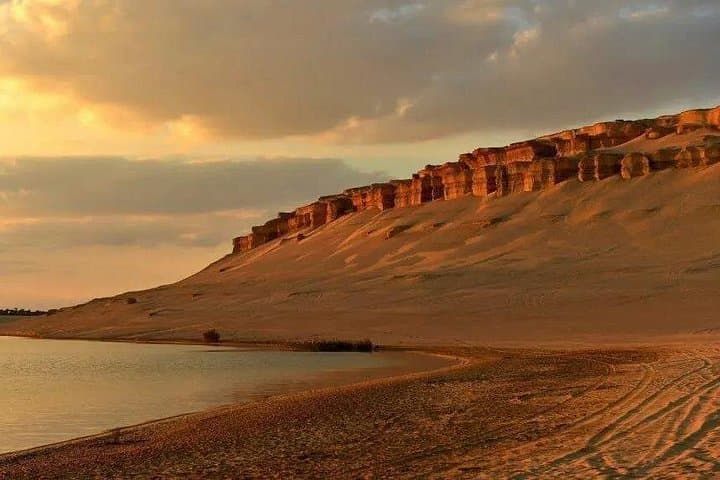
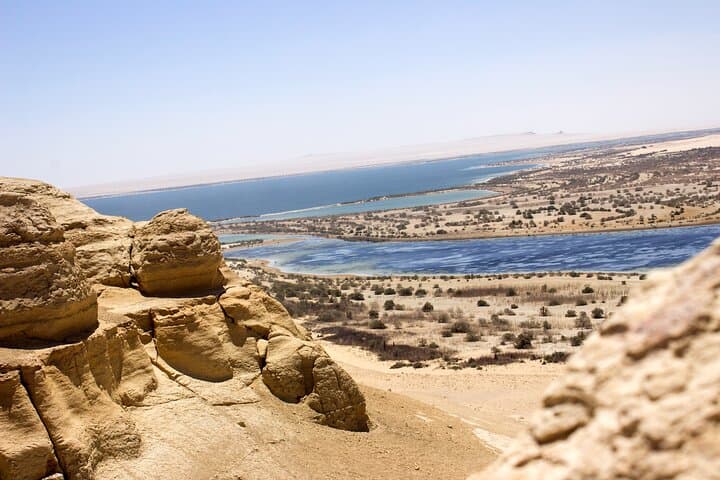
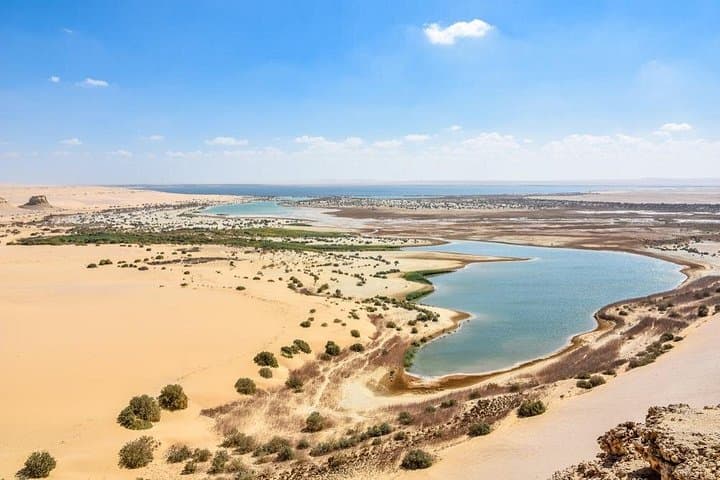
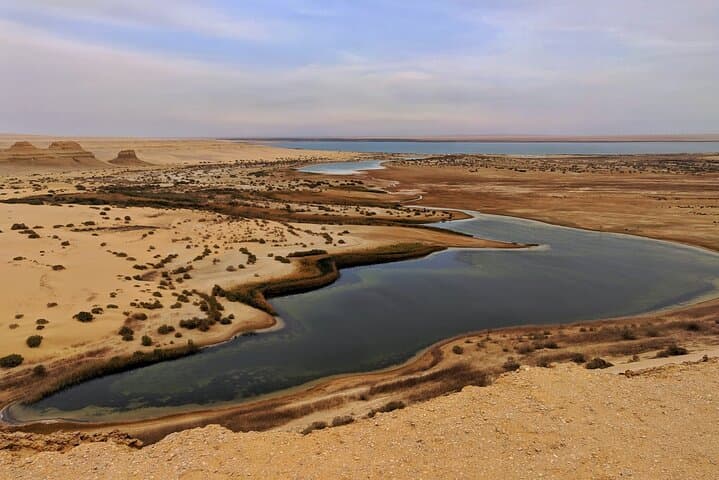
This day trip stitches natural history and human history. Wadi Al‑Hitan (Whale Valley) preserves archaeocete fossils that chart whales’ transition from land to sea; UNESCO protected beds expose ribs and vertebrae of animals that lived 40 million years ago. Wadi El Rayan is largely man-made—drainage waters collected into upper and lower lakes—yet geology still shows marine deposits, sulphur springs and shifting dunes where fossils surface.
Local culture in Fayoum blends small agricultural towns, reed craftsmen, and sites like Medinet Madi—mudbrick temples and Greco‑Roman remains that make for a quick, layered history lesson between nature stops.
Practical guidance: expect a mostly vehicle‑led day with short, sometimes sandy walks over uneven ground and minimal shade. Bring sun protection, at least 2 liters of water, and sturdy closed shoes for dune and outcrop walking. Photography is excellent mid‑morning or late afternoon for softer light; heat peaks midday. The tour usually provides lunch and bottled water, and includes a guide who handles permits—respect fenced paleontological areas and avoid removing any fossils.
This route suits travelers wanting a compact mix of paleontology, dramatic falls, and wide desert views without strenuous hiking.
easy.
6 hours.
Suitable for light fitness—mostly vehicle transfer with short walks up to 30 minutes over uneven terrain
Typically 2–3 hours each way depending on traffic; the full tour runs about six hours including stops.
Yes—this tour’s ticket covers entry and permits for Wadi El‑Hitan and Wadi El Rayan as stated in the itinerary.
Families can visit, but supervise children closely around fossil areas, cliffs and at the waterfall viewing points.
No—Wadi Al‑Hitan is protected; handling or removing fossils is prohibited and guides will direct you to viewing areas.
The Fayoum basin was once a shallow Miocene sea; exposed fossils in Wadi Al‑Hitan document early whale evolution. Medinet Madi reflects Pharaonic and later settlements that farmed the oasis.
Wadi Al‑Hitan is a UNESCO World Heritage Site with strict protections; visitors should stay on marked paths and avoid disturbing fossil beds or fragile dune habitats.
Emo Tours Sweden operates guided outdoor trips and adventures with an emphasis on safety, stewardship, and memorable experiences.
You roll out of Cairo's traffic in an air‑conditioned minivan and, within two hours, the city noise gives way to desert wind and distant sand ridges. The road to Fayoum slices across pale plains until roadside palms and the quiet of Wadi El Rayan come into view. At the lower lake the water glints like a private sea; at the falls, sheets of water drop between terrace-like rock steps, daring you to walk closer and listen.
You roll out of Cairo's traffic in an air‑conditioned minivan and, within two hours, the city noise gives way to desert wind and distant sand ridges. The road to Fayoum slices across pale plains until roadside palms and the quiet of Wadi El Rayan come into view. At the lower lake the water glints like a private sea; at the falls, sheets of water drop between terrace-like rock steps, daring you to walk closer and listen.
This day trip stitches natural history and human history. Wadi Al‑Hitan (Whale Valley) preserves archaeocete fossils that chart whales’ transition from land to sea; UNESCO protected beds expose ribs and vertebrae of animals that lived 40 million years ago. Wadi El Rayan is largely man-made—drainage waters collected into upper and lower lakes—yet geology still shows marine deposits, sulphur springs and shifting dunes where fossils surface.
Local culture in Fayoum blends small agricultural towns, reed craftsmen, and sites like Medinet Madi—mudbrick temples and Greco‑Roman remains that make for a quick, layered history lesson between nature stops.
Practical guidance: expect a mostly vehicle‑led day with short, sometimes sandy walks over uneven ground and minimal shade. Bring sun protection, at least 2 liters of water, and sturdy closed shoes for dune and outcrop walking. Photography is excellent mid‑morning or late afternoon for softer light; heat peaks midday. The tour usually provides lunch and bottled water, and includes a guide who handles permits—respect fenced paleontological areas and avoid removing any fossils.
This route suits travelers wanting a compact mix of paleontology, dramatic falls, and wide desert views without strenuous hiking.