THE ADVENTURE COLLECTIVE® · Independent discovery and booking for outdoor travel

Make the most of a long day on the Mediterranean: this private Cairo-to-Alexandria trip pairs Roman catacombs, the modern Bibliotheca Alexandrina and seafront vistas with curated transport and a local guide. Read on for what to expect, practical tips and on-the-ground insights.
Make the most of a long day on the Mediterranean: this private Cairo-to-Alexandria trip pairs Roman catacombs, the modern Bibliotheca Alexandrina and seafront vistas with curated transport and a local guide. Read on for what to expect, practical tips and on-the-ground insights.
You step onto the A/C minivan as Cairo’s skyline thins and the Mediterranean unfurls on the horizon — a wide blue that seems to pull the coastal highway toward Alexandria’s pale stone. The drive itself is part of the story: roughly 2.5–3 hours each way along Route 2, moving from frenetic capital streets into a looser coastal rhythm.
Verified experiences and guided adventures in the surrounding area.
Operated by Egypt Planners · Alexandria, Alexandria Governorate
You step onto the A/C minivan as Cairo’s skyline thins and the Mediterranean unfurls on the horizon — a wide blue that seems to pull the coastal highway toward Alexandria’s pale stone. The drive itself is part of the story: roughly 2.5–3 hours each way along Route 2, moving from frenetic capital streets into a looser coastal rhythm.
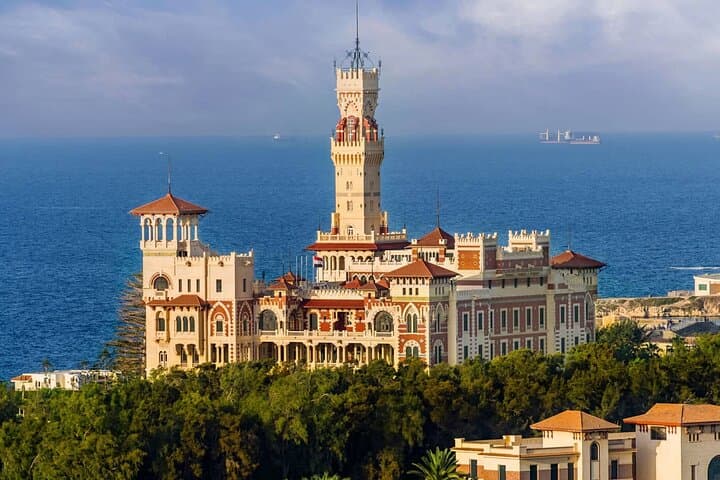
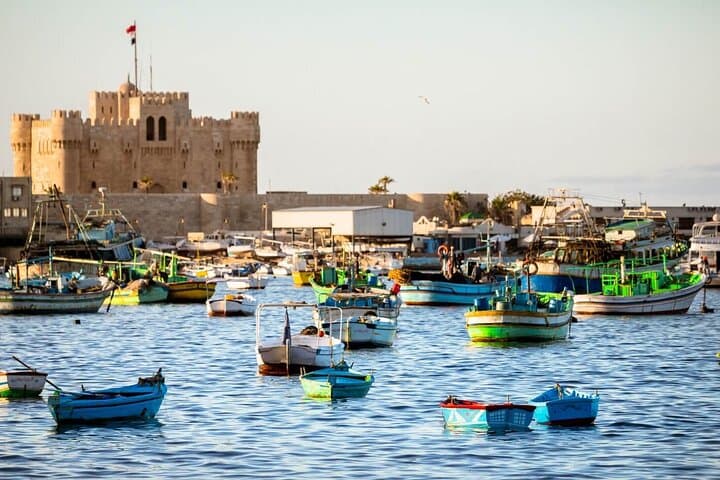
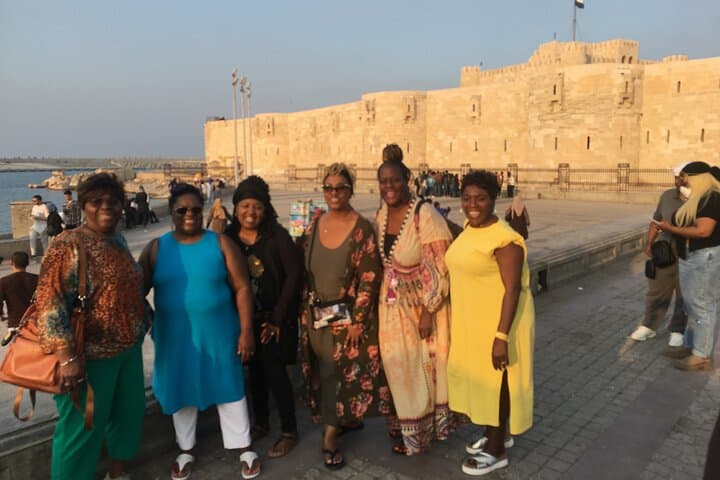
Alexandria’s layers reveal themselves in sequence. Begin at the Catacombs of Kom el Shoqafa — a triangular Roman funerary complex where pharaonic motifs rub shoulders with imperial reliefs — then move to the Bibliotheca Alexandrina, a modern cultural engine referencing the ancient library’s ambition. Outside, Qaitbay Citadel perches on the point where the vanished Lighthouse once stood; its battlements frame the harbor and give a sense of Alexandria’s long maritime role.
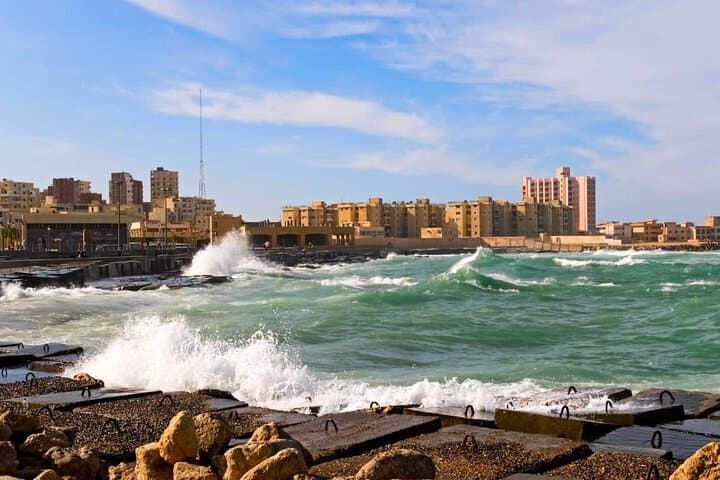
History here is public and tactile: Hellenistic foundations, Roman marble, medieval fortifications and 19th–20th century port infrastructure all stitched along the Corniche. Geology is visible in bedrock and reclaimed limestone; culture plays out in fish markets and seafood restaurants where the catch defines the city’s palate.
Practical guidance: expect 10–12 hours door-to-door, moderate walking across uneven archaeological surfaces, and repeated short stair sections in museums and tomb sites. Carry sun protection, a refillable water bottle, and small cash for local purchases. Morning departures avoid peak sun at outdoor sites and give better light for photography. The private guide and transport keep the day efficient; wear good walking shoes and allow time for a leisurely seafood lunch on the harbor.
easy.
10–12 hours.
Suitable for most fitness levels; expect moderate walking and stair-climbing at archaeological sites.
The drive typically takes 2.5–3 hours each way depending on traffic along the coastal highway (Route 2).
The tour lists entrance fees as included for the attractions specified—confirm with your booking for any optional sites or updates.
The tour is labeled easy but many sites have stairs and uneven surfaces; contact the operator in advance to discuss accessibility and alternative arrangements.
Yes—most itineraries build in a generous lunch stop at a seafood restaurant by the harbor and brief time for souvenir shopping along the Corniche.
Founded by Alexander the Great in 331 BC, Alexandria became a Hellenistic and later Roman center; layers of Greek, Roman, Coptic and Islamic heritage are visible across its sites.
Coastal development and tourism pressure make site preservation vital; stick to marked paths, avoid taking antiquities and support local businesses that follow sustainable practices.
Egypt Planners operates guided outdoor trips and adventures with an emphasis on safety, stewardship, and memorable experiences.
You step onto the A/C minivan as Cairo’s skyline thins and the Mediterranean unfurls on the horizon — a wide blue that seems to pull the coastal highway toward Alexandria’s pale stone. The drive itself is part of the story: roughly 2.5–3 hours each way along Route 2, moving from frenetic capital streets into a looser coastal rhythm.
You step onto the A/C minivan as Cairo’s skyline thins and the Mediterranean unfurls on the horizon — a wide blue that seems to pull the coastal highway toward Alexandria’s pale stone. The drive itself is part of the story: roughly 2.5–3 hours each way along Route 2, moving from frenetic capital streets into a looser coastal rhythm.
Alexandria’s layers reveal themselves in sequence. Begin at the Catacombs of Kom el Shoqafa — a triangular Roman funerary complex where pharaonic motifs rub shoulders with imperial reliefs — then move to the Bibliotheca Alexandrina, a modern cultural engine referencing the ancient library’s ambition. Outside, Qaitbay Citadel perches on the point where the vanished Lighthouse once stood; its battlements frame the harbor and give a sense of Alexandria’s long maritime role.
History here is public and tactile: Hellenistic foundations, Roman marble, medieval fortifications and 19th–20th century port infrastructure all stitched along the Corniche. Geology is visible in bedrock and reclaimed limestone; culture plays out in fish markets and seafood restaurants where the catch defines the city’s palate.
Practical guidance: expect 10–12 hours door-to-door, moderate walking across uneven archaeological surfaces, and repeated short stair sections in museums and tomb sites. Carry sun protection, a refillable water bottle, and small cash for local purchases. Morning departures avoid peak sun at outdoor sites and give better light for photography. The private guide and transport keep the day efficient; wear good walking shoes and allow time for a leisurely seafood lunch on the harbor.