THE ADVENTURE COLLECTIVE® · Independent discovery and booking for outdoor travel

Ride a camel across the sand as the sun lowers behind the Great Pyramid, then settle into a desert BBQ beneath the stars. This private evening tour combines close-up exterior views of Khufu, Khafre and Menkaure with local food and desert atmosphere.
Ride a camel across the sand as the sun lowers behind the Great Pyramid, then settle into a desert BBQ beneath the stars. This private evening tour combines close-up exterior views of Khufu, Khafre and Menkaure with local food and desert atmosphere.
The sun drops behind three stone mountains as the camel team pads across wind-sculpted sand, and suddenly the Great Pyramid looms in profile—old stone catching last light while the desert exhales around you.
Verified experiences and guided adventures in the surrounding area.
Operated by Three Pyramids Tours · Giza, Giza Governorate
The sun drops behind three stone mountains as the camel team pads across wind-sculpted sand, and suddenly the Great Pyramid looms in profile—old stone catching last light while the desert exhales around you.
This private horseback-of-the-desert experience takes place on the Giza Plateau at the foot of Khufu, Khafre and Menkaure. Geologically the plateau is limestone bedrock capped by quarried blocks; historically these pyramids were royal tombs completed during the Fourth Dynasty (around 2560–2490 BCE) and stood as the tallest human-made structures for millennia. Culturally the area has long blended Egypt’s ancient monuments with living traditions—local guides, Bedouin camps, and artisans maintain desert skills that visitors glimpse during a late-afternoon ride and an open-air BBQ.
Expect 2–3 miles of slow camel travel on uneven sand and compacted desert tracks, light walking to viewpoints, and a relaxed communal dinner under open sky. The camel pace lets you absorb angled sightlines of the monuments rather than a quick snapshot; the barbecue offers grilled kofta, chicken and local salads served at a small desert camp.
Practical notes: plan for strong sun, variable winds and coarse sand that can abrade ankles. Avoid heavy backpacks on camels, keep camera gear secured, and allow time to arrive early for sunset light. The tour typically includes private pickup and return; pyramid interior entry is not part of this itinerary. Modest clothing, hydration, and a steady sense of balance will make this historic, tactile evening both comfortable and memorable.
moderate.
5 hours.
Participants should have moderate fitness—able to mount a camel, stand and walk on uneven sand, and tolerate 1–2 hours outdoors.
This tour provides exterior viewpoints of the three pyramids and a camel ride on the plateau; interior entry or climbing is not included.
Not recommended—participants with spinal issues or who are pregnant should avoid camel rides due to mounting and the animal’s gait.
Yes; the tour includes private air-conditioned transportation with hotel pickup and return as listed in the inclusions.
Children can join but infants must sit on an adult’s lap; the tour requires moderate fitness and camel mounts may be difficult for very young kids.
The Giza Pyramids date to Egypt’s Fourth Dynasty; the Great Pyramid (Khufu) was built around 2560 BCE and remained the tallest human-made structure for over 3,800 years.
Visitor pressure and wind-driven sand erosion threaten surface stones and camp sites—stick to guided routes, avoid climbing, and follow local staff guidance to minimize impact.
Three Pyramids Tours operates guided outdoor trips and adventures with an emphasis on safety, stewardship, and memorable experiences.
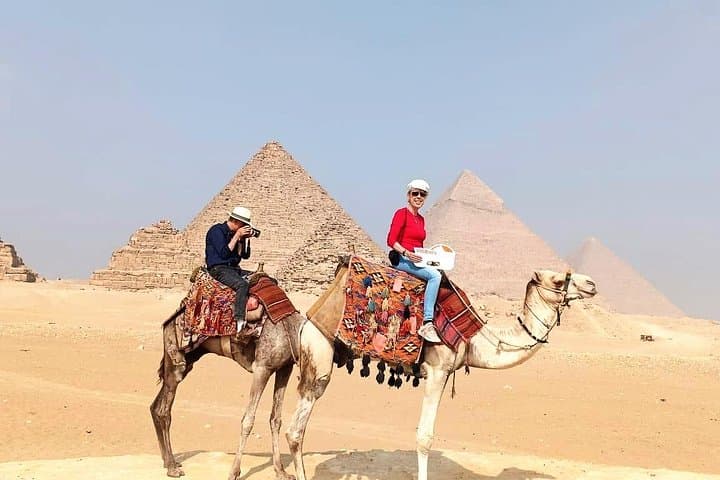


The sun drops behind three stone mountains as the camel team pads across wind-sculpted sand, and suddenly the Great Pyramid looms in profile—old stone catching last light while the desert exhales around you.
The sun drops behind three stone mountains as the camel team pads across wind-sculpted sand, and suddenly the Great Pyramid looms in profile—old stone catching last light while the desert exhales around you.
This private horseback-of-the-desert experience takes place on the Giza Plateau at the foot of Khufu, Khafre and Menkaure. Geologically the plateau is limestone bedrock capped by quarried blocks; historically these pyramids were royal tombs completed during the Fourth Dynasty (around 2560–2490 BCE) and stood as the tallest human-made structures for millennia. Culturally the area has long blended Egypt’s ancient monuments with living traditions—local guides, Bedouin camps, and artisans maintain desert skills that visitors glimpse during a late-afternoon ride and an open-air BBQ.
Expect 2–3 miles of slow camel travel on uneven sand and compacted desert tracks, light walking to viewpoints, and a relaxed communal dinner under open sky. The camel pace lets you absorb angled sightlines of the monuments rather than a quick snapshot; the barbecue offers grilled kofta, chicken and local salads served at a small desert camp.
Practical notes: plan for strong sun, variable winds and coarse sand that can abrade ankles. Avoid heavy backpacks on camels, keep camera gear secured, and allow time to arrive early for sunset light. The tour typically includes private pickup and return; pyramid interior entry is not part of this itinerary. Modest clothing, hydration, and a steady sense of balance will make this historic, tactile evening both comfortable and memorable.