THE ADVENTURE COLLECTIVE® · Independent discovery and booking for outdoor travel

A compact, private 2-day Cairo stopover that pairs sunrise visits to the Giza Pyramids with an in-depth stop at the Egyptian Museum. Ideal for travelers on tight schedules who want expert-guided context and seamless transfers.
A compact, private 2-day Cairo stopover that pairs sunrise visits to the Giza Pyramids with an in-depth stop at the Egyptian Museum. Ideal for travelers on tight schedules who want expert-guided context and seamless transfers.
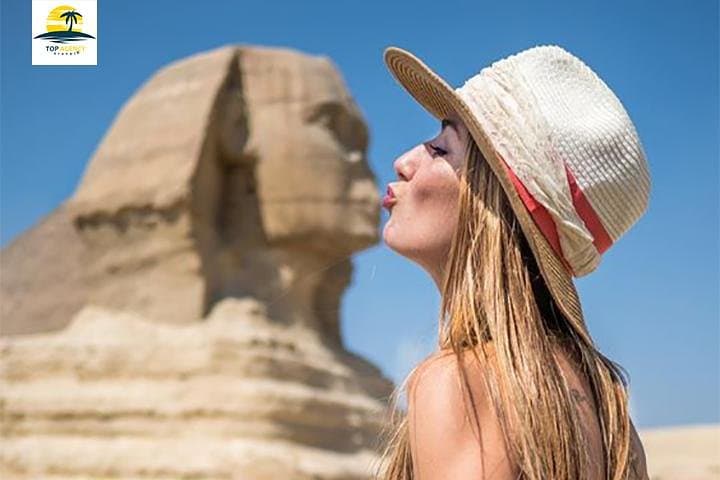
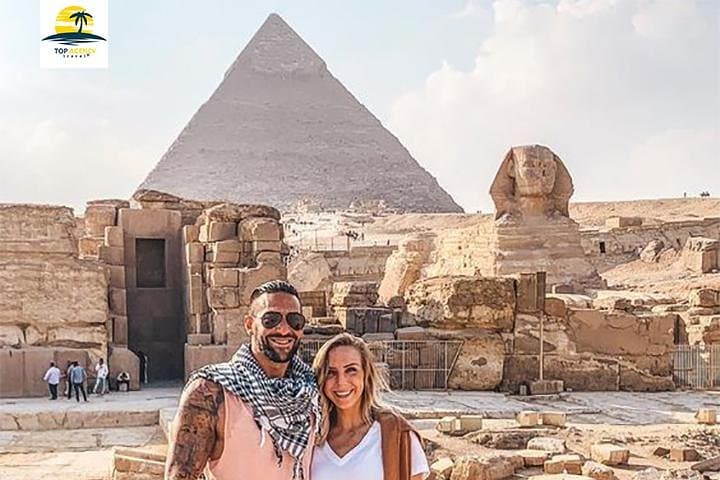
You step out of the car onto a broad, stony plateau where the sun bakes the air and the stones seem to hold time itself. Wind moves across the Giza plateau, nudging sand into drifts at the base of three massive silhouettes — Khufu, Khafre and Menkaure — that have watched the Nile valley for millennia.
Verified experiences and guided adventures in the surrounding area.
Operated by Top Agency Travel Egypt · Cairo, Cairo Governorate
You step out of the car onto a broad, stony plateau where the sun bakes the air and the stones seem to hold time itself. Wind moves across the Giza plateau, nudging sand into drifts at the base of three massive silhouettes — Khufu, Khafre and Menkaure — that have watched the Nile valley for millennia.
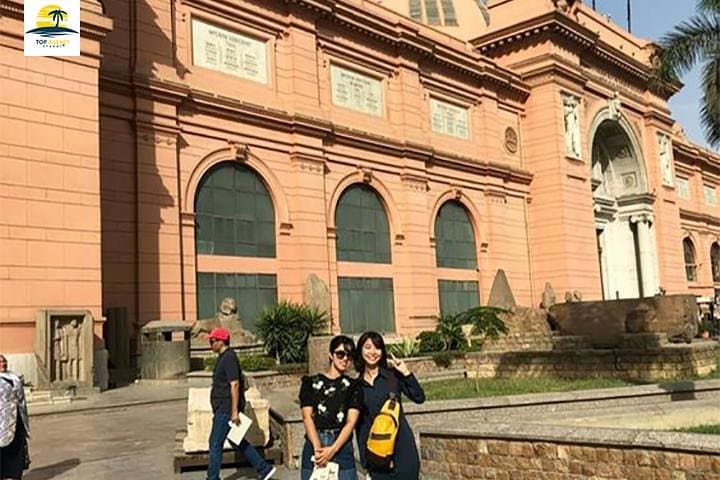
This two-day short break pairs the ancient monuments of the Giza Plateau with the concentrated collections of the Egyptian Museum in central Cairo. The pyramids, built around 2560 BCE as royal tombs, sit on Cenozoic limestone that was quarried to create the smooth-faced mastabas and stepped cores you see today; expect uneven packed-sand walking across roughly 1–2 miles (1.6–3.2 km) of sites with minimal elevation change (plateau sits near 60 m above sea level). The Egyptian Museum, located near Tahrir Square, houses over 120,000 artifacts — including Tutankhamun’s gold mask — that trace Pharaonic, Greco-Roman and Islamic layers of Cairo’s history.
Culturally, Cairo’s rhythm is busy and immediate: vendors offer shade and cold drinks, while licensed Egyptologist guides narrate construction techniques and funerary beliefs that shaped ancient Egyptian society. Locals advise early starts to avoid heat and crowds.
Practical guidance: plan for an 8–10 hour sightseeing day, wear sturdy walking shoes, carry 2+ liters of water, and budget time for security lines and photo stops. Bring sun protection, a lightweight layer for mornings or air-conditioned vehicles, and a photocopy of travel documents. Respect site rules — no climbing on monuments — and tip guides and drivers if service is good.
easy.
2 days (48 hours total); main sightseeing day ~8–10 hours.
Suitable for travelers with basic mobility; must be able to walk several hours on uneven ground
Yes — entrance fees to the mentioned sites are included in this package.
Access to the interior is subject to Egyptian Antiquities regulations and can be limited; your guide will advise on availability.
The Giza plateau and museum have uneven surfaces and stairs; this tour is not fully accessible for standard wheelchairs without assistance.
Private transfer from your Cairo hotel and return to the airport is provided as stated in the itinerary.
The Giza pyramids were built during the Fourth Dynasty (c. 2600–2500 BCE) as monumental tombs; the Egyptian Museum preserves artifacts spanning millennia of Egyptian civilization.
High visitor numbers stress fragile sites; follow guide instructions, avoid touching stonework, and support licensed tour operators who contribute to preservation.
Top Agency Travel Egypt operates guided outdoor trips and adventures with an emphasis on safety, stewardship, and memorable experiences.
You step out of the car onto a broad, stony plateau where the sun bakes the air and the stones seem to hold time itself. Wind moves across the Giza plateau, nudging sand into drifts at the base of three massive silhouettes — Khufu, Khafre and Menkaure — that have watched the Nile valley for millennia.
You step out of the car onto a broad, stony plateau where the sun bakes the air and the stones seem to hold time itself. Wind moves across the Giza plateau, nudging sand into drifts at the base of three massive silhouettes — Khufu, Khafre and Menkaure — that have watched the Nile valley for millennia.
This two-day short break pairs the ancient monuments of the Giza Plateau with the concentrated collections of the Egyptian Museum in central Cairo. The pyramids, built around 2560 BCE as royal tombs, sit on Cenozoic limestone that was quarried to create the smooth-faced mastabas and stepped cores you see today; expect uneven packed-sand walking across roughly 1–2 miles (1.6–3.2 km) of sites with minimal elevation change (plateau sits near 60 m above sea level). The Egyptian Museum, located near Tahrir Square, houses over 120,000 artifacts — including Tutankhamun’s gold mask — that trace Pharaonic, Greco-Roman and Islamic layers of Cairo’s history.
Culturally, Cairo’s rhythm is busy and immediate: vendors offer shade and cold drinks, while licensed Egyptologist guides narrate construction techniques and funerary beliefs that shaped ancient Egyptian society. Locals advise early starts to avoid heat and crowds.
Practical guidance: plan for an 8–10 hour sightseeing day, wear sturdy walking shoes, carry 2+ liters of water, and budget time for security lines and photo stops. Bring sun protection, a lightweight layer for mornings or air-conditioned vehicles, and a photocopy of travel documents. Respect site rules — no climbing on monuments — and tip guides and drivers if service is good.