THE ADVENTURE COLLECTIVE® · Independent discovery and booking for outdoor travel

Explore three of Cairo’s storied palaces on a five-hour escorted tour that mixes ornate interiors, landscaped gardens, and modern Egyptian history. Perfect for travelers who want a compact, well-paced cultural walk through royal Cairo.
Explore three of Cairo’s storied palaces on a five-hour escorted tour that mixes ornate interiors, landscaped gardens, and modern Egyptian history. Perfect for travelers who want a compact, well-paced cultural walk through royal Cairo.
Morning light catches the carved stone and onion domes of Heliopolis as the tour begins, the Baron Empain Palace rising like an unlikely dream against a Cairo skyline. Walkways hum with city life; the Nile nearby nudges the route southward toward leafy Rhoda Island and then back into the ceremonial heart of downtown at Abdeen Palace.
Verified experiences and guided adventures in the surrounding area.
Operated by Emo Tours Sweden · Cairo, Cairo Governorate
Morning light catches the carved stone and onion domes of Heliopolis as the tour begins, the Baron Empain Palace rising like an unlikely dream against a Cairo skyline. Walkways hum with city life; the Nile nearby nudges the route southward toward leafy Rhoda Island and then back into the ceremonial heart of downtown at Abdeen Palace.
Each stop reads like a different chapter of modern Egyptian statecraft and cosmopolitan experiment. The Baron Empain Palace channels Hindu-revival architecture from a Belgian industrialist era; Abdeen Palace records Khedive Ismail’s 19th-century push to modernize Cairo and later presidential pageantry; Manial Palace holds Ottoman-influenced rooms and Persian-styled gardens stitched along a Nile branch. Geology is absent from the buildings but present in Cairo’s silted river plain—the city sits atop alluvial deposits that made the Nile banks prime royal real estate.
Expect a mix of interior rooms, ornate halls, and outdoor gardens: tiled courtyards, gilt decoration, and shaded paths among mature trees. Guides usually cover political history, decorative arts, and the palaces’ changing roles through the 19th and 20th centuries.
Practical guidance: the full itinerary runs about five hours with air-conditioned transport between sites and bottled water provided. Wear comfortable walking shoes and sun protection; dress modestly for indoor royal chambers. Midday in summer can be hot—schedule earlier slots to avoid peak heat. Skip-the-line access helps maximize time inside each palace; bring a compact camera and small cash for museum shops or local refreshments.
easy.
5 hours.
Suitable for most fitness levels; involves standing and walking indoors and short outdoor transfers between sites.
Entry fees for the listed palaces are included in the tour package as noted in the itinerary.
Yes—tour notes indicate infant seats available and a pace suitable for families; expect a lot of standing and walking.
Photography is generally allowed in most areas but flash or tripods may be restricted; follow the guide’s directions.
Private, air-conditioned transportation is provided for transfers between the palaces, reducing walking distances on city streets.
These palaces trace Egypt’s late 19th- and early 20th-century shift from Ottoman provincial rule toward modern state institutions, reflecting European influence and local dynastic tastes.
Palace conservation is managed by Egypt’s antiquities authorities; visitors should follow posted rules to protect fragile interiors and historic gardens.
Emo Tours Sweden operates guided outdoor trips and adventures with an emphasis on safety, stewardship, and memorable experiences.
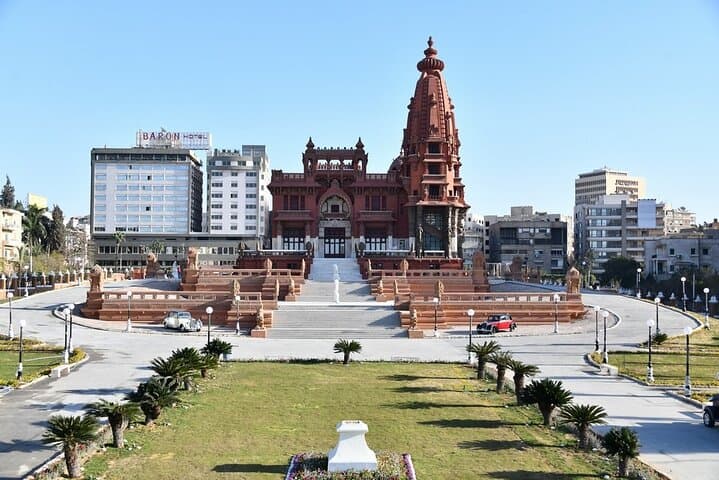
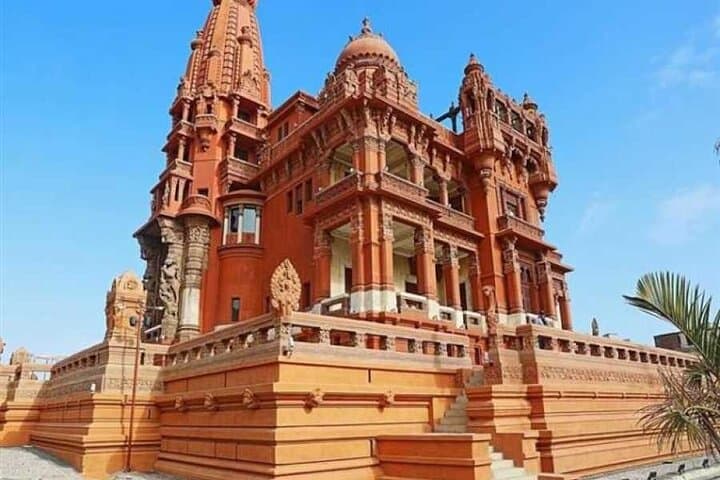
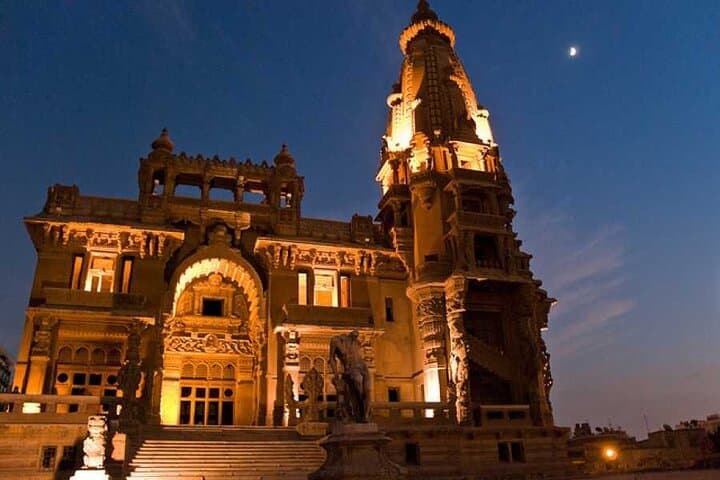
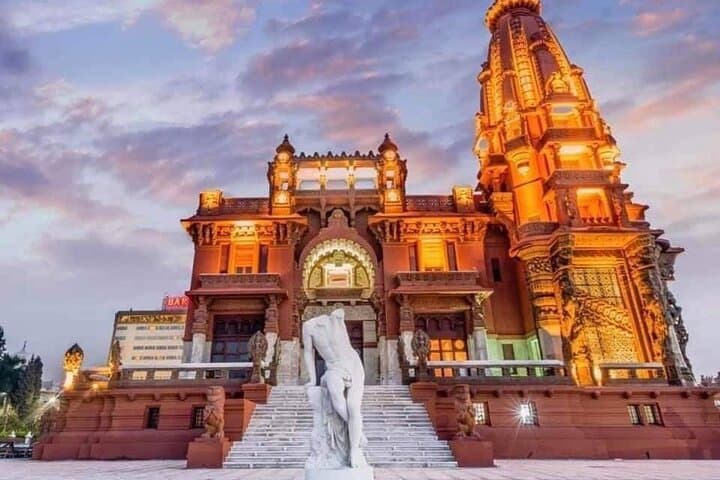
Morning light catches the carved stone and onion domes of Heliopolis as the tour begins, the Baron Empain Palace rising like an unlikely dream against a Cairo skyline. Walkways hum with city life; the Nile nearby nudges the route southward toward leafy Rhoda Island and then back into the ceremonial heart of downtown at Abdeen Palace.
Morning light catches the carved stone and onion domes of Heliopolis as the tour begins, the Baron Empain Palace rising like an unlikely dream against a Cairo skyline. Walkways hum with city life; the Nile nearby nudges the route southward toward leafy Rhoda Island and then back into the ceremonial heart of downtown at Abdeen Palace.
Each stop reads like a different chapter of modern Egyptian statecraft and cosmopolitan experiment. The Baron Empain Palace channels Hindu-revival architecture from a Belgian industrialist era; Abdeen Palace records Khedive Ismail’s 19th-century push to modernize Cairo and later presidential pageantry; Manial Palace holds Ottoman-influenced rooms and Persian-styled gardens stitched along a Nile branch. Geology is absent from the buildings but present in Cairo’s silted river plain—the city sits atop alluvial deposits that made the Nile banks prime royal real estate.
Expect a mix of interior rooms, ornate halls, and outdoor gardens: tiled courtyards, gilt decoration, and shaded paths among mature trees. Guides usually cover political history, decorative arts, and the palaces’ changing roles through the 19th and 20th centuries.
Practical guidance: the full itinerary runs about five hours with air-conditioned transport between sites and bottled water provided. Wear comfortable walking shoes and sun protection; dress modestly for indoor royal chambers. Midday in summer can be hot—schedule earlier slots to avoid peak heat. Skip-the-line access helps maximize time inside each palace; bring a compact camera and small cash for museum shops or local refreshments.