THE ADVENTURE COLLECTIVE® · Independent discovery and booking for outdoor travel

Spend a full day between the sun-baked Giza Plateau and the artifact-packed halls of Cairo’s national museum. This guided tour balances outdoor exploration of the pyramids with a deep dive into Egypt’s museum collections—perfect for first-time visitors who want history, context, and practical logistics.
Spend a full day between the sun-baked Giza Plateau and the artifact-packed halls of Cairo’s national museum. This guided tour balances outdoor exploration of the pyramids with a deep dive into Egypt’s museum collections—perfect for first-time visitors who want history, context, and practical logistics.
You arrive on the Giza Plateau with sunlight flattening the sandstone faces of three monumental pyramids—wind and dust press against the soles of your shoes as camels wait like patient witnesses along the edge of the road.
Verified experiences and guided adventures in the surrounding area.
Operated by Foodprint Tours · Giza, Giza Governorate
You arrive on the Giza Plateau with sunlight flattening the sandstone faces of three monumental pyramids—wind and dust press against the soles of your shoes as camels wait like patient witnesses along the edge of the road.
The tour opens at the Great Pyramid of Khufu, where a local guide outlines the scale and engineering: blocks weighing tons, passageways angled to align with stars. Walking across the plateau is typically 1.5–3 km depending on stops; entering the pyramid means a short, steep crawl through narrow corridors, while the exterior viewing offers sweeping photographic lines with the Sphinx in the foreground.
After Giza the route moves into central Cairo to the National Egyptian Museum. The museum’s halls trace Pharaonic chronology—Old Kingdom statuary, Middle Kingdom reliefs, and the famously ornate funerary material of Tutankhamun—each object telling a story of burial practice, material trade and ritual life.
Practical guidance is straightforward: the day runs about eight hours including transit; expect exposed sun on the plateau and security checks at both sites. Wear sturdy closed shoes for uneven stone and bring at least 1.5–2 liters of water, sun protection, and a light layer for air-conditioned museum galleries. Photography rules vary—follow your guide’s instruction and museum signage.
Timing matters: early-morning departures cut heat and crowds; late afternoons yield longer shadows for dramatic photos. Respect barriers, local customs, and the fragile surfaces underfoot—these are working archaeological landscapes and museum collections that require care.
easy.
8 hours.
Suitable for most fitness levels; requires short walks on uneven terrain and the ability to navigate steps and narrow spaces.
The tour runs about eight hours total and typically includes 1.5–3 km of walking on the Giza Plateau and museum galleries—mostly on even ground with some steps and uneven stones.
Many tours offer optional interior access to at least one pyramid when available; the original mask of Tutankhamun has been exhibited in Cairo’s museums but display locations can change—confirm current holdings with your operator.
Yes—there are restroom facilities at tourist sites and scheduled breaks; bring snacks if you have dietary needs, though bottled water is usually provided on the vehicle.
Yes—it's advertised as suitable for all fitness levels, but pyramid interiors and long standing periods may be difficult for very young children or those with mobility issues; plan accordingly.
The Great Pyramid at Giza was constructed as Khufu’s tomb around 2600 BCE and remains the largest of Egypt’s royal pyramids; the museum collections chronicle millennia of Pharaonic civilization.
Visitor pressure and urban encroachment challenge both the plateau and Cairo’s museums—follow established paths, don’t touch surfaces, and heed guide instructions to minimize impact.
Foodprint Tours operates guided outdoor trips and adventures with an emphasis on safety, stewardship, and memorable experiences.
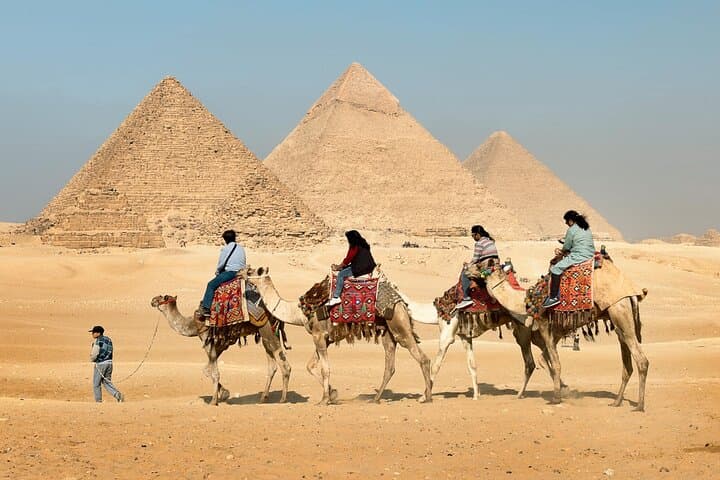
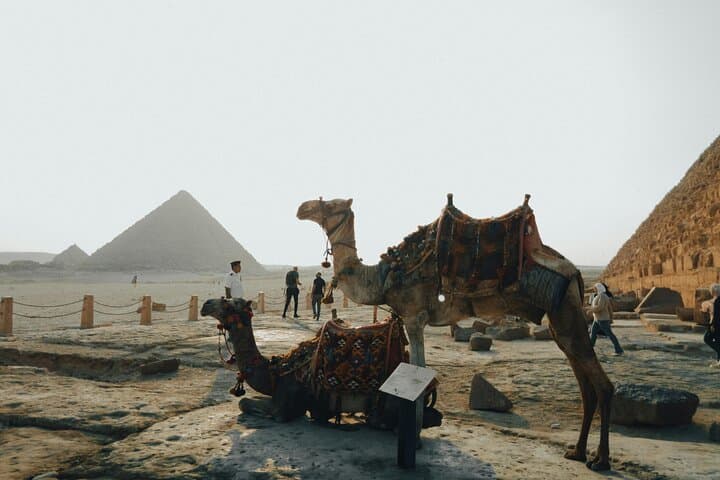
You arrive on the Giza Plateau with sunlight flattening the sandstone faces of three monumental pyramids—wind and dust press against the soles of your shoes as camels wait like patient witnesses along the edge of the road.
You arrive on the Giza Plateau with sunlight flattening the sandstone faces of three monumental pyramids—wind and dust press against the soles of your shoes as camels wait like patient witnesses along the edge of the road.
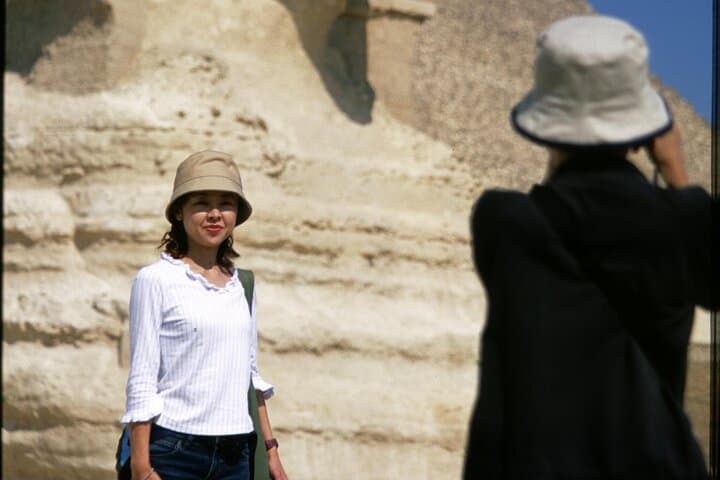
The tour opens at the Great Pyramid of Khufu, where a local guide outlines the scale and engineering: blocks weighing tons, passageways angled to align with stars. Walking across the plateau is typically 1.5–3 km depending on stops; entering the pyramid means a short, steep crawl through narrow corridors, while the exterior viewing offers sweeping photographic lines with the Sphinx in the foreground.
After Giza the route moves into central Cairo to the National Egyptian Museum. The museum’s halls trace Pharaonic chronology—Old Kingdom statuary, Middle Kingdom reliefs, and the famously ornate funerary material of Tutankhamun—each object telling a story of burial practice, material trade and ritual life.
Practical guidance is straightforward: the day runs about eight hours including transit; expect exposed sun on the plateau and security checks at both sites. Wear sturdy closed shoes for uneven stone and bring at least 1.5–2 liters of water, sun protection, and a light layer for air-conditioned museum galleries. Photography rules vary—follow your guide’s instruction and museum signage.
Timing matters: early-morning departures cut heat and crowds; late afternoons yield longer shadows for dramatic photos. Respect barriers, local customs, and the fragile surfaces underfoot—these are working archaeological landscapes and museum collections that require care.