THE ADVENTURE COLLECTIVE® · Independent discovery and booking for outdoor travel

Experience the Giza Plateau without logistics worries: a private Egyptologist guide, entrance tickets, a short camel ride and traditional lunch are included. This concise half‑day tour pairs up-close views of the Great Pyramid and Sphinx with practical comforts and photo-ready stops.
Experience the Giza Plateau without logistics worries: a private Egyptologist guide, entrance tickets, a short camel ride and traditional lunch are included. This concise half‑day tour pairs up-close views of the Great Pyramid and Sphinx with practical comforts and photo-ready stops.
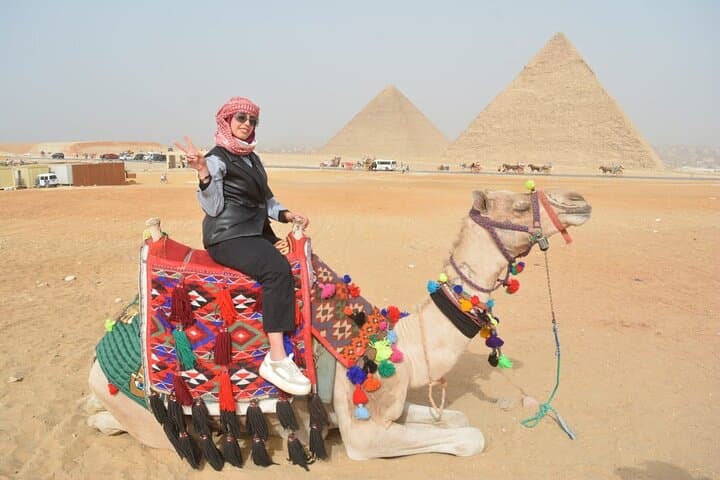
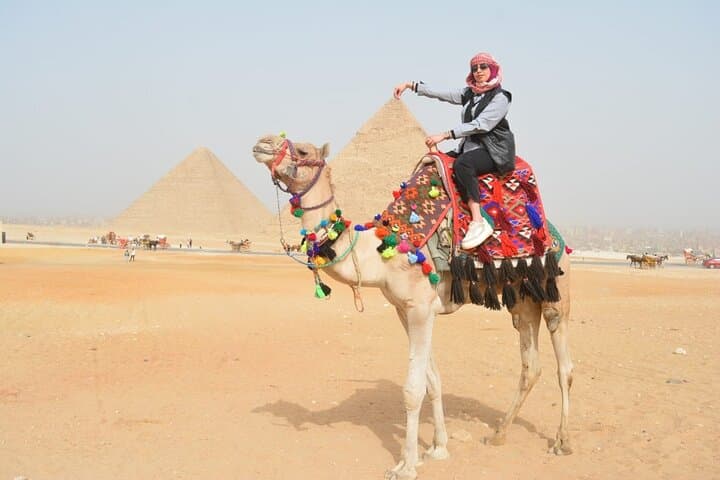
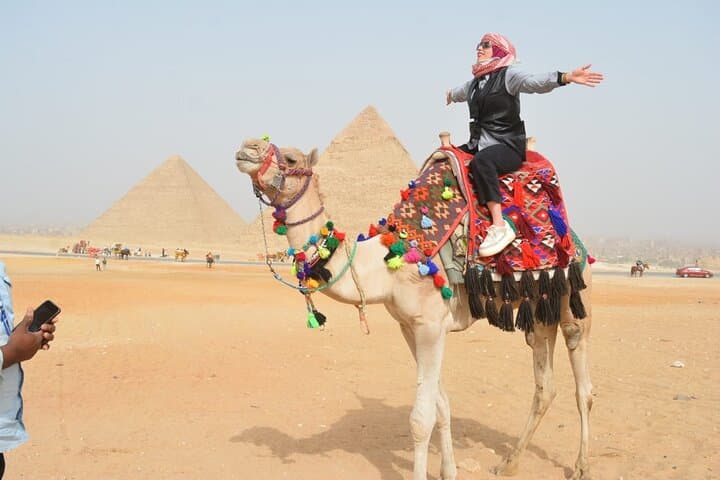
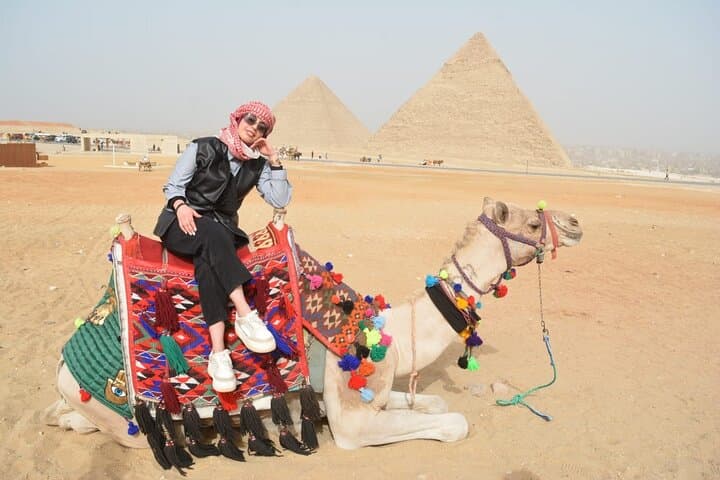
The wind off the Sahara lifts grit across the plateau as the three pyramids appear, monumental and sun-bleached against Cairo’s skyline. On a private half-day tour, travelers step from an air-conditioned vehicle onto ancient stone and into four and a half millennia of engineered intent: the Great Pyramid rising like a geometric island, the Sphinx’s limestone face turning slowly toward the sun, and camels pacing the horizon like patient sentinels ready for a short ride.
Verified experiences and guided adventures in the surrounding area.
Operated by egytiatours · Giza, Giza Governorate
The wind off the Sahara lifts grit across the plateau as the three pyramids appear, monumental and sun-bleached against Cairo’s skyline. On a private half-day tour, travelers step from an air-conditioned vehicle onto ancient stone and into four and a half millennia of engineered intent: the Great Pyramid rising like a geometric island, the Sphinx’s limestone face turning slowly toward the sun, and camels pacing the horizon like patient sentinels ready for a short ride.
This landscape is both archaeological site and working cultural space. The Great Pyramid was built c. 2560 BCE for Pharaoh Khufu; smaller pyramids beside it honor Khafre and Menkaure. The Sphinx, carved from the bedrock, anchors funerary complexes used in Old Kingdom mortuary rituals. Geologically, the plateau is a limestone shelf cut by centuries of wind and human activity, revealing quarry marks and weathered blocks that tell the construction story.
Practicalities are straightforward on an inclusive private tour: entrance tickets, a professional Egyptologist guide, a short camel ride for photos, and a traditional lunch at a local restaurant are covered. Expect around 4–5 hours on-site with short walks over uneven, sandy terrain and occasional loose limestone. Bring sunscreen, a hat, and a refillable water bottle; morning or late-afternoon departures avoid peak heat and harsh midday light.
Respect site rules—do not climb monuments—and keep to marked paths to protect fragile archaeology. Photography is excellent from viewpoints around the plateau; local bazaars nearby offer handcrafted souvenirs if you have time at the end of your visit.
easy.
4–5 hours.
Light walking over uneven ground; suitable for most fitness levels but not for those with serious spinal issues.
The included camel ride is short—typically 10–20 minutes—designed for panoramic photos rather than long-distance trekking.
Yes; the tour includes entrance tickets to the Giza Plateau covering the pyramids and Sphinx area listed on the itinerary.
Parts of the plateau are uneven; the booking notes stroller accessibility for infants but it may not be suitable for standard wheelchairs across rough sections—ask the operator about specific pickup/drop-off needs.
Photography is allowed in most outdoor areas; rules vary for interior access to specific tombs or chambers—follow your guide’s instructions and local signage.
The Great Pyramid dates to c. 2560 BCE as Khufu’s tomb; the Sphinx is widely associated with Pharaoh Khafre and sits within Old Kingdom funerary architecture.
Visitor numbers stress fragile stone and surrounding desert ecology; follow paths, avoid touching ancient masonry, and support licensed local guides to fund preservation work.
egytiatours operates guided outdoor trips and adventures with an emphasis on safety, stewardship, and memorable experiences.
The wind off the Sahara lifts grit across the plateau as the three pyramids appear, monumental and sun-bleached against Cairo’s skyline. On a private half-day tour, travelers step from an air-conditioned vehicle onto ancient stone and into four and a half millennia of engineered intent: the Great Pyramid rising like a geometric island, the Sphinx’s limestone face turning slowly toward the sun, and camels pacing the horizon like patient sentinels ready for a short ride.
The wind off the Sahara lifts grit across the plateau as the three pyramids appear, monumental and sun-bleached against Cairo’s skyline. On a private half-day tour, travelers step from an air-conditioned vehicle onto ancient stone and into four and a half millennia of engineered intent: the Great Pyramid rising like a geometric island, the Sphinx’s limestone face turning slowly toward the sun, and camels pacing the horizon like patient sentinels ready for a short ride.
This landscape is both archaeological site and working cultural space. The Great Pyramid was built c. 2560 BCE for Pharaoh Khufu; smaller pyramids beside it honor Khafre and Menkaure. The Sphinx, carved from the bedrock, anchors funerary complexes used in Old Kingdom mortuary rituals. Geologically, the plateau is a limestone shelf cut by centuries of wind and human activity, revealing quarry marks and weathered blocks that tell the construction story.
Practicalities are straightforward on an inclusive private tour: entrance tickets, a professional Egyptologist guide, a short camel ride for photos, and a traditional lunch at a local restaurant are covered. Expect around 4–5 hours on-site with short walks over uneven, sandy terrain and occasional loose limestone. Bring sunscreen, a hat, and a refillable water bottle; morning or late-afternoon departures avoid peak heat and harsh midday light.
Respect site rules—do not climb monuments—and keep to marked paths to protect fragile archaeology. Photography is excellent from viewpoints around the plateau; local bazaars nearby offer handcrafted souvenirs if you have time at the end of your visit.