THE ADVENTURE COLLECTIVE® · Independent discovery and booking for outdoor travel

Visit the Giza pyramids, Alabaster Mosque and Khan el-Khalili in a single private day tour. This guided itinerary pairs ancient monuments with local markets and practical tips for navigating Cairo’s heat, dress code and bargaining culture.
Visit the Giza pyramids, Alabaster Mosque and Khan el-Khalili in a single private day tour. This guided itinerary pairs ancient monuments with local markets and practical tips for navigating Cairo’s heat, dress code and bargaining culture.
Morning light pulls you out of Cairo's labyrinth and onto the Giza plateau: a low, sandy plain where the three great pyramids loom like timeworn walls against a bright sky. Your guide eases the minivan to a panorama point; wind carries grit across the stones and the Sphinx watches as camels and tourists thread the desert below. A short camel ride rounds the experience—animal, sand and history moving in slow sync.
Verified experiences and guided adventures in the surrounding area.
Operated by Let`s Explore Egypt · Cairo, Cairo Governorate
Morning light pulls you out of Cairo's labyrinth and onto the Giza plateau: a low, sandy plain where the three great pyramids loom like timeworn walls against a bright sky. Your guide eases the minivan to a panorama point; wind carries grit across the stones and the Sphinx watches as camels and tourists thread the desert below. A short camel ride rounds the experience—animal, sand and history moving in slow sync.
The day stitches eras together. The Giza pyramids date to the Fourth Dynasty, monumental tombs hewn from limestone and granite that still reward close inspection; nearby the Solar Boat Museum preserves an intact funerary vessel. Geologically the plateau is bedrock limestone capped by wind-blown sand, so footing alternates between compact rock and loose sand. Move on to Saladin's Citadel, a 12th-century fortress offering strategic views of lower Cairo; inside sits the Alabaster Mosque of Muhammad Ali, an Ottoman-style landmark from the 19th century whose marble surfaces catch light and city views. End in Khan el-Khalili, a medieval bazaar where alleys trade in copper, perfume and strong mint tea.
Practical edge: expect 7–8 hours with roughly 2–3 km of walking on uneven surfaces and some steps. Dress conservatively for mosque access—shoulders and knees covered—and wear closed-toe shoes that handle sand and stone. Carry sun protection, cash for small purchases and modest tips, and a reusable water bottle; heat and crowds peak midday, so aim for an early start or late afternoon return. The rhythm of this private tour is part history lesson, part urban safari—plan for comfortable pacing and clear camera space.
easy.
7–8 hours.
Suitable for most fitness levels; involves several short walks on uneven ground and a few stair sections.
Entrance fees to the pyramid interior and the Solar Boat Museum are included in this tour as listed, but optional extras like pyramid interior access can depend on ticket availability.
Shoulders and knees must be covered for both men and women; avoid sleeveless tops and shorts—bring a scarf if you need to cover up.
Camel rides are typically safe but should be supervised; children must be accompanied by an adult and follow handlers’ instructions.
Most stalls prefer cash; larger shops may accept cards, but bring Egyptian pounds for bargaining and smaller purchases.
The Giza necropolis dates to circa 2600 BCE; the Citadel was established by Saladin in the 12th century and Muhammad Ali built the Alabaster Mosque in the 19th century as a showpiece of Ottoman reform.
High visitor numbers stress fragile stone and painted surfaces—avoid touching ancient masonry and use marked paths; support local guides and licensed vendors to contribute to sustainable tourism.
Let`s Explore Egypt operates guided outdoor trips and adventures with an emphasis on safety, stewardship, and memorable experiences.


Morning light pulls you out of Cairo's labyrinth and onto the Giza plateau: a low, sandy plain where the three great pyramids loom like timeworn walls against a bright sky. Your guide eases the minivan to a panorama point; wind carries grit across the stones and the Sphinx watches as camels and tourists thread the desert below. A short camel ride rounds the experience—animal, sand and history moving in slow sync.
Morning light pulls you out of Cairo's labyrinth and onto the Giza plateau: a low, sandy plain where the three great pyramids loom like timeworn walls against a bright sky. Your guide eases the minivan to a panorama point; wind carries grit across the stones and the Sphinx watches as camels and tourists thread the desert below. A short camel ride rounds the experience—animal, sand and history moving in slow sync.
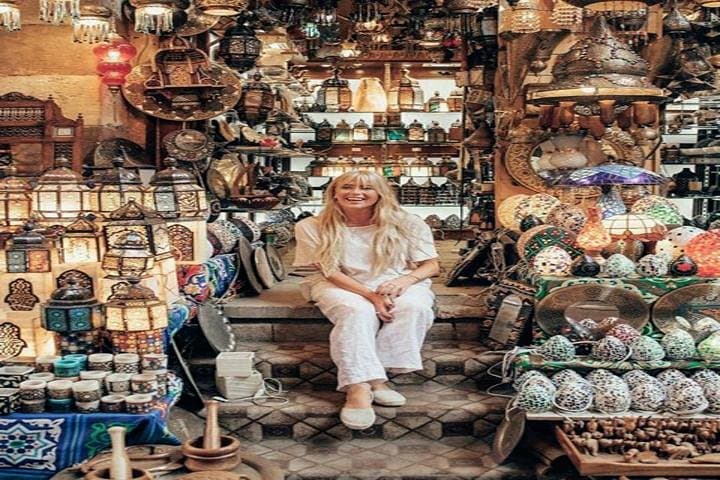
The day stitches eras together. The Giza pyramids date to the Fourth Dynasty, monumental tombs hewn from limestone and granite that still reward close inspection; nearby the Solar Boat Museum preserves an intact funerary vessel. Geologically the plateau is bedrock limestone capped by wind-blown sand, so footing alternates between compact rock and loose sand. Move on to Saladin's Citadel, a 12th-century fortress offering strategic views of lower Cairo; inside sits the Alabaster Mosque of Muhammad Ali, an Ottoman-style landmark from the 19th century whose marble surfaces catch light and city views. End in Khan el-Khalili, a medieval bazaar where alleys trade in copper, perfume and strong mint tea.
Practical edge: expect 7–8 hours with roughly 2–3 km of walking on uneven surfaces and some steps. Dress conservatively for mosque access—shoulders and knees covered—and wear closed-toe shoes that handle sand and stone. Carry sun protection, cash for small purchases and modest tips, and a reusable water bottle; heat and crowds peak midday, so aim for an early start or late afternoon return. The rhythm of this private tour is part history lesson, part urban safari—plan for comfortable pacing and clear camera space.