THE ADVENTURE COLLECTIVE® · Independent discovery and booking for outdoor travel

Turn a short stop in Cairo into a full‑day, private sweep of the Giza Pyramids, the Egyptian Museum’s Tutankhamun treasures, and the bustling Khan El‑Khalili bazaar. Expert guiding and private transfers make efficient use of a 7–8 hour layover.
Turn a short stop in Cairo into a full‑day, private sweep of the Giza Pyramids, the Egyptian Museum’s Tutankhamun treasures, and the bustling Khan El‑Khalili bazaar. Expert guiding and private transfers make efficient use of a 7–8 hour layover.
You step from the air‑conditioned car onto sun-warmed limestone and the scale of the Giza Plateau takes over — three pyramids rise like geometric mountains against a high, dry sky while the Sphinx keeps a patient watch. The air smells of dust, diesel, and roasted coffee from a nearby vendor; your Egyptologist nods toward carved stones and suddenly 4,500 years feel immediate.
Verified experiences and guided adventures in the surrounding area.
Operated by Blue Tours · Cairo, Cairo Governorate
You step from the air‑conditioned car onto sun-warmed limestone and the scale of the Giza Plateau takes over — three pyramids rise like geometric mountains against a high, dry sky while the Sphinx keeps a patient watch. The air smells of dust, diesel, and roasted coffee from a nearby vendor; your Egyptologist nods toward carved stones and suddenly 4,500 years feel immediate.
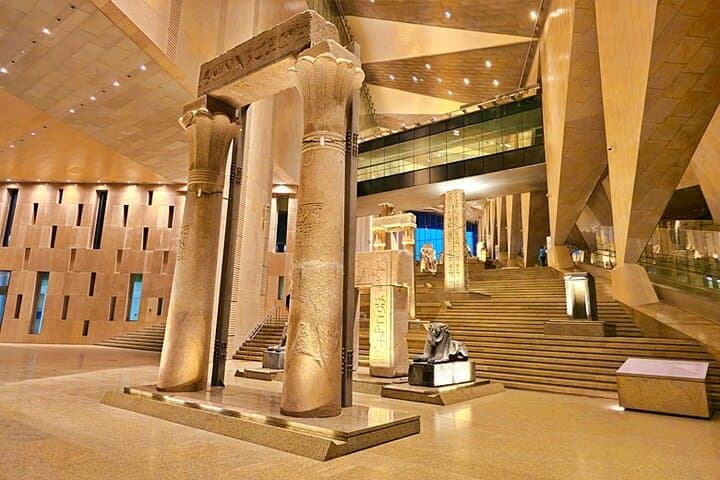
The route stitches together epochs: the Pyramids and Sphinx are burial complexes and engineering feats of the Old Kingdom; the nearby Valley Temple hints at ancient funerary rites. In the heart of Cairo the Egyptian Museum catalogues New Kingdom opulence — Tutankhamun’s mask, gilded shrines and monumental statuary — while Khan El‑Khalili bazaar preserves urban craft traditions that expanded under the Mamluks and Ottomans. Geology underpins the story here: the plateau’s bedrock is local limestone quarried for monuments; the Nile’s annual floodplain shaped settlement patterns downstream.
Practically, this is an accessible day designed for efficient discovery on a 7–8 hour private itinerary. Expect short walks on uneven stone, moderate heat in summer, and close crowds around major exhibits. Bring a copy of your passport for museum entry and a small cash reserve for local purchases and tips. Wear sturdy, comfortable shoes for loose sand and temple steps; sunscreen and a hat are non‑negotiable in midday sun. Time your visit early or late to reduce heat and to catch stronger light for photography.
This layover compresses centuries into a single day: strategic planning, an expert guide, and sensible pacing turn a short stop into a vivid encounter with ancient Egypt.
easy.
7–8 hours.
Light walking and standing; suitable for most adults who can manage short on/off vehicle transfers.
The private itinerary runs about 7–8 hours, including transfers, site visits, and museum time.
Admissions for the Egyptian Museum and Giza Plateau stops are included as described in the booking; confirm whether special exhibits or optional entries require extra fees.
Yes—private transfers and focused routing are optimized for travelers with limited time; plan arrival/departure buffers to allow for airport security and traffic.
The tour notes wheelchair accessibility and stroller allowance, but some outdoor surfaces and pyramid approaches involve uneven ground—check specific needs with the operator ahead of time.
The Giza Pyramids were built in the Fourth Dynasty (c. 2600–2500 BCE); Khan El‑Khalili developed as a commercial center in the 14th century under Mamluk rule.
Visitor numbers and urban pollution strain fragile artifacts and monuments; follow guide instructions, avoid touching ancient stonework, and favor licensed vendors to support local craft economies.
Blue Tours operates guided outdoor trips and adventures with an emphasis on safety, stewardship, and memorable experiences.
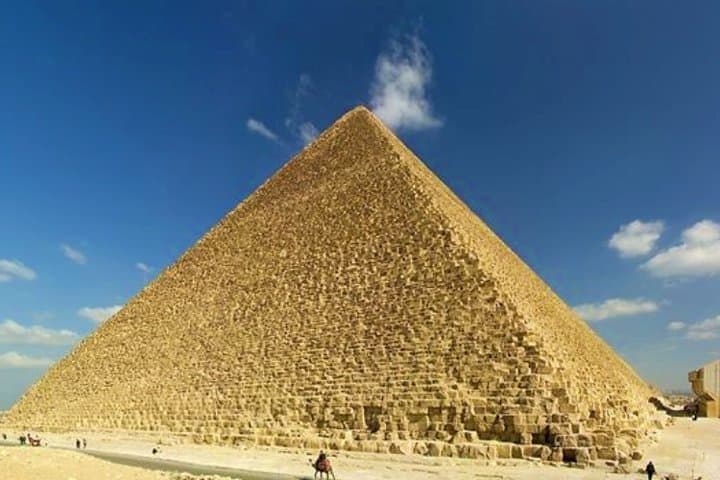
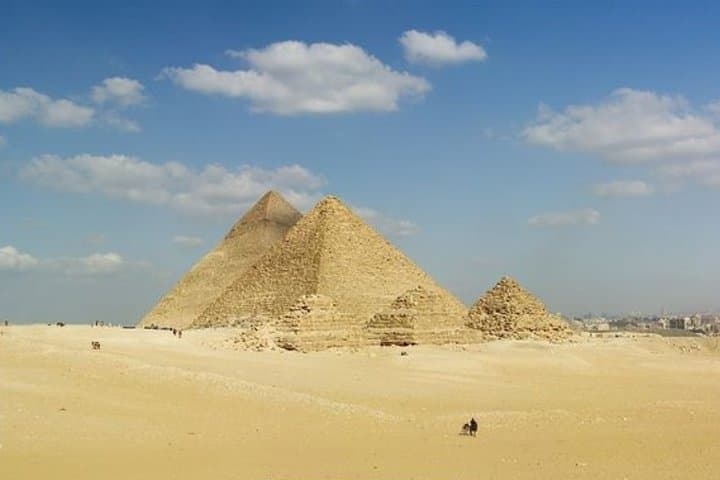
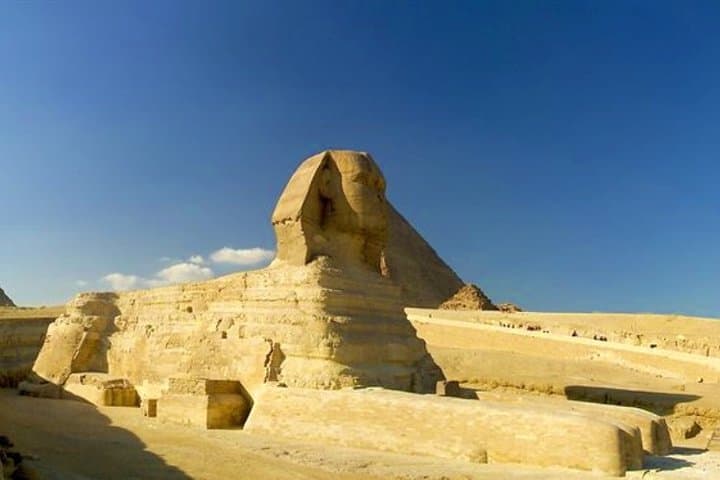
You step from the air‑conditioned car onto sun-warmed limestone and the scale of the Giza Plateau takes over — three pyramids rise like geometric mountains against a high, dry sky while the Sphinx keeps a patient watch. The air smells of dust, diesel, and roasted coffee from a nearby vendor; your Egyptologist nods toward carved stones and suddenly 4,500 years feel immediate.
You step from the air‑conditioned car onto sun-warmed limestone and the scale of the Giza Plateau takes over — three pyramids rise like geometric mountains against a high, dry sky while the Sphinx keeps a patient watch. The air smells of dust, diesel, and roasted coffee from a nearby vendor; your Egyptologist nods toward carved stones and suddenly 4,500 years feel immediate.
The route stitches together epochs: the Pyramids and Sphinx are burial complexes and engineering feats of the Old Kingdom; the nearby Valley Temple hints at ancient funerary rites. In the heart of Cairo the Egyptian Museum catalogues New Kingdom opulence — Tutankhamun’s mask, gilded shrines and monumental statuary — while Khan El‑Khalili bazaar preserves urban craft traditions that expanded under the Mamluks and Ottomans. Geology underpins the story here: the plateau’s bedrock is local limestone quarried for monuments; the Nile’s annual floodplain shaped settlement patterns downstream.
Practically, this is an accessible day designed for efficient discovery on a 7–8 hour private itinerary. Expect short walks on uneven stone, moderate heat in summer, and close crowds around major exhibits. Bring a copy of your passport for museum entry and a small cash reserve for local purchases and tips. Wear sturdy, comfortable shoes for loose sand and temple steps; sunscreen and a hat are non‑negotiable in midday sun. Time your visit early or late to reduce heat and to catch stronger light for photography.
This layover compresses centuries into a single day: strategic planning, an expert guide, and sensible pacing turn a short stop into a vivid encounter with ancient Egypt.