THE ADVENTURE COLLECTIVE® · Independent discovery and booking for outdoor travel

A private airport-to-Giza tour that fits a layover or short visit: see the pyramids, Sphinx, Valley Temple and the Royal Mummies at NMEC with transfers, a guide and lunch included. Practical, timed for travelers who need efficiency and context.
A private airport-to-Giza tour that fits a layover or short visit: see the pyramids, Sphinx, Valley Temple and the Royal Mummies at NMEC with transfers, a guide and lunch included. Practical, timed for travelers who need efficiency and context.
You step out of the airport into warm, dust-fine air and into a waiting air-conditioned vehicle that speeds toward the low ridge where the three great pyramids puncture the horizon.
Verified experiences and guided adventures in the surrounding area.
Operated by WOW TOURS EGYPT · Giza, Giza Governorate
You step out of the airport into warm, dust-fine air and into a waiting air-conditioned vehicle that speeds toward the low ridge where the three great pyramids puncture the horizon.
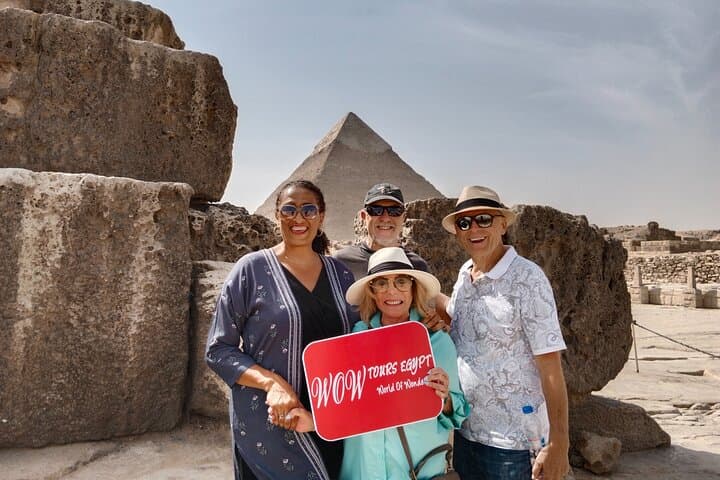
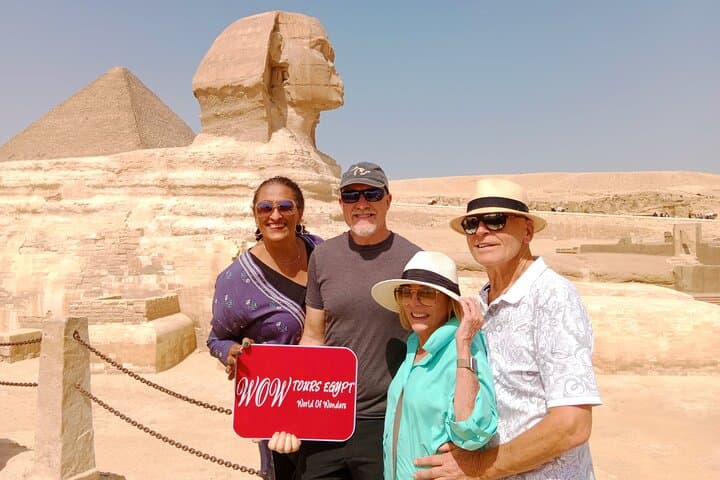
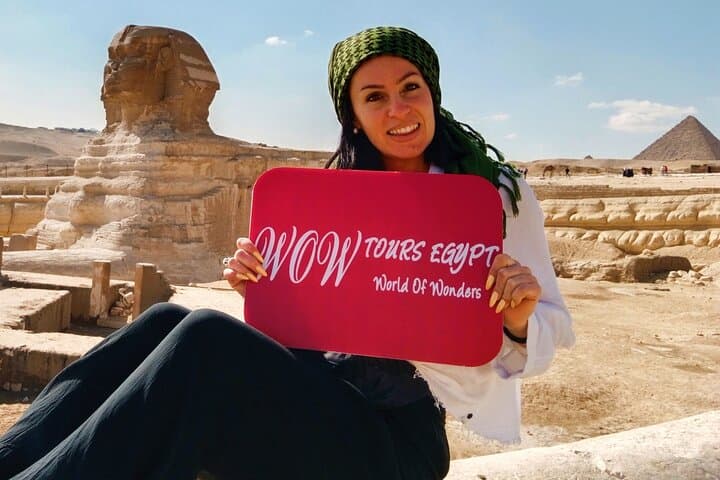
The guide places the Giza plateau in context: these stone giants date to the Fourth Dynasty (about 2600–2500 BCE), built as royal tombs and aligned with astronomical points. The Sphinx—lion body, human face—keeps silent watch beside the Valley Temple, where funerary rituals once took place. Later the day moves to the National Museum of Egyptian Civilization (NMEC) in Al-Fustat, where the Pharaohs’ Golden Parade relocated 22 royal mummies into a modern hall designed to echo the Valley of the Kings.
Geology here is simple and immediate—limestone bedrock and wind-polished sand—and the skyline reads as much as it sings: an ancient construction landscape against a modern metropolis.
Practical edge: the tour is private and airport-friendly, running 5–8 hours with included transfers, tickets, lunch, bottled water and an English Egyptologist. Visitors should carry passports (required for museum entry), expect flat walking with some uneven stone at the sites, and plan for sun and heat—shade is limited on the plateau. Photography is allowed in most areas but follow guide directions near artifacts and mummies. Pace the visit: the plateau's open exposure makes midday tiring; consider requesting an early or late pickup for cooler light and better photos. Respect barriers—do not climb—and tip guides and drivers for attentive, local expertise.
easy.
5–8 hours.
Suitable for travelers in average fitness; requires standing and walking on uneven stone for short periods.
No — this itinerary includes exterior visits and entrance to the listed sites; entering inside the pyramids is not included in this tour.
Transfers vary with traffic but typically 45–60 minutes each way from Cairo International to Giza; the tour duration accounts for travel time.
The provider lists wheelchair-accessible transport and surfaces, but some tomb areas and the plateau have uneven stone—contact the operator to confirm specific needs.
Lunch at a local restaurant is included, but drinks are not; notify the operator in advance for dietary restrictions.
The Giza pyramids were built during Egypt’s Fourth Dynasty as monumental tombs; NMEC now houses royal mummies moved there in the recent Pharaohs’ Golden Parade.
Heavy visitation stresses fragile stone and desert crust—follow marked paths, avoid climbing, and minimize plastic waste to protect the site.
WOW TOURS EGYPT operates guided outdoor trips and adventures with an emphasis on safety, stewardship, and memorable experiences.
You step out of the airport into warm, dust-fine air and into a waiting air-conditioned vehicle that speeds toward the low ridge where the three great pyramids puncture the horizon.
You step out of the airport into warm, dust-fine air and into a waiting air-conditioned vehicle that speeds toward the low ridge where the three great pyramids puncture the horizon.
The guide places the Giza plateau in context: these stone giants date to the Fourth Dynasty (about 2600–2500 BCE), built as royal tombs and aligned with astronomical points. The Sphinx—lion body, human face—keeps silent watch beside the Valley Temple, where funerary rituals once took place. Later the day moves to the National Museum of Egyptian Civilization (NMEC) in Al-Fustat, where the Pharaohs’ Golden Parade relocated 22 royal mummies into a modern hall designed to echo the Valley of the Kings.
Geology here is simple and immediate—limestone bedrock and wind-polished sand—and the skyline reads as much as it sings: an ancient construction landscape against a modern metropolis.
Practical edge: the tour is private and airport-friendly, running 5–8 hours with included transfers, tickets, lunch, bottled water and an English Egyptologist. Visitors should carry passports (required for museum entry), expect flat walking with some uneven stone at the sites, and plan for sun and heat—shade is limited on the plateau. Photography is allowed in most areas but follow guide directions near artifacts and mummies. Pace the visit: the plateau's open exposure makes midday tiring; consider requesting an early or late pickup for cooler light and better photos. Respect barriers—do not climb—and tip guides and drivers for attentive, local expertise.