THE ADVENTURE COLLECTIVE® · Independent discovery and booking for outdoor travel

Cover Cairo’s essential highlights in a single day: climb the Giza Plateau for close views of the Great Pyramid, tour the Egyptian Museum’s ancient finds, glide the Nile on a felucca and haggle through Khan el-Khalili. Practical timing and packing tips help you do it without missing a moment.
Cover Cairo’s essential highlights in a single day: climb the Giza Plateau for close views of the Great Pyramid, tour the Egyptian Museum’s ancient finds, glide the Nile on a felucca and haggle through Khan el-Khalili. Practical timing and packing tips help you do it without missing a moment.
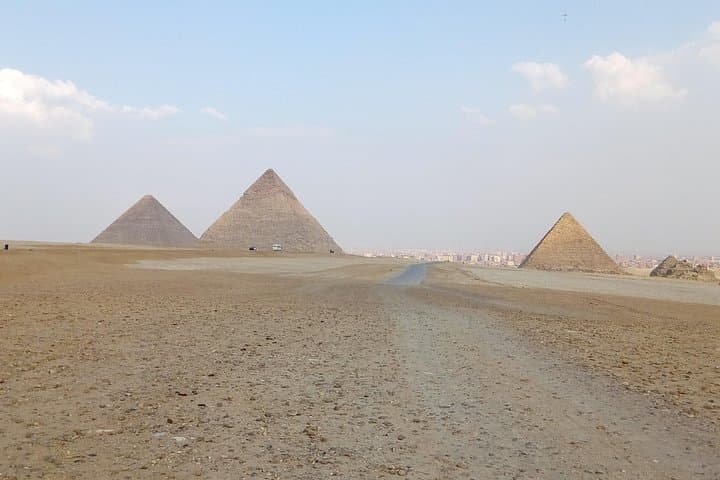
The morning light cuts across the Giza Plateau, throwing the Great Pyramid into sharp relief as the city hums behind it. Travelers on a one-day Cairo circuit move from the broad, wind-swept stones of the pyramids to the close-carved corridors of the Egyptian Museum, then down to the Nile where a felucca unfurls its sail and drifts past riverside life toward the crowded alleys of Khan el-Khalili.
Verified experiences and guided adventures in the surrounding area.
Operated by True Egypt - Day Tours · Giza, Giza Governorate
The morning light cuts across the Giza Plateau, throwing the Great Pyramid into sharp relief as the city hums behind it. Travelers on a one-day Cairo circuit move from the broad, wind-swept stones of the pyramids to the close-carved corridors of the Egyptian Museum, then down to the Nile where a felucca unfurls its sail and drifts past riverside life toward the crowded alleys of Khan el-Khalili.
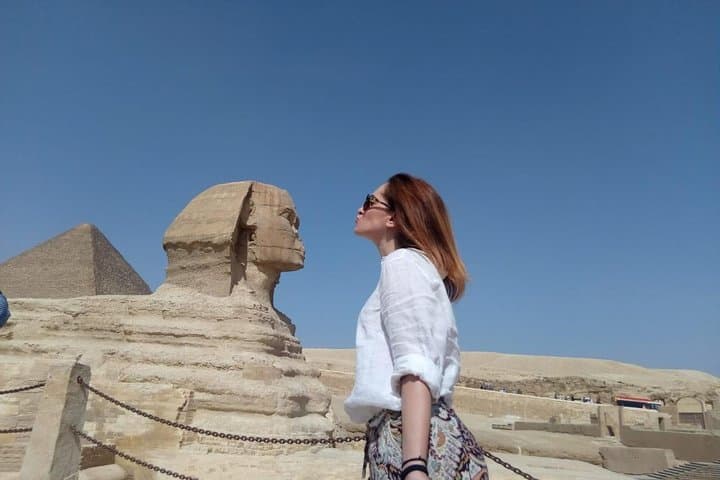
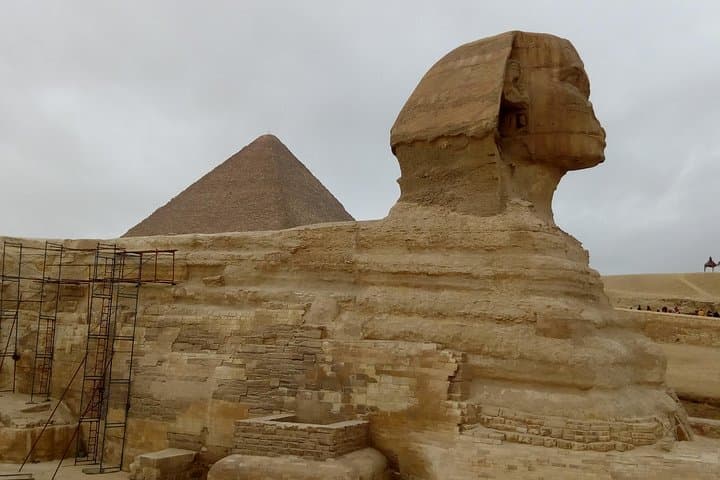
Giza’s limestone ridges are 4,500-year-old engineering made visible: the Great Pyramid, built for Pharaoh Khufu, sits with subsidiary tombs and the still-watchful Sphinx. The Egyptian Museum in Tahrir holds artifacts from the same dynastic sweep—most famously funerary finds from Tutankhamun. The Nile, carved by geology and time, remains Cairo’s lifeline; felucca captains have sailed these currents for generations, and Khan el-Khalili preserves craft and commerce in streets that trace medieval trade routes.
Practical guidance: expect a full day—early pickup and 8–10 hours on the road. Walking on the plateau and in museum halls involves uneven surfaces and short climbs; comfortable, closed-toe shoes are mandatory. Sun protection and water are essential year-round; summer temperatures can exceed 35°C (95°F). Bring cash for market haggling, a modest dress code for religious or conservative areas, and a small backpack for layers and purchases.
Timing tips: visit the pyramids early to avoid crowds, schedule the museum in the middle of the day when light is gentler for photographs, and finish with a late-afternoon felucca or evening walk through Khan el-Khalili for cooler temperatures and better market atmosphere.
easy.
10 hours.
Suitable for most travelers; requires short periods of walking on uneven terrain and stairs.
Most tours pick up from central Cairo or Giza hotels in the morning and return to the same hotel at the end of the day; confirm your pickup point when booking.
This tour includes the listed entrance fees, but optional extras (e.g., entering the Great Pyramid interior) may require additional tickets onsite.
Yes—the felucca is a gentle sail on the Nile; life vests may not always be provided, so supervise children and request safety measures if needed.
Photography policies can vary by exhibit—most galleries allow photos without flash, but trip-specific rules and restricted areas should be respected.
The Giza Plateau is part of an ancient funerary landscape built during Egypt’s Fourth Dynasty; the Egyptian Museum aggregates millennia of finds, including treasures from Tutankhamun’s tomb.
High tourist volumes stress fragile sites—avoid touching structures, follow guide instructions, and use marked paths to help protect archaeological remains.
True Egypt - Day Tours operates guided outdoor trips and adventures with an emphasis on safety, stewardship, and memorable experiences.
The morning light cuts across the Giza Plateau, throwing the Great Pyramid into sharp relief as the city hums behind it. Travelers on a one-day Cairo circuit move from the broad, wind-swept stones of the pyramids to the close-carved corridors of the Egyptian Museum, then down to the Nile where a felucca unfurls its sail and drifts past riverside life toward the crowded alleys of Khan el-Khalili.
The morning light cuts across the Giza Plateau, throwing the Great Pyramid into sharp relief as the city hums behind it. Travelers on a one-day Cairo circuit move from the broad, wind-swept stones of the pyramids to the close-carved corridors of the Egyptian Museum, then down to the Nile where a felucca unfurls its sail and drifts past riverside life toward the crowded alleys of Khan el-Khalili.
Giza’s limestone ridges are 4,500-year-old engineering made visible: the Great Pyramid, built for Pharaoh Khufu, sits with subsidiary tombs and the still-watchful Sphinx. The Egyptian Museum in Tahrir holds artifacts from the same dynastic sweep—most famously funerary finds from Tutankhamun. The Nile, carved by geology and time, remains Cairo’s lifeline; felucca captains have sailed these currents for generations, and Khan el-Khalili preserves craft and commerce in streets that trace medieval trade routes.
Practical guidance: expect a full day—early pickup and 8–10 hours on the road. Walking on the plateau and in museum halls involves uneven surfaces and short climbs; comfortable, closed-toe shoes are mandatory. Sun protection and water are essential year-round; summer temperatures can exceed 35°C (95°F). Bring cash for market haggling, a modest dress code for religious or conservative areas, and a small backpack for layers and purchases.
Timing tips: visit the pyramids early to avoid crowds, schedule the museum in the middle of the day when light is gentler for photographs, and finish with a late-afternoon felucca or evening walk through Khan el-Khalili for cooler temperatures and better market atmosphere.