THE ADVENTURE COLLECTIVE® · Independent discovery and booking for outdoor travel

A single-day, flight-assisted loop from Sharm El Sheikh that delivers the Giza pyramids, the Grand Egyptian Museum and Khan El Khalili market with an Egyptologist guide. Ideal for travelers who want maximum cultural immersion in one efficient day.
A single-day, flight-assisted loop from Sharm El Sheikh that delivers the Giza pyramids, the Grand Egyptian Museum and Khan El Khalili market with an Egyptologist guide. Ideal for travelers who want maximum cultural immersion in one efficient day.
You arrive in Cairo by a short domestic flight and the city greets you with a low, ancient hum—the desert plateau ahead holding stone giants that have watched the Nile valley for five millennia.
Verified experiences and guided adventures in the surrounding area.
Operated by Nice tours · Cairo, Cairo Governorate
You arrive in Cairo by a short domestic flight and the city greets you with a low, ancient hum—the desert plateau ahead holding stone giants that have watched the Nile valley for five millennia.
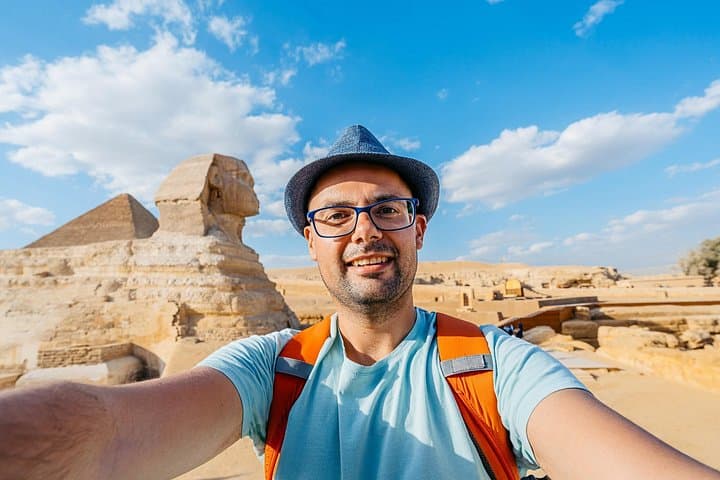
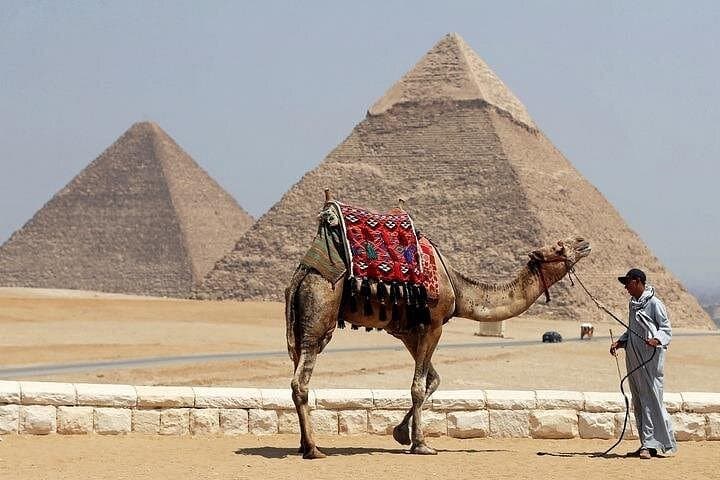
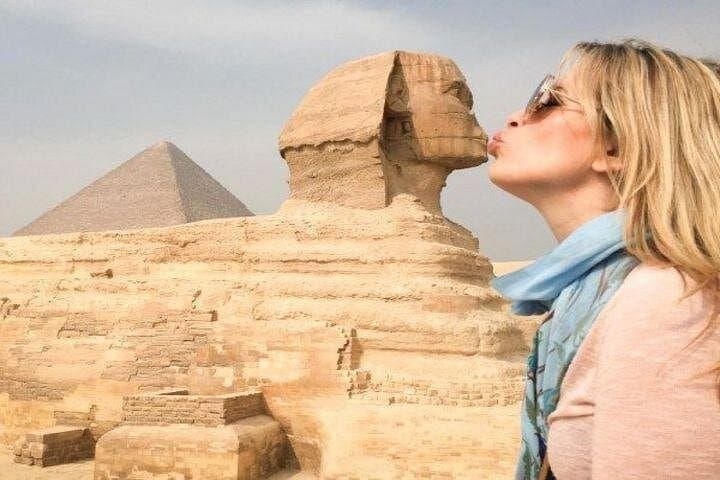
On the Giza Plateau, the Great Pyramid and Sphinx dominate the horizon; wind and sun shape the sand around them and the stones seem to hold their own. The guide explains construction techniques and funerary culture as visitors move between Khufu’s bulk, Khafre’s angled profile and Menkaure’s smaller capstone. Geologically, the plateau is a limestone outcrop whose quarries supplied blocks and whose hardness preserved tomb entrances.
At the Grand Egyptian Museum, modern glass emphasizes the artifacts’ age: Tutankhamun’s treasures, chariot fittings and funerary masks arranged for close study. Later, Khan El Khalili slices urban life into sensory chapters—metalworkers, spice scents and narrow alleys where Ottoman-era and medieval Islamic Cairo overlaps.
Practical guidance: the itinerary is tightly scheduled—expect about 10 hours including air transfers. Security checks and walking across uneven stone mean steady footwear matters; camel rides on the plateau last minutes and are optional. Midday heat can be strong; plan hydration and sun protection. Passport and printed or mobile ticket are required for flights and museum entry. Language is Arabic, but an English-speaking Egyptologist is provided.
This day trip compresses major sites into a single, efficient loop—excellent for travelers based in Sharm who want a focused cultural and archaeological immersion without overnight logistics.
easy.
10 hours.
Suitable for travelers with basic mobility; requires walking on uneven stone, brief camel ride optional.
Yes — the tour includes return domestic flights from Sharm, all listed entrance fees and transfers as described.
Yes — an English-speaking professional Egyptologist accompanies the group and explains major exhibits.
Visas are not included; travelers should check visa requirements for Egypt based on their nationality and arrange any necessary documents before travel.
Infants and small children can use strollers for some transfers, and the tour is suitable for all fitness levels, though the plateau has uneven terrain and stairs.
The Giza complex dates to the Fourth Dynasty (c. 2600–2500 BCE) and represents the apex of Old Kingdom pyramid construction; Khan El Khalili originated as a 14th-century market in Islamic Cairo.
Large heritage sites manage visitor flow to protect fragile stone and artifacts—follow barriers and guidance to minimize wear; avoid touching exhibits and use designated photo rules.
Nice tours operates guided outdoor trips and adventures with an emphasis on safety, stewardship, and memorable experiences.

You arrive in Cairo by a short domestic flight and the city greets you with a low, ancient hum—the desert plateau ahead holding stone giants that have watched the Nile valley for five millennia.
You arrive in Cairo by a short domestic flight and the city greets you with a low, ancient hum—the desert plateau ahead holding stone giants that have watched the Nile valley for five millennia.
On the Giza Plateau, the Great Pyramid and Sphinx dominate the horizon; wind and sun shape the sand around them and the stones seem to hold their own. The guide explains construction techniques and funerary culture as visitors move between Khufu’s bulk, Khafre’s angled profile and Menkaure’s smaller capstone. Geologically, the plateau is a limestone outcrop whose quarries supplied blocks and whose hardness preserved tomb entrances.
At the Grand Egyptian Museum, modern glass emphasizes the artifacts’ age: Tutankhamun’s treasures, chariot fittings and funerary masks arranged for close study. Later, Khan El Khalili slices urban life into sensory chapters—metalworkers, spice scents and narrow alleys where Ottoman-era and medieval Islamic Cairo overlaps.
Practical guidance: the itinerary is tightly scheduled—expect about 10 hours including air transfers. Security checks and walking across uneven stone mean steady footwear matters; camel rides on the plateau last minutes and are optional. Midday heat can be strong; plan hydration and sun protection. Passport and printed or mobile ticket are required for flights and museum entry. Language is Arabic, but an English-speaking Egyptologist is provided.
This day trip compresses major sites into a single, efficient loop—excellent for travelers based in Sharm who want a focused cultural and archaeological immersion without overnight logistics.