THE ADVENTURE COLLECTIVE® · Independent discovery and booking for outdoor travel

Make the long road from Hurghada count: this full-day coach tour covers the Giza Pyramids, Sphinx, Egyptian Museum (or GEM), a papyrus stop and an open buffet. Expect a very long but highly concentrated day of iconic ancient sites and practical logistics.
Make the long road from Hurghada count: this full-day coach tour covers the Giza Pyramids, Sphinx, Egyptian Museum (or GEM), a papyrus stop and an open buffet. Expect a very long but highly concentrated day of iconic ancient sites and practical logistics.
Before dawn the coach pulls out of Hurghada and the Red Sea light slips away, leaving a corridor of desert that seems to push you toward the Nile. Hours on the road transform into arrival at the Giza Plateau: three pyramids silhouette the horizon and the Sphinx watches like a patient guardian. The desert itself feels deliberate — wind-polished limestone cliffs and sand that dares you to look closer.
Verified experiences and guided adventures in the surrounding area.
Operated by E.T.O Travels · Giza, Cairo Governorate
Before dawn the coach pulls out of Hurghada and the Red Sea light slips away, leaving a corridor of desert that seems to push you toward the Nile. Hours on the road transform into arrival at the Giza Plateau: three pyramids silhouette the horizon and the Sphinx watches like a patient guardian. The desert itself feels deliberate — wind-polished limestone cliffs and sand that dares you to look closer.
This one-day itinerary threads modern Cairo with 4,500 years of history. The Great Pyramid (ca. 2560 BCE) sits on bedrock that ancient builders leveled with geometric precision; the Sphinx retains a face long argued over by scholars. The Egyptian Museum and the new Grand Egyptian Museum curate pharaonic wealth — Tutankhamun’s treasures, colossal statues, and intricate sarcophagi — while nearby Coptic and Islamic quarters remind visitors that Cairo’s story continued in churches, mosques, and souks.
Practical guidance is blunt: expect an 18–21 hour day with long bus transfers, multiple short stops, and concentrated walking in busy sites. Bring passport and photocopy for entry, sun protection and breathable layers, comfortable closed shoes for gravel and steps, and a refillable water bottle. Plan for cash to tip guides or buy small souvenirs, and choose the Grand Egyptian Museum option if you want a more modern, less crowded museum experience. Restroom breaks are scheduled but limited; carry basic toiletries. Travel with patience — the payoff is close-up time with structures that shaped urban civilization and a sense of scale you can only get standing on the plateau.
easy.
18–21 hours.
Suitable for average fitness; involves multiple short walks on uneven ground and stairs at museum exhibits
The coach journey each way is roughly 6–7 hours with scheduled rest stops; total day length is about 18–21 hours depending on traffic and selected museum options.
Most options include entrance fees for the Pyramids, Sphinx and selected museum (check your option); an open buffet lunch is included but drinks may be extra.
The tour is family-friendly but involves walking on uneven ground and many stairs; it’s not recommended for travelers with serious back or heart problems.
Yes — some options include GEM entry; choose that variant when booking for a modern, less crowded exhibit layout and more artifacts on display.
The pyramids at Giza date to the Old Kingdom (c. 2600–2500 BCE); the plateau functioned as royal necropolis and a focal point for ancient Egyptian funerary culture.
Visitor pressure is high—stick to marked paths, refrain from climbing monuments, and support licensed guides and local conservation fees to help protect fragile antiquities.
E.T.O Travels operates guided outdoor trips and adventures with an emphasis on safety, stewardship, and memorable experiences.


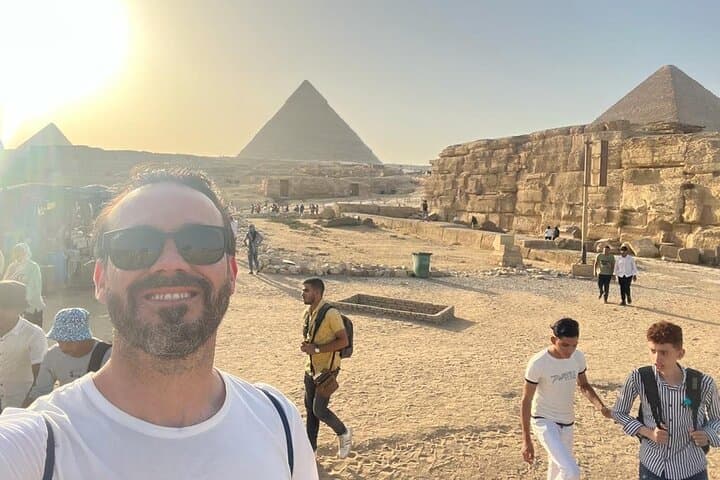
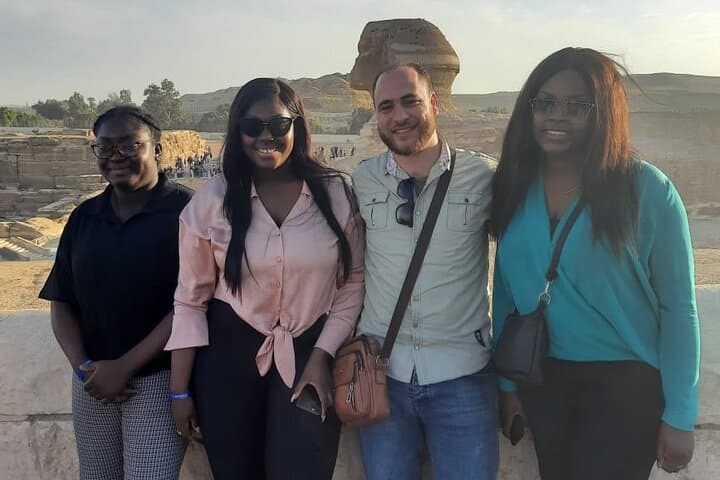
Before dawn the coach pulls out of Hurghada and the Red Sea light slips away, leaving a corridor of desert that seems to push you toward the Nile. Hours on the road transform into arrival at the Giza Plateau: three pyramids silhouette the horizon and the Sphinx watches like a patient guardian. The desert itself feels deliberate — wind-polished limestone cliffs and sand that dares you to look closer.
Before dawn the coach pulls out of Hurghada and the Red Sea light slips away, leaving a corridor of desert that seems to push you toward the Nile. Hours on the road transform into arrival at the Giza Plateau: three pyramids silhouette the horizon and the Sphinx watches like a patient guardian. The desert itself feels deliberate — wind-polished limestone cliffs and sand that dares you to look closer.
This one-day itinerary threads modern Cairo with 4,500 years of history. The Great Pyramid (ca. 2560 BCE) sits on bedrock that ancient builders leveled with geometric precision; the Sphinx retains a face long argued over by scholars. The Egyptian Museum and the new Grand Egyptian Museum curate pharaonic wealth — Tutankhamun’s treasures, colossal statues, and intricate sarcophagi — while nearby Coptic and Islamic quarters remind visitors that Cairo’s story continued in churches, mosques, and souks.
Practical guidance is blunt: expect an 18–21 hour day with long bus transfers, multiple short stops, and concentrated walking in busy sites. Bring passport and photocopy for entry, sun protection and breathable layers, comfortable closed shoes for gravel and steps, and a refillable water bottle. Plan for cash to tip guides or buy small souvenirs, and choose the Grand Egyptian Museum option if you want a more modern, less crowded museum experience. Restroom breaks are scheduled but limited; carry basic toiletries. Travel with patience — the payoff is close-up time with structures that shaped urban civilization and a sense of scale you can only get standing on the plateau.