THE ADVENTURE COLLECTIVE® · Independent discovery and booking for outdoor travel

See Cairo’s essential landmarks in a single, customizable day: the Egyptian Museum’s antiquities, Saladin’s Citadel and the lively Khan el-Khalili bazaar. Ideal for travelers who want history, architecture and market life condensed into one practical itinerary.
See Cairo’s essential landmarks in a single, customizable day: the Egyptian Museum’s antiquities, Saladin’s Citadel and the lively Khan el-Khalili bazaar. Ideal for travelers who want history, architecture and market life condensed into one practical itinerary.
You step out into a Cairo morning where stone and river argue for attention: the Citadel perches on a pale limestone spur, the Nile glints to the south, and the city’s minarets puncture the sky.
Verified experiences and guided adventures in the surrounding area.
Operated by Sunny Nile Tours · Cairo, Cairo Governorate
You step out into a Cairo morning where stone and river argue for attention: the Citadel perches on a pale limestone spur, the Nile glints to the south, and the city’s minarets puncture the sky.
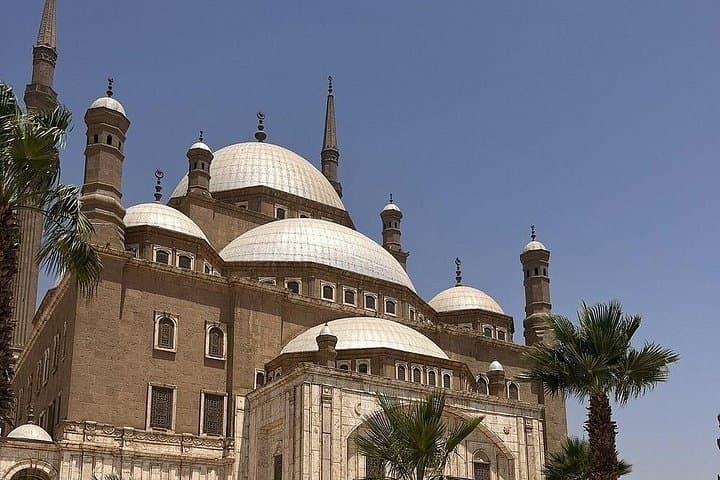
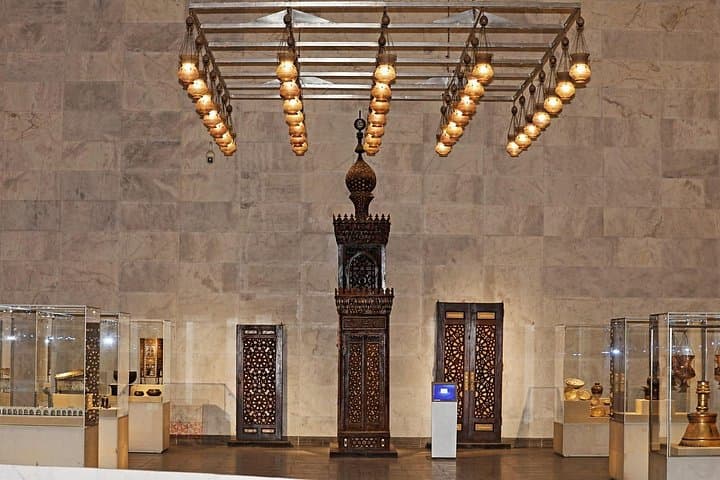
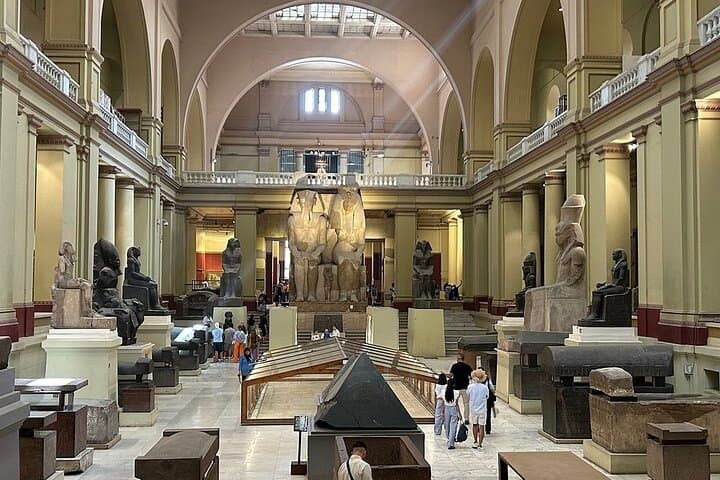
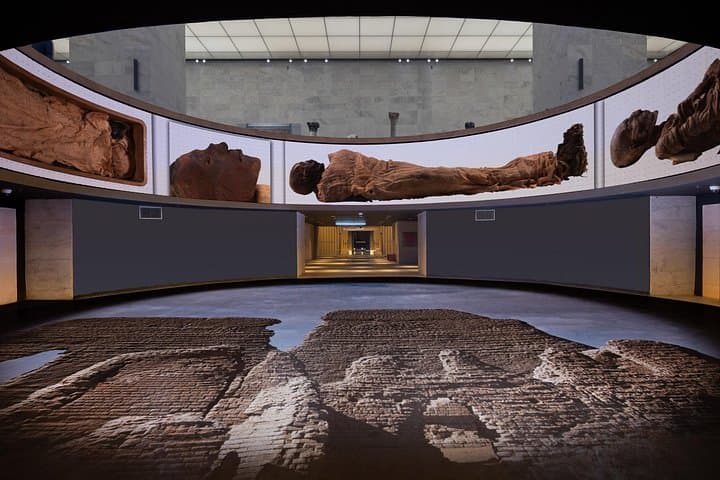
Begin at Saladin’s Citadel, where ramparts still frame wind and call to prayer; the Alabaster Mosque’s white face and oversized chandeliers give the site a theatrical calm. From there the Egyptian Museum’s dim halls collect five millennia—gold funerary masks, wooden boats and mummified monarchs that make chronology feel immediate.
Move into the market: Khan el-Khalili’s alleys are economic topography—spices, metals, and hawkers shaping a vibrant human geology. In Coptic Cairo the Hanging Church and the Church of Saints Sergius and Bacchus put Christianity’s Egyptian chapters alongside Islamic and Pharaonic layers; every neighborhood is a living palimpsest.
Practical guidance is simple: start early to avoid midday heat, choose breathable, modest clothing for religious sites, and leave room for negotiation in the bazaar. Expect cobbled and uneven surfaces at historic sites, short uphill ramps at the Citadel, and crowded lanes in Khan el-Khalili. Bring a refillable bottle, a hat, and a modest tip for your guide if they enrich the narrative.
This is a customizable, accessible day of concentrated history—museums that preserve artifacts; citadel walls that once guarded empires; markets that still trade in stories and silver. With timing and a little cultural sensitivity, the arc from tomb-room hush to market clamor becomes an efficient, unforgettable pulse of Cairo.
easy.
2–8 hours.
Suitable for most fitness levels; expect moderate walking on uneven surfaces and short stair sections at the Citadel.
The tour is customizable; advertised durations vary from a 2-hour focused visit to a full day (up to about 8 hours) depending on added stops and lunch options.
Many main sites report wheelchair-accessible routes and transport options, but older buildings may have uneven surfaces—check specific access needs when booking.
You can purchase tickets at some sites, but skip-the-line or combined-ticket options can save time; confirm whether your booking includes entrance fees.
Yes—vendors expect negotiation. Start lower than your top price and be respectful; small purchases are great practice for haggling.
The Citadel was begun by Salah al-Din (Saladin) in the 12th century as a defensive stronghold; the Egyptian Museum in Tahrir preserves pharaonic treasures collected since the early 20th century, including Tutankhamun’s burial goods.
Historic sites balance heavy visitation and preservation—use marked paths, avoid flash photography where prohibited, and reduce plastic waste by refilling bottles to protect fragile artifacts and local waterways.
Sunny Nile Tours operates guided outdoor trips and adventures with an emphasis on safety, stewardship, and memorable experiences.
You step out into a Cairo morning where stone and river argue for attention: the Citadel perches on a pale limestone spur, the Nile glints to the south, and the city’s minarets puncture the sky.
You step out into a Cairo morning where stone and river argue for attention: the Citadel perches on a pale limestone spur, the Nile glints to the south, and the city’s minarets puncture the sky.
Begin at Saladin’s Citadel, where ramparts still frame wind and call to prayer; the Alabaster Mosque’s white face and oversized chandeliers give the site a theatrical calm. From there the Egyptian Museum’s dim halls collect five millennia—gold funerary masks, wooden boats and mummified monarchs that make chronology feel immediate.
Move into the market: Khan el-Khalili’s alleys are economic topography—spices, metals, and hawkers shaping a vibrant human geology. In Coptic Cairo the Hanging Church and the Church of Saints Sergius and Bacchus put Christianity’s Egyptian chapters alongside Islamic and Pharaonic layers; every neighborhood is a living palimpsest.
Practical guidance is simple: start early to avoid midday heat, choose breathable, modest clothing for religious sites, and leave room for negotiation in the bazaar. Expect cobbled and uneven surfaces at historic sites, short uphill ramps at the Citadel, and crowded lanes in Khan el-Khalili. Bring a refillable bottle, a hat, and a modest tip for your guide if they enrich the narrative.
This is a customizable, accessible day of concentrated history—museums that preserve artifacts; citadel walls that once guarded empires; markets that still trade in stories and silver. With timing and a little cultural sensitivity, the arc from tomb-room hush to market clamor becomes an efficient, unforgettable pulse of Cairo.