THE ADVENTURE COLLECTIVE® · Independent discovery and booking for outdoor travel

See Cairo’s curated past at the Egyptian Museum of Civilization, then stand before the Great Pyramids and Sphinx on the Giza Plateau in a single guided day. This practical guide outlines what to expect, how to prepare, and where to focus your time.
See Cairo’s curated past at the Egyptian Museum of Civilization, then stand before the Great Pyramids and Sphinx on the Giza Plateau in a single guided day. This practical guide outlines what to expect, how to prepare, and where to focus your time.
The morning air in Cairo comes alive with the clatter of city traffic and the low hum of commuters, but step inside the Egyptian Museum of Civilization and the soundscape changes: quiet footsteps, the faint scent of old papyrus, and the hush that accompanies objects older than nations.
Verified experiences and guided adventures in the surrounding area.
Operated by Egypt Nice Tours · Cairo, Cairo
The morning air in Cairo comes alive with the clatter of city traffic and the low hum of commuters, but step inside the Egyptian Museum of Civilization and the soundscape changes: quiet footsteps, the faint scent of old papyrus, and the hush that accompanies objects older than nations.
This guided day tour pairs the city’s curated past at Fustat’s museum—the Mummies Hall among its crowning exhibits—with the raw, wind-sculpted presence of the Giza Plateau in the afternoon. Geologically the plateau is a nub of Eocene limestone and chert that provided the blocky canvas for Old Kingdom builders; culturally it’s where funerary ritual, astronomical alignment, and state power converged into the pyramids you’ll see today.
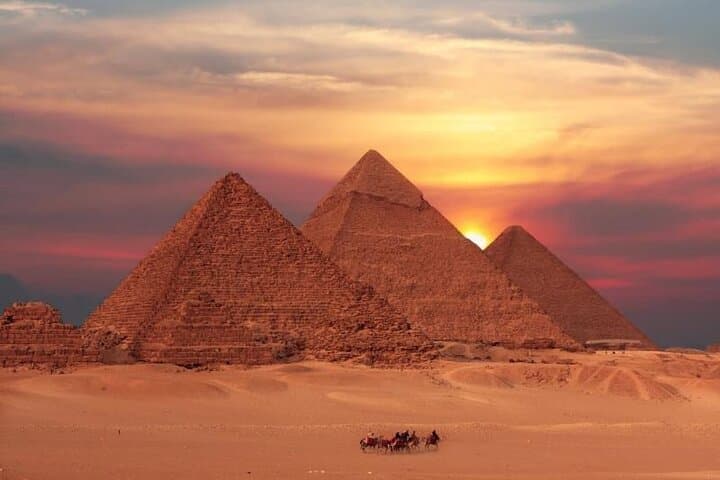
Expect clear contrasts: climate-controlled galleries displaying conservation work, then open desert terraces facing three millennia-old tombs and the Sphinx, carved from a single limestone outcrop. Local insights include the museum’s recent emphasis on contextual displays (from predynastic tools to Roman-period artifacts) and the practical reality that the plateau’s loose sand can conceal uneven footing.
Practical guidance: plan for a 4–7 hour outing with hotel transfers included, comfortable walking shoes, sun protection and a photocopy of your passport for ticketing. Most visits don’t include internal pyramid access unless prearranged, so budget extra time if you want to enter chambers. Follow your guide’s lead for crowd navigation at exhibits and keep hydrated—the desert and the city both demand it.
easy.
4–7 hours.
Suitable for most fitness levels; involves several hours of standing and short walks over uneven ground
Admission to the Egyptian Museum of Civilization and the Giza Plateau is typically not included; confirm at booking and budget extra for any internal pyramid entry.
Yes—transfers from and back to your hotel by air-conditioned vehicle are included in the tour.
Yes—infants and small children can use strollers, and the tour is rated easy for most fitness levels; expect some walking and crowds.
Internal pyramid access is usually separate and may require additional tickets and time—ask when booking to arrange it.
The Giza pyramids date to the Fourth Dynasty (c. 2600–2500 BCE) and served as monumental royal tombs; the Egyptian Museum of Civilization traces Egyptian culture from prehistoric artifacts to modern artifacts including a dedicated Mummies Hall.
Both museums and Giza’s site face conservation challenges from urban growth and tourism; visitors should avoid touching artifacts, follow paths, and support licensed guides and official visitor services.
Egypt Nice Tours operates guided outdoor trips and adventures with an emphasis on safety, stewardship, and memorable experiences.


The morning air in Cairo comes alive with the clatter of city traffic and the low hum of commuters, but step inside the Egyptian Museum of Civilization and the soundscape changes: quiet footsteps, the faint scent of old papyrus, and the hush that accompanies objects older than nations.
The morning air in Cairo comes alive with the clatter of city traffic and the low hum of commuters, but step inside the Egyptian Museum of Civilization and the soundscape changes: quiet footsteps, the faint scent of old papyrus, and the hush that accompanies objects older than nations.
This guided day tour pairs the city’s curated past at Fustat’s museum—the Mummies Hall among its crowning exhibits—with the raw, wind-sculpted presence of the Giza Plateau in the afternoon. Geologically the plateau is a nub of Eocene limestone and chert that provided the blocky canvas for Old Kingdom builders; culturally it’s where funerary ritual, astronomical alignment, and state power converged into the pyramids you’ll see today.
Expect clear contrasts: climate-controlled galleries displaying conservation work, then open desert terraces facing three millennia-old tombs and the Sphinx, carved from a single limestone outcrop. Local insights include the museum’s recent emphasis on contextual displays (from predynastic tools to Roman-period artifacts) and the practical reality that the plateau’s loose sand can conceal uneven footing.
Practical guidance: plan for a 4–7 hour outing with hotel transfers included, comfortable walking shoes, sun protection and a photocopy of your passport for ticketing. Most visits don’t include internal pyramid access unless prearranged, so budget extra time if you want to enter chambers. Follow your guide’s lead for crowd navigation at exhibits and keep hydrated—the desert and the city both demand it.