THE ADVENTURE COLLECTIVE® · Independent discovery and booking for outdoor travel

Spend a single, focused day with an Egyptologist to stand beneath the Great Pyramid, study the Sphinx, and explore the Egyptian Museum’s Tutankhamun collection. This guided tour blends geology, history, and practical logistics for travelers who want an efficient, informative visit.
Spend a single, focused day with an Egyptologist to stand beneath the Great Pyramid, study the Sphinx, and explore the Egyptian Museum’s Tutankhamun collection. This guided tour blends geology, history, and practical logistics for travelers who want an efficient, informative visit.
Dust from the plateau lifts as the minibus draws close and the Great Pyramid first appears—square and patient against a pale blue sky. The desert around Giza dares you to move closer; wind nudges fine sand against stone and every angle reveals workmanship older than recorded memory.
Verified experiences and guided adventures in the surrounding area.
Operated by Egypt Excursions Online · Giza, Cairo Governorate
Dust from the plateau lifts as the minibus draws close and the Great Pyramid first appears—square and patient against a pale blue sky. The desert around Giza dares you to move closer; wind nudges fine sand against stone and every angle reveals workmanship older than recorded memory.
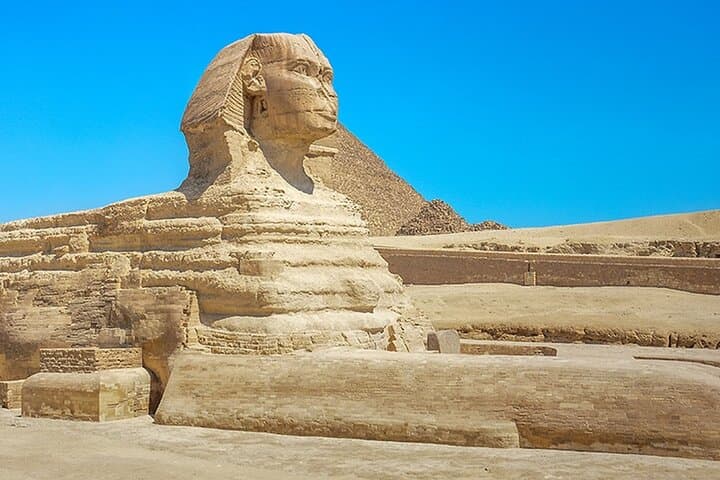
This one-day guided circuit pairs the geology of the Giza Plateau—limestone bedrock and quarried blocks—with deep cultural layers: dynastic Egypt’s burial rites, the Sphinx’s debated origins, and the Egyptian Museum’s catalog of millennia, including Tutankhamun’s find. The Pyramids were engineered from local stone and sit where the Nile’s annual floodplain once fed a dense population; nearby Cairo later became the region’s political and cultural hub.
Guides typically weave archaeology with social history—telling of pharaohs, 19th-century explorers, and modern conservation challenges—while pointing out sightlines across the plateau and the museum’s standout objects.
Practically, expect 5–6 hours on tour, modest walking on packed sand and paved museum floors, and repeated sun exposure. Bring water, sun protection, and comfortable shoes. If you choose the option with admissions and lunch, timing is relaxed and queues are minimized; shared tours are budget-friendly but less flexible.
Photography is straightforward outside; interior pyramid access changes by policy and often requires extra tickets. Respect restricted areas, follow your Egyptologist’s directions, and budget extra time for Cairo traffic if your schedule is tight. The day delivers a concentrated primer in ancient engineering and museum-grade archaeology—accessible, sensory, and undeniably grounded in place.
easy.
5–6 hours.
Suitable for travelers in light to moderate fitness who can walk on uneven ground for short periods
Some tour options include entrance fees for the Pyramids and Egyptian Museum; select the option with admissions if you want tickets handled in advance.
Interior access varies by policy and often requires separate tickets—ask before booking if interior entry is important.
The tour involves uneven, sandy surfaces and some steps; it’s generally suitable for those with light mobility limitations but not recommended for travelers unable to walk short distances.
Tipping guides and drivers is customary; small amounts in Egyptian pounds or USD are commonly accepted and appreciated.
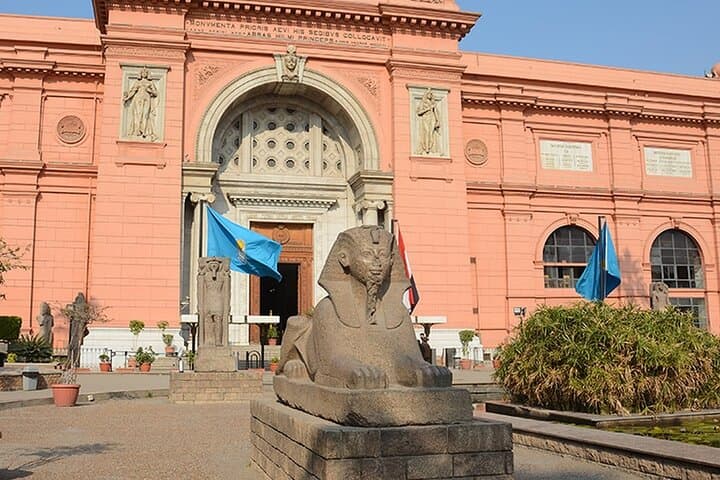
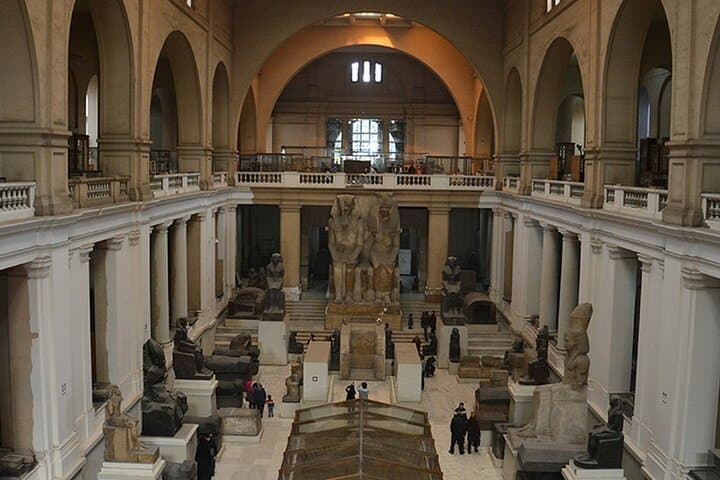
The Giza Plateau holds Fourth Dynasty pyramids built ~4,500 years ago; the Egyptian Museum in Cairo preserves millennia of artifacts, including Tutankhamun’s treasures recovered in 1922.
Visitor pressure and urban pollution stress ancient stone; follow route guidance, avoid touching surfaces, and support licensed guides and local conservation initiatives.
Egypt Excursions Online operates guided outdoor trips and adventures with an emphasis on safety, stewardship, and memorable experiences.
Dust from the plateau lifts as the minibus draws close and the Great Pyramid first appears—square and patient against a pale blue sky. The desert around Giza dares you to move closer; wind nudges fine sand against stone and every angle reveals workmanship older than recorded memory.
Dust from the plateau lifts as the minibus draws close and the Great Pyramid first appears—square and patient against a pale blue sky. The desert around Giza dares you to move closer; wind nudges fine sand against stone and every angle reveals workmanship older than recorded memory.
This one-day guided circuit pairs the geology of the Giza Plateau—limestone bedrock and quarried blocks—with deep cultural layers: dynastic Egypt’s burial rites, the Sphinx’s debated origins, and the Egyptian Museum’s catalog of millennia, including Tutankhamun’s find. The Pyramids were engineered from local stone and sit where the Nile’s annual floodplain once fed a dense population; nearby Cairo later became the region’s political and cultural hub.
Guides typically weave archaeology with social history—telling of pharaohs, 19th-century explorers, and modern conservation challenges—while pointing out sightlines across the plateau and the museum’s standout objects.
Practically, expect 5–6 hours on tour, modest walking on packed sand and paved museum floors, and repeated sun exposure. Bring water, sun protection, and comfortable shoes. If you choose the option with admissions and lunch, timing is relaxed and queues are minimized; shared tours are budget-friendly but less flexible.
Photography is straightforward outside; interior pyramid access changes by policy and often requires extra tickets. Respect restricted areas, follow your Egyptologist’s directions, and budget extra time for Cairo traffic if your schedule is tight. The day delivers a concentrated primer in ancient engineering and museum-grade archaeology—accessible, sensory, and undeniably grounded in place.