THE ADVENTURE COLLECTIVE® · Independent discovery and booking for outdoor travel

A full-day coach tour from Hurghada delivers Cairo’s headline antiquities in one long, intense day: the Giza pyramids and Sphinx, Tutankhamen’s mask at the Egyptian Museum, plus a guided walk and lunch. Expect long bus transfers, uneven walking surfaces, and crowded sites — but expert context from an Egyptologist.
A full-day coach tour from Hurghada delivers Cairo’s headline antiquities in one long, intense day: the Giza pyramids and Sphinx, Tutankhamen’s mask at the Egyptian Museum, plus a guided walk and lunch. Expect long bus transfers, uneven walking surfaces, and crowded sites — but expert context from an Egyptologist.
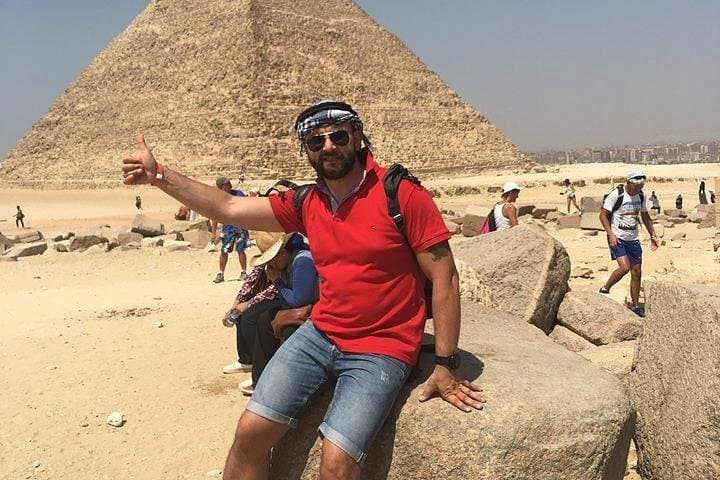
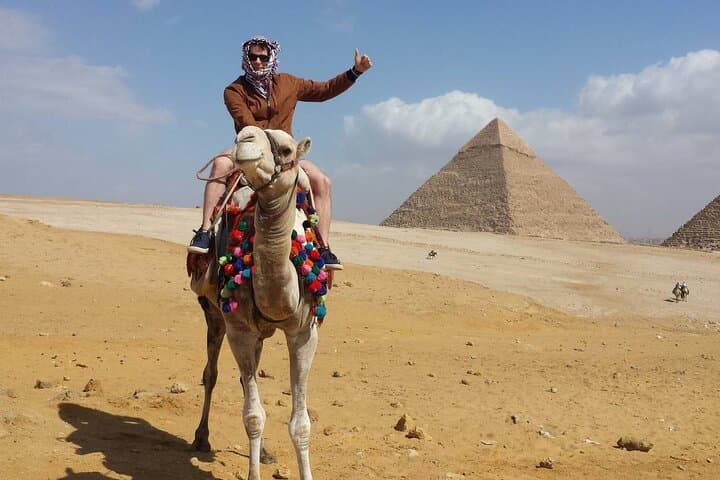
You arrive before sunrise after a long coastal drive; the desert flattens and the Pyramids of Giza silhouette against a pearly sky. The day stretches like the open road that delivered you, and the plateau’s stones seem to hold a slow, deliberate memory — the pyramids daring you to register their scale.
Verified experiences and guided adventures in the surrounding area.
Operated by Charming Egypt Tours · Cairo, Cairo Governorate
You arrive before sunrise after a long coastal drive; the desert flattens and the Pyramids of Giza silhouette against a pearly sky. The day stretches like the open road that delivered you, and the plateau’s stones seem to hold a slow, deliberate memory — the pyramids daring you to register their scale.
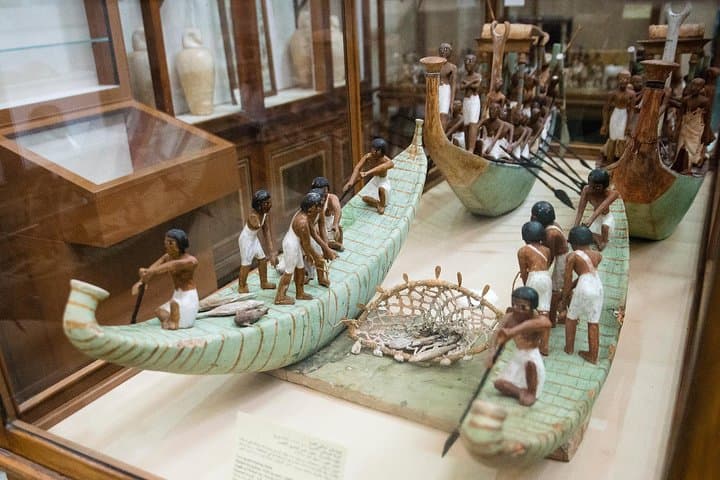
An Egyptologist leads the route through layers of history: the Giza plateau where Khufu, Khafre and Menkaure rose from bedrock; the nearby Solar Boat Museum that preserves a votive vessel; then the Egyptian Museum in Tahrir, a dense vault of sarcophagi and Tutankhamen’s gold mask. Geologically the plateau is limestone laid down in shallow seas, its exposed beds scoured by wind and human hands for millennia. Culturally the day trades coastal resort calm for a frenetic Cairo: hawkers, minarets and bazaar alleys that have shifted with every era of rule.
Practicalities shape the rhythm: expect roughly five hours each way by air-conditioned coach, about 6–8 hours on location with walking on uneven stone, tight crowds and photo stops. Lunch is included at an oriental restaurant; admissions often require separate tickets — carry local currency. Hydration, sun protection and comfortable shoes make the difference between being photo-ready and exhausted. Timing matters: morning light for the pyramids, afternoon for the museum. When the bus starts the return, you’ll have a quiet window to collect the day into memory — and a long ride to rest tired feet.
easy.
14–15 hours.
Suitable for travelers with basic fitness — must handle long seated transfers and several hours of walking on uneven ground.
The air-conditioned bus ride is roughly five hours one way, depending on traffic and stops along the Red Sea coast.
The tour inclusions list lunch, pickup and an Egyptologist guide; entrance fees are commonly paid separately on site — check with the operator before booking.
Yes — the operator notes infants must sit on laps and infant seats are available; children must be accompanied by an adult and child rates apply when sharing with two paying adults.
Yes — the itinerary typically includes free time at bazaars such as Khan el-Khalili for shopping after the museum visit before the return to Hurghada.
The Giza pyramids date to the Fourth Dynasty (c. 2600–2500 BCE) and the Egyptian Museum houses thousands of artifacts spanning millennia, including Tutankhamen’s funerary treasures.
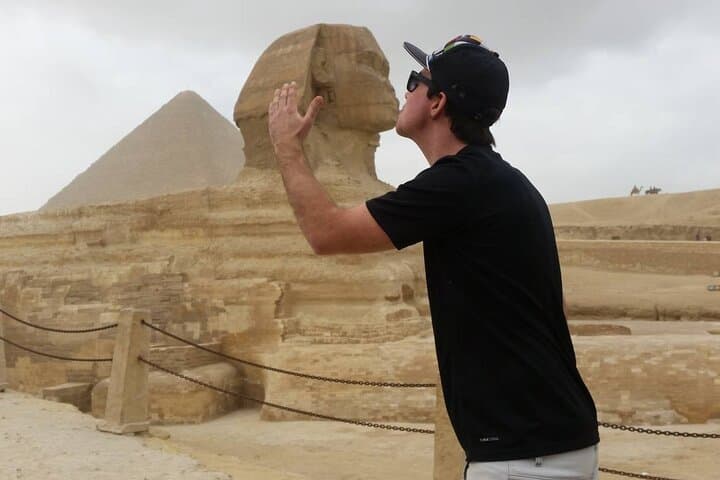
The Giza plateau restricts climbing and limits certain activities to protect ancient stone; visitors should avoid touching monuments and reduce plastic waste to lessen impacts.
Charming Egypt Tours operates guided outdoor trips and adventures with an emphasis on safety, stewardship, and memorable experiences.
You arrive before sunrise after a long coastal drive; the desert flattens and the Pyramids of Giza silhouette against a pearly sky. The day stretches like the open road that delivered you, and the plateau’s stones seem to hold a slow, deliberate memory — the pyramids daring you to register their scale.
You arrive before sunrise after a long coastal drive; the desert flattens and the Pyramids of Giza silhouette against a pearly sky. The day stretches like the open road that delivered you, and the plateau’s stones seem to hold a slow, deliberate memory — the pyramids daring you to register their scale.
An Egyptologist leads the route through layers of history: the Giza plateau where Khufu, Khafre and Menkaure rose from bedrock; the nearby Solar Boat Museum that preserves a votive vessel; then the Egyptian Museum in Tahrir, a dense vault of sarcophagi and Tutankhamen’s gold mask. Geologically the plateau is limestone laid down in shallow seas, its exposed beds scoured by wind and human hands for millennia. Culturally the day trades coastal resort calm for a frenetic Cairo: hawkers, minarets and bazaar alleys that have shifted with every era of rule.
Practicalities shape the rhythm: expect roughly five hours each way by air-conditioned coach, about 6–8 hours on location with walking on uneven stone, tight crowds and photo stops. Lunch is included at an oriental restaurant; admissions often require separate tickets — carry local currency. Hydration, sun protection and comfortable shoes make the difference between being photo-ready and exhausted. Timing matters: morning light for the pyramids, afternoon for the museum. When the bus starts the return, you’ll have a quiet window to collect the day into memory — and a long ride to rest tired feet.