THE ADVENTURE COLLECTIVE® · Independent discovery and booking for outdoor travel

A long, early day that pairs the Egyptian Museum’s monumental collections with the raw scale of the Giza Plateau. Expect museum galleries, a papyrus workshop and up-close views of the Great Pyramid and Sphinx, with an air‑conditioned transfer from Hurghada.
A long, early day that pairs the Egyptian Museum’s monumental collections with the raw scale of the Giza Plateau. Expect museum galleries, a papyrus workshop and up-close views of the Great Pyramid and Sphinx, with an air‑conditioned transfer from Hurghada.
Early before dawn the coach peels out of Hurghada and the road unfurls across Sinai’s flat light toward Cairo — a city that breathes history and noise in equal measure. Arriving at Tahrir Square, visitors step into the Egyptian Museum’s hushed halls where carved stone and gold artifacts hold the weight of millennia; light falls across painted coffins and the silent gaze of funerary masks.
Verified experiences and guided adventures in the surrounding area.
Operated by GetYourTrip Egypt · Cairo, Cairo Governorate
Early before dawn the coach peels out of Hurghada and the road unfurls across Sinai’s flat light toward Cairo — a city that breathes history and noise in equal measure. Arriving at Tahrir Square, visitors step into the Egyptian Museum’s hushed halls where carved stone and gold artifacts hold the weight of millennia; light falls across painted coffins and the silent gaze of funerary masks.
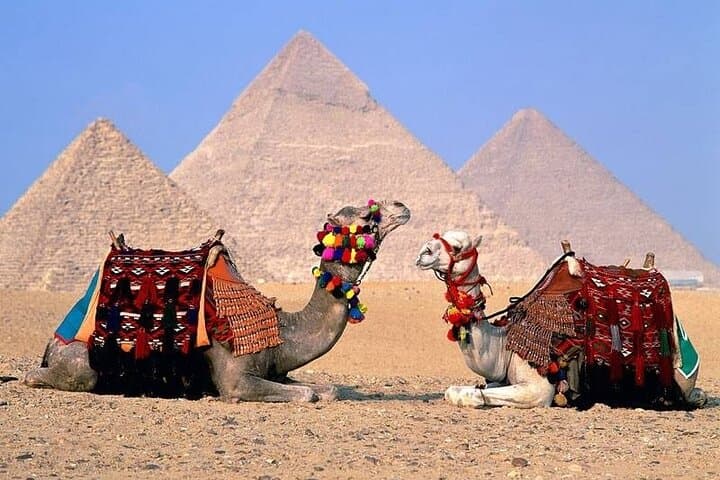
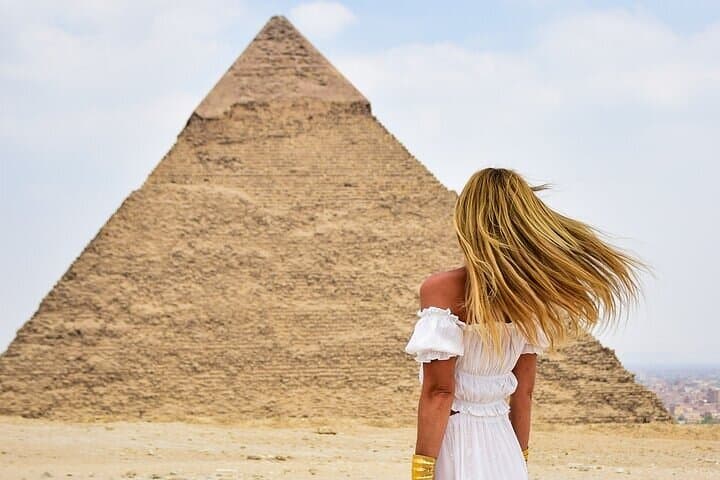
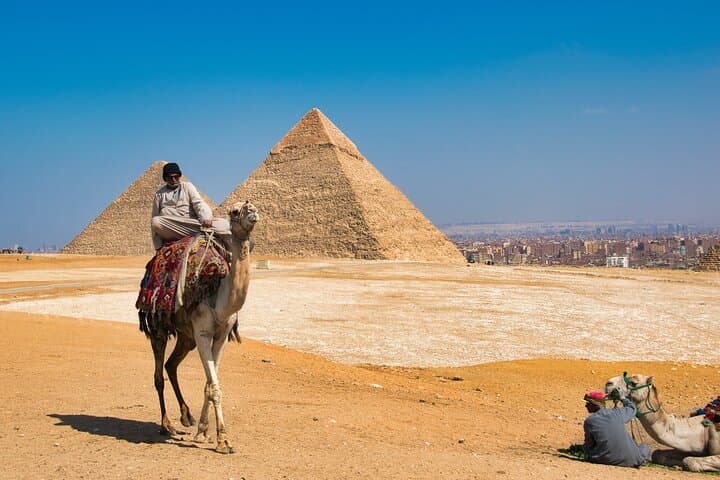
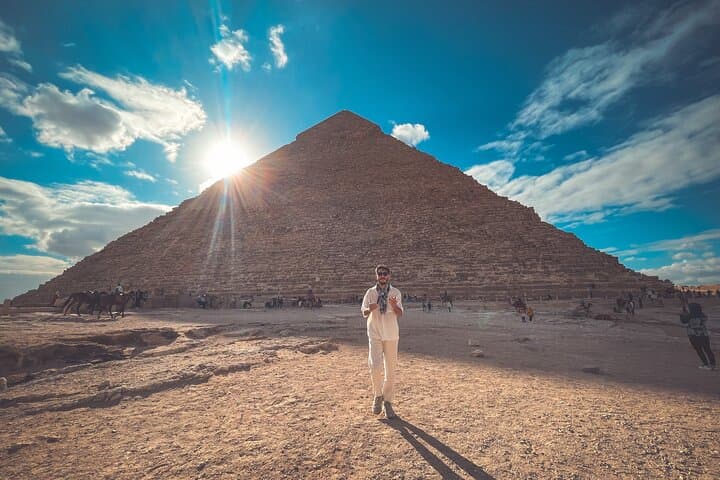
Later the tour drifts west to the Giza Plateau. The limestone faces of the Great Pyramid shoulder the sun, geological layers exposed like pages of an ancient ledger; the Sphinx watches across the baked sand with a lion’s patience. Along the way a stop at a papyrus shop explains how reeds from the Nile were pressed and painted to record kings, prayers and daily life.
This day combines archaeology, urban culture and a long, scenic transfer: the Museum reveals museum-grade collections and curatorial history, while Giza offers open-air encounters with colossal stonework, desert geology and craft traditions. Travelers should expect a full, structured day with museum time, photo stops and a guided plateau walk.
Practical guidance: wear sturdy shoes for uneven stone and packed sand, carry sun protection and water, and plan for a very early start and a late return to Hurghada. Photographic flash rules and museum queues vary — follow your guide for the fastest route through the highlights and to respect fragile sites.
easy.
17–18 hours.
Suitable for most travelers with basic mobility; must be able to board a coach and walk short to moderate distances on uneven ground.
The tour notes that entrance tickets for the Egyptian Museum and Giza Plateau are included, but access to enter internal pyramid chambers may require an additional fee and is subject to availability.
Yes — shared tours normally include hotel pickup from Hurghada; you’ll confirm a pickup point when booking and should be ready at the scheduled time.
Expect roughly 4–5 hours one way by air‑conditioned coach depending on traffic and stops, which is why the full day runs about 17–18 hours total.
Local currency is the Egyptian pound (EGP); tipping guides and drivers is customary—carry small notes for gratuities and small purchases.
The Giza pyramids date to the Fourth Dynasty (c. 2560–2540 BCE), and the Egyptian Museum’s collections trace formal archaeology and collecting from the 19th and early 20th centuries.
Heavy visitor numbers stress fragile stone surfaces and museum interiors; stick to walkways, avoid touching artifacts and support accredited local museums and guides to help preserve sites.
GetYourTrip Egypt operates guided outdoor trips and adventures with an emphasis on safety, stewardship, and memorable experiences.
Early before dawn the coach peels out of Hurghada and the road unfurls across Sinai’s flat light toward Cairo — a city that breathes history and noise in equal measure. Arriving at Tahrir Square, visitors step into the Egyptian Museum’s hushed halls where carved stone and gold artifacts hold the weight of millennia; light falls across painted coffins and the silent gaze of funerary masks.
Early before dawn the coach peels out of Hurghada and the road unfurls across Sinai’s flat light toward Cairo — a city that breathes history and noise in equal measure. Arriving at Tahrir Square, visitors step into the Egyptian Museum’s hushed halls where carved stone and gold artifacts hold the weight of millennia; light falls across painted coffins and the silent gaze of funerary masks.
Later the tour drifts west to the Giza Plateau. The limestone faces of the Great Pyramid shoulder the sun, geological layers exposed like pages of an ancient ledger; the Sphinx watches across the baked sand with a lion’s patience. Along the way a stop at a papyrus shop explains how reeds from the Nile were pressed and painted to record kings, prayers and daily life.
This day combines archaeology, urban culture and a long, scenic transfer: the Museum reveals museum-grade collections and curatorial history, while Giza offers open-air encounters with colossal stonework, desert geology and craft traditions. Travelers should expect a full, structured day with museum time, photo stops and a guided plateau walk.
Practical guidance: wear sturdy shoes for uneven stone and packed sand, carry sun protection and water, and plan for a very early start and a late return to Hurghada. Photographic flash rules and museum queues vary — follow your guide for the fastest route through the highlights and to respect fragile sites.