THE ADVENTURE COLLECTIVE® · Independent discovery and booking for outdoor travel

Ride a camel beside the pyramids, stand face-to-face with the Sphinx and browse the bustling Khan el-Khalili on a full-day private tour of Cairo. This itinerary combines the Giza plateau, the Egyptian Museum’s pharaonic treasures and a hands-on market experience.
Ride a camel beside the pyramids, stand face-to-face with the Sphinx and browse the bustling Khan el-Khalili on a full-day private tour of Cairo. This itinerary combines the Giza plateau, the Egyptian Museum’s pharaonic treasures and a hands-on market experience.
You step from the air-conditioned vehicle into a sun-forged sweep of sand where the Great Pyramid rises like an engineered mountain. Wind pulls at your scarf; the desert seems to dare you to cross a few ancient steps. A camel bell clicks, and the plateau opens to broad sightlines that let you feel the scale of monuments older than most written histories.
Verified experiences and guided adventures in the surrounding area.
You step from the air-conditioned vehicle into a sun-forged sweep of sand where the Great Pyramid rises like an engineered mountain. Wind pulls at your scarf; the desert seems to dare you to cross a few ancient steps. A camel bell clicks, and the plateau opens to broad sightlines that let you feel the scale of monuments older than most written histories.
This loop of Cairo pairs the Giza necropolis—limestone bedrock sculpted into royal tombs around 4,500 years ago—with the city’s dense, living history. The Valley Temple’s dressed stone and the Sphinx’s weathered face reveal geology and ritual engineering. At the Egyptian Museum, 19th- and 20th-century excavations brought pharaonic wealth into glass cases: gold masks, coffins, and the fragile linen of mummies. Later, Khan el-Khalili throws you into a different current—metalworkers, spice stalls and bargaining etiquette that evolved over centuries of trade.
Expect at least eight hours on the move: walking across uneven sand, climbing short ramps, and navigating crowded market alleys. Practical notes—start early to avoid midday heat, carry plenty of water, and wear closed, grippy shoes for loose sand and stone. Photography rules and entry fees vary by site; verify what’s included in your booking and keep cash for small purchases and tips.
The day mixes sensory extremes—dry, bright plateau vistas and the cool, dim museum halls—so pace yourself. A private guide will stitch context to each stop, turning fragments of stone and glass into stories you can follow as you move through more than four millennia of human ambition.
moderate.
8 hours.
Moderately fit—able to walk several miles across uneven stone and sand with short climbs.
This is a full-day private tour—approximately eight hours including transfers, site time and lunch.
Inclusions vary by operator; many private tours include entrance fees, a camel ride and lunch but always check the booking details before you go.
Photography policies change—some rooms permit non-flash photography while others are restricted; your guide can confirm current rules on the day.
Accessibility is limited at Giza due to sand and stepped areas; the Egyptian Museum has ramps, but check with the operator for tailored arrangements.
The Giza pyramids date to the Fourth Dynasty (c. 2600–2500 BCE); the Egyptian Museum (opened 1902) houses artifacts from millennia of Egyptian civilization, including Tutankhamun’s collection.
High visitation and urban air pollution pose risks to ancient stone and fragile artifacts; support guides and operators who follow site rules and avoid touching monuments.
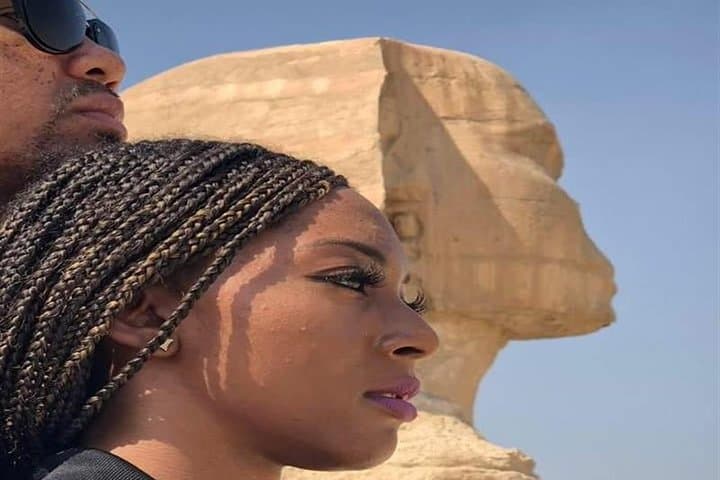
You step from the air-conditioned vehicle into a sun-forged sweep of sand where the Great Pyramid rises like an engineered mountain. Wind pulls at your scarf; the desert seems to dare you to cross a few ancient steps. A camel bell clicks, and the plateau opens to broad sightlines that let you feel the scale of monuments older than most written histories.
You step from the air-conditioned vehicle into a sun-forged sweep of sand where the Great Pyramid rises like an engineered mountain. Wind pulls at your scarf; the desert seems to dare you to cross a few ancient steps. A camel bell clicks, and the plateau opens to broad sightlines that let you feel the scale of monuments older than most written histories.
This loop of Cairo pairs the Giza necropolis—limestone bedrock sculpted into royal tombs around 4,500 years ago—with the city’s dense, living history. The Valley Temple’s dressed stone and the Sphinx’s weathered face reveal geology and ritual engineering. At the Egyptian Museum, 19th- and 20th-century excavations brought pharaonic wealth into glass cases: gold masks, coffins, and the fragile linen of mummies. Later, Khan el-Khalili throws you into a different current—metalworkers, spice stalls and bargaining etiquette that evolved over centuries of trade.
Expect at least eight hours on the move: walking across uneven sand, climbing short ramps, and navigating crowded market alleys. Practical notes—start early to avoid midday heat, carry plenty of water, and wear closed, grippy shoes for loose sand and stone. Photography rules and entry fees vary by site; verify what’s included in your booking and keep cash for small purchases and tips.
The day mixes sensory extremes—dry, bright plateau vistas and the cool, dim museum halls—so pace yourself. A private guide will stitch context to each stop, turning fragments of stone and glass into stories you can follow as you move through more than four millennia of human ambition.