THE ADVENTURE COLLECTIVE® · Independent discovery and booking for outdoor travel

Make the long haul from Hurghada to Cairo in one action‑packed day: ancient treasures at the Egyptian Museum and the monumental Giza Plateau. This guided tour pairs concentrated history with practical tips for a full, long day on the road.
Make the long haul from Hurghada to Cairo in one action‑packed day: ancient treasures at the Egyptian Museum and the monumental Giza Plateau. This guided tour pairs concentrated history with practical tips for a full, long day on the road.
You arrive before dawn, highway lights sliding past the coach windows while the desert loosens its hold and Cairo's skyline grows behind a haze of dust and traffic. By midmorning you step into a cool museum gallery where gold glints under careful lighting; by afternoon the Giza Plateau spreads under a high, dry sun—stone blocks older than most maps of civilization, daring you to measure time by shadow instead of seconds.
Verified experiences and guided adventures in the surrounding area.
Operated by ZExcursion · Giza, Giza Governorate
You arrive before dawn, highway lights sliding past the coach windows while the desert loosens its hold and Cairo's skyline grows behind a haze of dust and traffic. By midmorning you step into a cool museum gallery where gold glints under careful lighting; by afternoon the Giza Plateau spreads under a high, dry sun—stone blocks older than most maps of civilization, daring you to measure time by shadow instead of seconds.
The Egyptian Museum in Tahrir Square holds artifacts from millennia of Nile‑fed civilization, including the famed funerary mask of Tutankhamen and carefully wrapped mummies. Geologically, the Giza Plateau is a natural limestone outcrop quarried by ancient engineers who understood how to stack weight and angle for millennia of survival. Culturally, the pyramids and the Sphinx are anchors of national identity—sites of pharaonic power, later Arab and Ottoman histories, and modern archaeological debate.
Practical guidance: this is a long, guided day—expect early pickup from Hurghada, extended road time (or a short flight depending on operator), and several hours on your feet across uneven, sandy terrain. Wear sturdy closed shoes, sun protection, and bring cash for tipping and optional extras like camel rides. Hydrate before and during the day; bottled water is included but refill options in summer are limited.
Timing matters: mornings are best for museum visits when galleries are less crowded; late afternoon brings softer light on the pyramids but declining temperatures. Respect signage: climbing on monuments is prohibited. With basic planning this intensive day delivers two of Egypt's must‑see sites in one sweep—high impact, long day, unforgettable context for the Bronze Age world.
easy.
16–18 hours.
Suitable for travelers in average fitness who can handle a long day with walking on uneven ground and several staircases.
Road transfers can take roughly 6–7 hours each way; some operators use early flights which shorten travel time—check your booking details.
This tour includes admission to the Egyptian Museum and the Giza complex as stated; optional extras like camel rides are not included.
The itinerary is physically easy but long; infants are accommodated, but travelers with spinal, heart, or pregnancy restrictions should consult the operator.
Access inside certain pyramids is limited and may require additional tickets or restrictions; confirm with the guide on the day of travel.
The Giza pyramids date to Egypt’s Fourth Dynasty (c. 2600–2500 BCE) and reflect advanced limestone quarrying and alignment practices; the museum catalogs items spanning prehistoric to Greco‑Roman Egypt.
Site management balances tourism with preservation; avoid touching surfaces, heed barriers, and follow guide directions to limit wear on ancient stone.
ZExcursion operates guided outdoor trips and adventures with an emphasis on safety, stewardship, and memorable experiences.


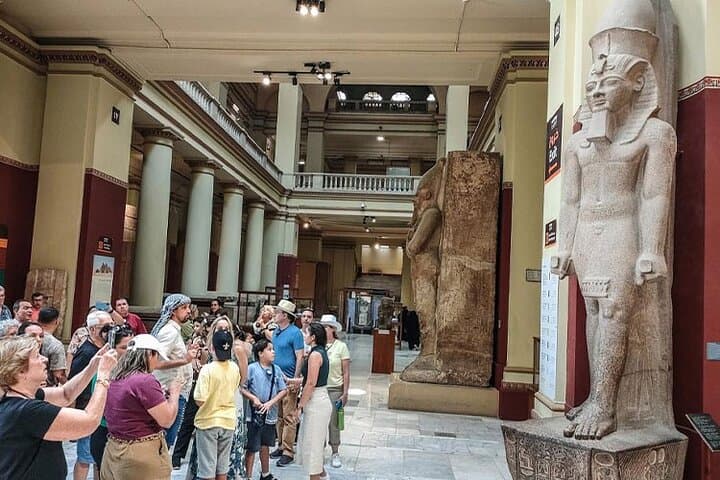
You arrive before dawn, highway lights sliding past the coach windows while the desert loosens its hold and Cairo's skyline grows behind a haze of dust and traffic. By midmorning you step into a cool museum gallery where gold glints under careful lighting; by afternoon the Giza Plateau spreads under a high, dry sun—stone blocks older than most maps of civilization, daring you to measure time by shadow instead of seconds.
You arrive before dawn, highway lights sliding past the coach windows while the desert loosens its hold and Cairo's skyline grows behind a haze of dust and traffic. By midmorning you step into a cool museum gallery where gold glints under careful lighting; by afternoon the Giza Plateau spreads under a high, dry sun—stone blocks older than most maps of civilization, daring you to measure time by shadow instead of seconds.
The Egyptian Museum in Tahrir Square holds artifacts from millennia of Nile‑fed civilization, including the famed funerary mask of Tutankhamen and carefully wrapped mummies. Geologically, the Giza Plateau is a natural limestone outcrop quarried by ancient engineers who understood how to stack weight and angle for millennia of survival. Culturally, the pyramids and the Sphinx are anchors of national identity—sites of pharaonic power, later Arab and Ottoman histories, and modern archaeological debate.
Practical guidance: this is a long, guided day—expect early pickup from Hurghada, extended road time (or a short flight depending on operator), and several hours on your feet across uneven, sandy terrain. Wear sturdy closed shoes, sun protection, and bring cash for tipping and optional extras like camel rides. Hydrate before and during the day; bottled water is included but refill options in summer are limited.
Timing matters: mornings are best for museum visits when galleries are less crowded; late afternoon brings softer light on the pyramids but declining temperatures. Respect signage: climbing on monuments is prohibited. With basic planning this intensive day delivers two of Egypt's must‑see sites in one sweep—high impact, long day, unforgettable context for the Bronze Age world.