THE ADVENTURE COLLECTIVE® · Independent discovery and booking for outdoor travel

Spend a compact day moving through Cairo’s religious and historic cores—from the sweeping Citadel and Mohamed Ali Mosque to Old Cairo’s churches and synagogue, finishing in the bustling Khan el-Khalili bazaar. This private, air-conditioned tour combines accessible walking with focused cultural context.
Spend a compact day moving through Cairo’s religious and historic cores—from the sweeping Citadel and Mohamed Ali Mosque to Old Cairo’s churches and synagogue, finishing in the bustling Khan el-Khalili bazaar. This private, air-conditioned tour combines accessible walking with focused cultural context.
You arrive on a warm morning and the Citadel of Saladin rises on the Moqattam ridge, white domes and minarets cutting a precise silhouette against Cairo’s low-rise sprawl. From the Citadel terrace the city unfolds toward the Nile; the air carries cardamom and diesel, and the mosque’s alabaster gleams under the sun.
Verified experiences and guided adventures in the surrounding area.
Operated by Egypt Super Tours · Cairo, Cairo
You arrive on a warm morning and the Citadel of Saladin rises on the Moqattam ridge, white domes and minarets cutting a precise silhouette against Cairo’s low-rise sprawl. From the Citadel terrace the city unfolds toward the Nile; the air carries cardamom and diesel, and the mosque’s alabaster gleams under the sun.
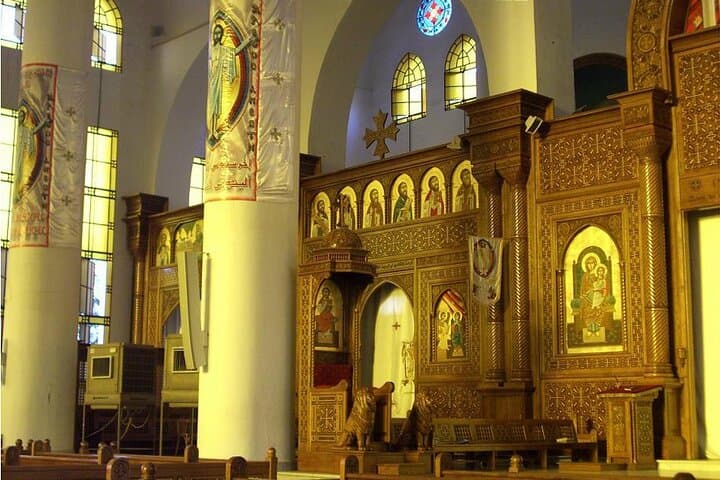
The route threads time: a 12th-century fortress built to repel Crusaders, Mohamed Ali’s 19th-century Ottoman-influenced marble mosque, the layered streets of Old Cairo where the Hanging Church sits over Roman walls, and the centuries-old Ben Ezra Synagogue that marks a long Jewish presence. Geology shows in the urban topography—the Moqattam limestone ridge that made the Citadel a defensible perch, and the Nile’s floodplain where Fustat, Cairo’s earliest Islamic capital, first took root.
Expect a practical cultural day: roughly six hours, guided, with A/C transfers. Entrance fees are typically paid on-site; wear comfortable shoes for stone steps and uneven courtyards. The Khan el-Khalili market finishes the loop—lanes of copper shops and spice stalls where bargaining is normal and staying hydrated matters.
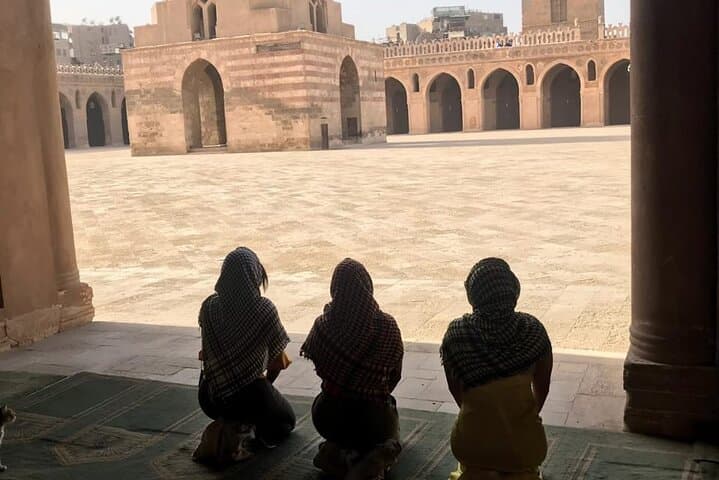
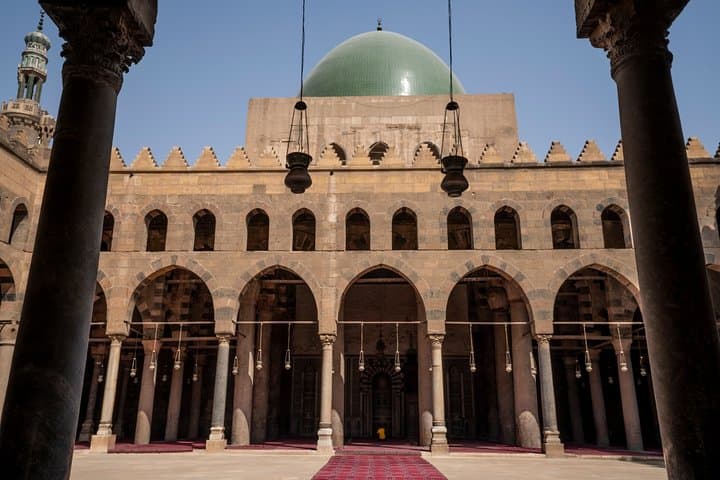
Bring a light layer for mosque visits and be ready to remove shoes; modest dress is required in religious sites. The tour balances walking with short drives, so it’s accessible for most travelers but involves stairs and cobbled alleys. Arrive early to avoid midday heat, and leave time to observe daily life—street vendors, prayer calls, and the Nile’s steady pull as you move through Cairo’s complex, living history.
easy.
6 hours.
Suitable for most fitness levels; involves walking on uneven stone, stairs, and short city walks.
Entrance fees to monuments are typically paid on-site and are not included in the base tour price; the guide can advise on current rates and card acceptance.
The tour notes wheelchair accessibility for transfers, but some historic sites have stairs and uneven surfaces—check specific site access with the operator before booking.
Tipping is customary in Egypt; a modest tip for the guide and driver is appreciated—your guide can suggest appropriate amounts.
The tour is private and often flexible; contact the operator in advance to request adjustments or additional language support (extra charges may apply).
Cairo grew from the early Islamic capital of Fustat and later Fatimid and Ayyubid layers; the Citadel was built by Sultan Saladin in the late 12th century to secure the city.
Historic sites face wear from heavy visitor numbers—stick to marked paths, avoid touching delicate surfaces, and support conservation by buying from licensed vendors.
Egypt Super Tours operates guided outdoor trips and adventures with an emphasis on safety, stewardship, and memorable experiences.
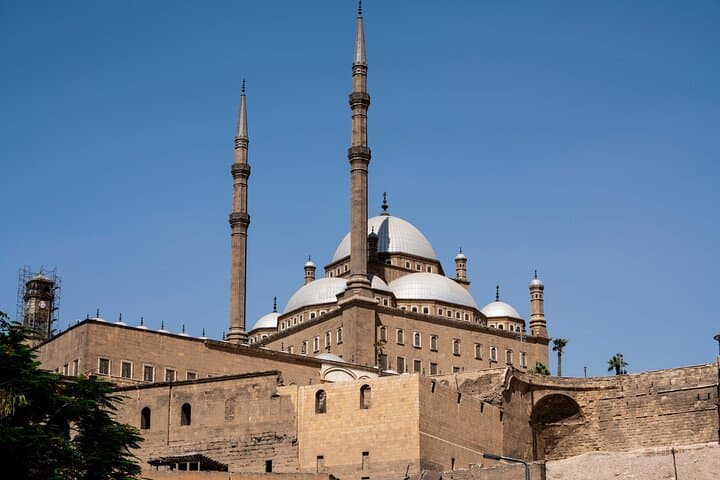
You arrive on a warm morning and the Citadel of Saladin rises on the Moqattam ridge, white domes and minarets cutting a precise silhouette against Cairo’s low-rise sprawl. From the Citadel terrace the city unfolds toward the Nile; the air carries cardamom and diesel, and the mosque’s alabaster gleams under the sun.
You arrive on a warm morning and the Citadel of Saladin rises on the Moqattam ridge, white domes and minarets cutting a precise silhouette against Cairo’s low-rise sprawl. From the Citadel terrace the city unfolds toward the Nile; the air carries cardamom and diesel, and the mosque’s alabaster gleams under the sun.
The route threads time: a 12th-century fortress built to repel Crusaders, Mohamed Ali’s 19th-century Ottoman-influenced marble mosque, the layered streets of Old Cairo where the Hanging Church sits over Roman walls, and the centuries-old Ben Ezra Synagogue that marks a long Jewish presence. Geology shows in the urban topography—the Moqattam limestone ridge that made the Citadel a defensible perch, and the Nile’s floodplain where Fustat, Cairo’s earliest Islamic capital, first took root.
Expect a practical cultural day: roughly six hours, guided, with A/C transfers. Entrance fees are typically paid on-site; wear comfortable shoes for stone steps and uneven courtyards. The Khan el-Khalili market finishes the loop—lanes of copper shops and spice stalls where bargaining is normal and staying hydrated matters.
Bring a light layer for mosque visits and be ready to remove shoes; modest dress is required in religious sites. The tour balances walking with short drives, so it’s accessible for most travelers but involves stairs and cobbled alleys. Arrive early to avoid midday heat, and leave time to observe daily life—street vendors, prayer calls, and the Nile’s steady pull as you move through Cairo’s complex, living history.