THE ADVENTURE COLLECTIVE® · Independent discovery and booking for outdoor travel

Spend a day circling Egypt’s foundational sites: Giza’s pyramids, the ruins of Memphis, the Step Pyramid at Saqqara and Dahshur’s Bent and Red pyramids. This guide outlines what to expect on the ground and how to prepare for an eight‑hour cultural‑hiking day.
Spend a day circling Egypt’s foundational sites: Giza’s pyramids, the ruins of Memphis, the Step Pyramid at Saqqara and Dahshur’s Bent and Red pyramids. This guide outlines what to expect on the ground and how to prepare for an eight‑hour cultural‑hiking day.
The morning light over the Giza Plateau is dry and direct, dust motes moving like a slow current as the pyramids rise from the horizon. You step from an air‑conditioned vehicle into a wind that tests your hat and dares your camera lens; the Great Pyramid looms, its stone faces older than most maps of the world.
Verified experiences and guided adventures in the surrounding area.
Operated by Egypt VIP Tours · Cairo, Giza
The morning light over the Giza Plateau is dry and direct, dust motes moving like a slow current as the pyramids rise from the horizon. You step from an air‑conditioned vehicle into a wind that tests your hat and dares your camera lens; the Great Pyramid looms, its stone faces older than most maps of the world.
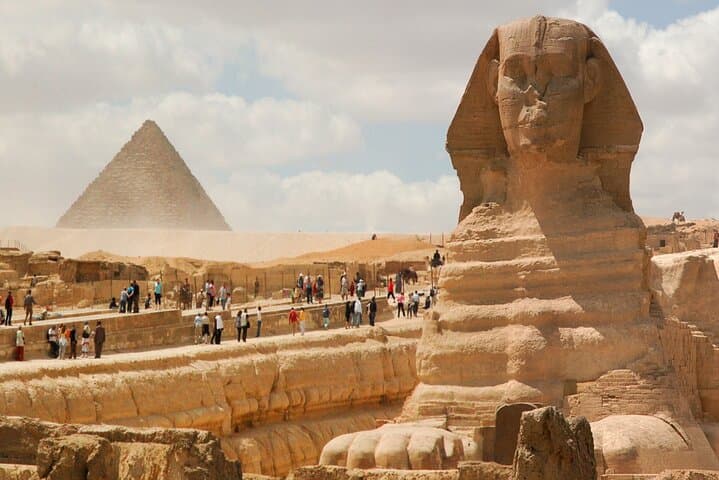
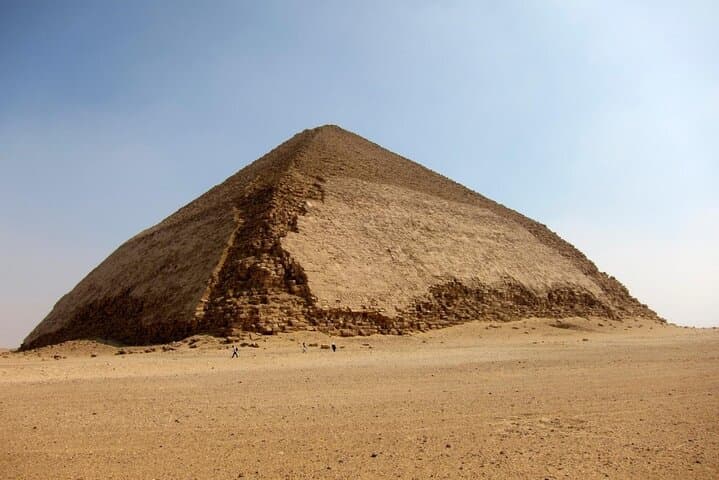
This full‑day loop threads through Egypt’s early capitals and experimental tombfields. Giza delivers the classic geometry of Old Kingdom royal tombs and the Sphinx guarding the approach; Memphis offers statues and museum fragments that show the scale of pharaonic ambition; Saqqara reveals the Step Pyramid — a pivotal moment in funerary design; and Dahshur exposes evolutionary experiments in curvature and red limestone. Geologically, the limestone and mudbrick of the Nile’s floodplain frame a landscape shaped by thousands of years of quarrying and shifting sands. Culturally, these sites condense millennia of religion, labor, and statecraft that defined ancient Egypt.
Practically, expect an eight‑hour day with multiple short walks on uneven, sandy, and paved surfaces. Comfortable shoes and sun protection are nonnegotiable; carry a refillable water bottle and limited cash for permits, photos, and tip culture. Guides handle logistics and context, but bring photocopies of ID if you plan internal tomb visits. Midday can be hot and busy; schedule earlier starts to avoid peak sun and crowds. The route is accessible by private vehicle, but mobility limitations may affect access to certain ruins. Respect ropes and restricted areas — preservation depends on visitor discipline.
easy.
8 hours.
Suitable for travelers in average condition who can handle several short walks over uneven ground throughout the day
This tour description indicates admission is not included; expect to pay separate entrance fees at Giza, Saqqara, Memphis and Dahshur unless your booking specifies otherwise.
Walking is intermittent: short to moderate walks at each site totaling several kilometers over the day, mostly on uneven or sandy ground.
Yes — the tour is considered easy physically; infants must sit on laps per the operator policy and younger children should be monitored near drop‑offs and open areas.
Interior access is limited and often requires additional tickets or permits; confirm with the operator in advance and bring ID if you plan to go inside.
Memphis served as Egypt’s first dynastic capital and Saqqara contains the Step Pyramid — a structural turning point from mastaba tombs to stone pyramids.
These sites face erosion from foot traffic and windblown sand; stick to marked paths and avoid touching fragile reliefs to help preserve them.
Egypt VIP Tours operates guided outdoor trips and adventures with an emphasis on safety, stewardship, and memorable experiences.
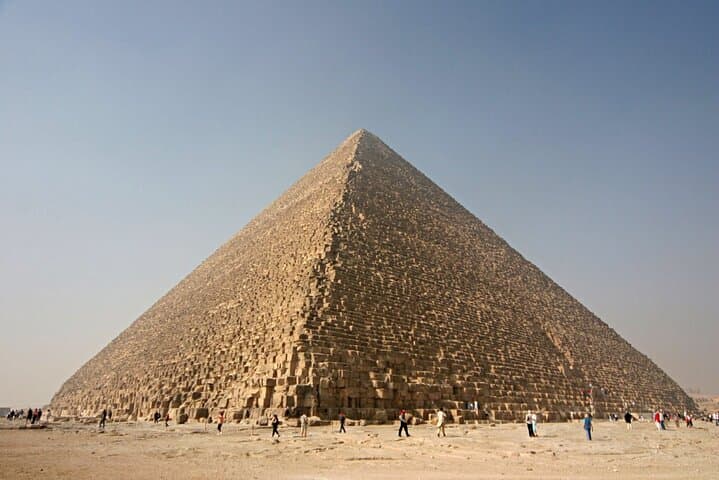
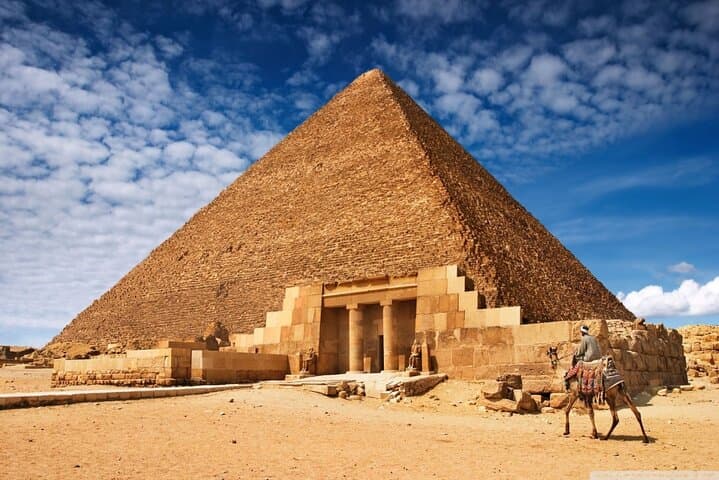
The morning light over the Giza Plateau is dry and direct, dust motes moving like a slow current as the pyramids rise from the horizon. You step from an air‑conditioned vehicle into a wind that tests your hat and dares your camera lens; the Great Pyramid looms, its stone faces older than most maps of the world.
The morning light over the Giza Plateau is dry and direct, dust motes moving like a slow current as the pyramids rise from the horizon. You step from an air‑conditioned vehicle into a wind that tests your hat and dares your camera lens; the Great Pyramid looms, its stone faces older than most maps of the world.
This full‑day loop threads through Egypt’s early capitals and experimental tombfields. Giza delivers the classic geometry of Old Kingdom royal tombs and the Sphinx guarding the approach; Memphis offers statues and museum fragments that show the scale of pharaonic ambition; Saqqara reveals the Step Pyramid — a pivotal moment in funerary design; and Dahshur exposes evolutionary experiments in curvature and red limestone. Geologically, the limestone and mudbrick of the Nile’s floodplain frame a landscape shaped by thousands of years of quarrying and shifting sands. Culturally, these sites condense millennia of religion, labor, and statecraft that defined ancient Egypt.
Practically, expect an eight‑hour day with multiple short walks on uneven, sandy, and paved surfaces. Comfortable shoes and sun protection are nonnegotiable; carry a refillable water bottle and limited cash for permits, photos, and tip culture. Guides handle logistics and context, but bring photocopies of ID if you plan internal tomb visits. Midday can be hot and busy; schedule earlier starts to avoid peak sun and crowds. The route is accessible by private vehicle, but mobility limitations may affect access to certain ruins. Respect ropes and restricted areas — preservation depends on visitor discipline.