THE ADVENTURE COLLECTIVE® · Independent discovery and booking for outdoor travel

Spend a private day stepping between the open desert of Giza and the packed galleries of the Egyptian Museum. This guided trip pairs sunrise-or-sunset pyramid views with up-close encounters with artifacts from Tutankhamun’s era.
Spend a private day stepping between the open desert of Giza and the packed galleries of the Egyptian Museum. This guided trip pairs sunrise-or-sunset pyramid views with up-close encounters with artifacts from Tutankhamun’s era.
You arrive in Cairo with the city’s dust-scented wind and a skyline punctuated by stone giants. From the Giza plateau the three pyramids—Khufu, Khafre and Menkaure—rise like engineered mountains, their weathered faces catching the sun while the Great Sphinx watches the plain. The day moves from open desert to cool museum halls: after the plateau, the Egyptian Museum’s packed rooms quiet the senses with gilded coffins and a ledger of ancient power.
Verified experiences and guided adventures in the surrounding area.
Operated by CRUISE ERA · Cairo, Cairo Governorate
You arrive in Cairo with the city’s dust-scented wind and a skyline punctuated by stone giants. From the Giza plateau the three pyramids—Khufu, Khafre and Menkaure—rise like engineered mountains, their weathered faces catching the sun while the Great Sphinx watches the plain. The day moves from open desert to cool museum halls: after the plateau, the Egyptian Museum’s packed rooms quiet the senses with gilded coffins and a ledger of ancient power.
The pyramids date to Egypt’s Fourth Dynasty (c. 2600–2500 BCE) and are primarily limestone and granite blocks set with precise angles; the Sphinx is carved from the bedrock just below the plateau. The Egyptian Museum, opened in 1902, holds an extensive collection including Tutankhamun’s funerary objects, though some royal exhibits have been relocated to newer institutions in recent years. The tour crosses millennia and introduces Cairo’s layered history—Pharaonic tomb engineering, Roman and Islamic urban growth, and modern-day stewardship challenges.
Practical guidance: this private, six-hour tour includes air-conditioned transport and hotel pickup, making it accessible for most travelers. Expect flat walking around the plateau with uneven stone surfaces near monuments; the museum has stairs and crowded rooms. Midday heat can be intense—plan early morning or late afternoon for softer light and cooler temperatures. Carry a refillable water bottle, wear sun protection and modest clothing for museum and mosque-adjacent areas. Photography is generally allowed outdoors; interior museum rules vary. Respect signs and barriers—climbing monuments is prohibited and damages irreplaceable heritage. With a knowledgeable guide, this day is straightforward but packed: bring stamina for standing, a light daypack, and time to absorb a civilization that still shapes the Nile’s banks.
easy.
6 hours.
Suitable for most fitness levels; requires moderate walking and standing on uneven stone surfaces
Standard tour prices often exclude site admission; check the booking details and be prepared to pay entry fees on the day if not included.
Yes—this private tour includes hotel pickup and drop-off in an air-conditioned vehicle within central Cairo areas; confirm your pickup point when booking.
Transport is listed as wheelchair accessible, but the Giza plateau has uneven terrain and limited accessible paths—contact the operator for detailed accommodations.
Interior entry to the Great Pyramid requires a separate ticket and is limited; access can be restricted for conservation reasons and may not be included in standard tours.
The Giza pyramids were built as royal tombs during Egypt’s Fourth Dynasty (c. 2600–2500 BCE); the Egyptian Museum, opened in 1902, centralized many of Cairo’s archaeological finds.
Air pollution, foot traffic, and souvenir-related wear threaten monuments; stay on marked routes, avoid touching carved surfaces, and follow guide instructions to minimize impact.
CRUISE ERA operates guided outdoor trips and adventures with an emphasis on safety, stewardship, and memorable experiences.
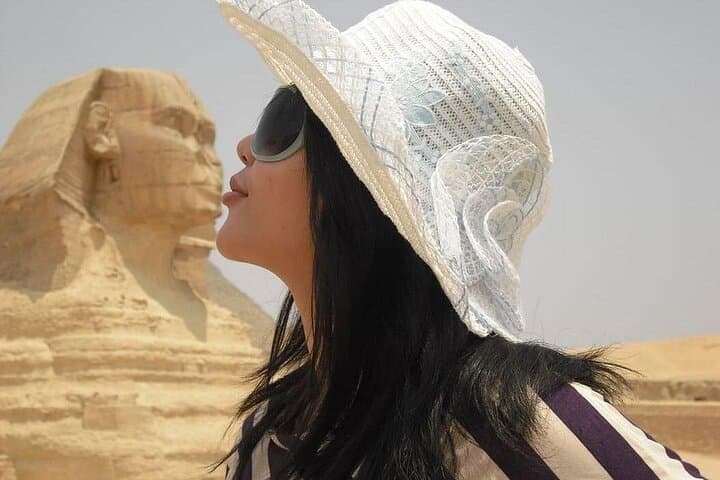
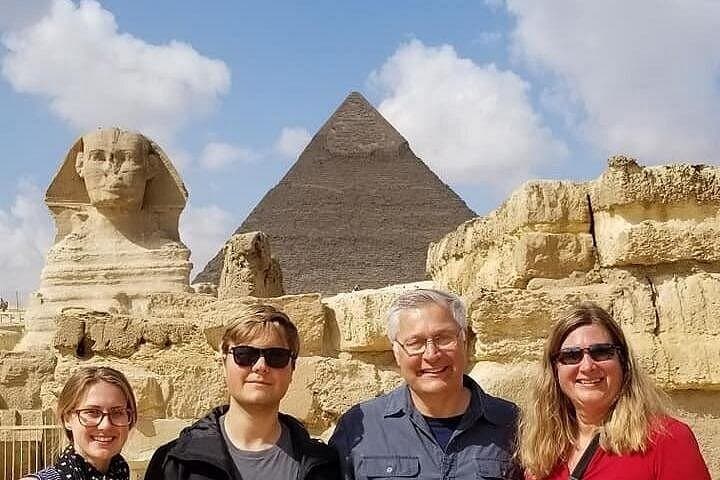


You arrive in Cairo with the city’s dust-scented wind and a skyline punctuated by stone giants. From the Giza plateau the three pyramids—Khufu, Khafre and Menkaure—rise like engineered mountains, their weathered faces catching the sun while the Great Sphinx watches the plain. The day moves from open desert to cool museum halls: after the plateau, the Egyptian Museum’s packed rooms quiet the senses with gilded coffins and a ledger of ancient power.
You arrive in Cairo with the city’s dust-scented wind and a skyline punctuated by stone giants. From the Giza plateau the three pyramids—Khufu, Khafre and Menkaure—rise like engineered mountains, their weathered faces catching the sun while the Great Sphinx watches the plain. The day moves from open desert to cool museum halls: after the plateau, the Egyptian Museum’s packed rooms quiet the senses with gilded coffins and a ledger of ancient power.
The pyramids date to Egypt’s Fourth Dynasty (c. 2600–2500 BCE) and are primarily limestone and granite blocks set with precise angles; the Sphinx is carved from the bedrock just below the plateau. The Egyptian Museum, opened in 1902, holds an extensive collection including Tutankhamun’s funerary objects, though some royal exhibits have been relocated to newer institutions in recent years. The tour crosses millennia and introduces Cairo’s layered history—Pharaonic tomb engineering, Roman and Islamic urban growth, and modern-day stewardship challenges.
Practical guidance: this private, six-hour tour includes air-conditioned transport and hotel pickup, making it accessible for most travelers. Expect flat walking around the plateau with uneven stone surfaces near monuments; the museum has stairs and crowded rooms. Midday heat can be intense—plan early morning or late afternoon for softer light and cooler temperatures. Carry a refillable water bottle, wear sun protection and modest clothing for museum and mosque-adjacent areas. Photography is generally allowed outdoors; interior museum rules vary. Respect signs and barriers—climbing monuments is prohibited and damages irreplaceable heritage. With a knowledgeable guide, this day is straightforward but packed: bring stamina for standing, a light daypack, and time to absorb a civilization that still shapes the Nile’s banks.