THE ADVENTURE COLLECTIVE® · Independent discovery and booking for outdoor travel

Fly from Luxor to Cairo for an action-packed private day covering the Giza Pyramids, the Sphinx, the Egyptian Museum and Khan el-Khalili. This full-day guided itinerary blends big-ticket archaeology with local flavors—camel ride, tea, and a bustling bazaar—on a tightly scheduled 14–15 hour outing.
Fly from Luxor to Cairo for an action-packed private day covering the Giza Pyramids, the Sphinx, the Egyptian Museum and Khan el-Khalili. This full-day guided itinerary blends big-ticket archaeology with local flavors—camel ride, tea, and a bustling bazaar—on a tightly scheduled 14–15 hour outing.
You land in Cairo with the city already in motion: the highway hums, the stone silhouette of the Great Pyramid fills the windshield, and your Egyptology guide begins threading dates and dynasties into the day.
Verified experiences and guided adventures in the surrounding area.
Operated by Here Egypt Tours · Cairo, Cairo Governorate
You land in Cairo with the city already in motion: the highway hums, the stone silhouette of the Great Pyramid fills the windshield, and your Egyptology guide begins threading dates and dynasties into the day.
On the Giza Plateau the pyramids read like engineered mountains—limestone faces glossed by desert wind—and the Sphinx watches the sun move across the plateau. Geology here is blunt: Tura limestone casing and core blocks quarried from the Nile terraces, raised into enormous funerary monuments more than 4,500 years old. In town, the Egyptian Museum holds crowded corridors of statuary, the gold of Tutankhamun, and mummified kings that anchor modern Cairo to Pharaonic politics and ritual.
Culturally the day shifts between public spectacle and intimate rituals: a 30-minute camel loop around the pyramids for portrait photos, a set lunch in a local restaurant, tea and sheesha at a street-side café, then the sensory maze of Khan el-Khalili where bargaining is its own social code.
Practically this is a long, fast-paced day: expect an early pickup in Luxor, a one-hour flight to Cairo, and 14–15 hours out and back. Dress for sun and dust—light, modest layers; comfortable shoes for uneven stone; a small daypack for passport, water, and camera batteries. Bring small bills for entrances, tips, and market haggling. Your private guide handles logistics and entry fees, but keep an eye on timing—Cairo’s traffic and security checks move on their own schedule.
easy.
14–15 hours.
Light fitness required—mostly walking on uneven ground and standing during site visits; able to handle a long travel day.
Direct flights take about 1 hour to 1 hour 15 minutes each way; the full excursion including transfers runs roughly 14–15 hours.
Yes—this private tour includes domestic flights, airport transfers, entrance fees to listed sites, lunch, and bottled water as stated in the itinerary.
The included camel ride is approximately 30 minutes around the outer area of the pyramids; animals are handled by local handlers—follow guide instructions and avoid sudden movements.
Yes—stroller access is noted and infant seats are available, but families should be prepared for a long day with airport procedures and busy crowds.
The Giza complex dates to Egypt’s Fourth Dynasty (c. 2600–2500 BCE); the Egyptian Museum preserves artifacts spanning Predynastic to Roman Egypt, including Tutankhamun’s treasures.
High visitor numbers and urban pollution stress ancient stone—stick to marked paths, avoid climbing monuments, and support licensed guides to minimize impact.
Here Egypt Tours operates guided outdoor trips and adventures with an emphasis on safety, stewardship, and memorable experiences.

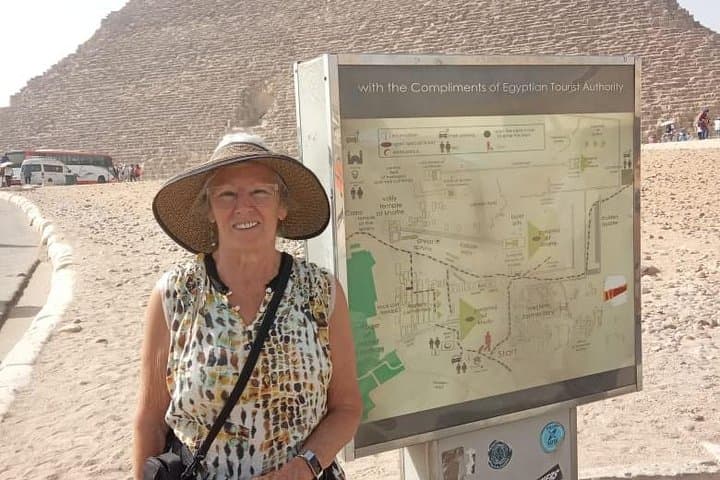
You land in Cairo with the city already in motion: the highway hums, the stone silhouette of the Great Pyramid fills the windshield, and your Egyptology guide begins threading dates and dynasties into the day.
You land in Cairo with the city already in motion: the highway hums, the stone silhouette of the Great Pyramid fills the windshield, and your Egyptology guide begins threading dates and dynasties into the day.
On the Giza Plateau the pyramids read like engineered mountains—limestone faces glossed by desert wind—and the Sphinx watches the sun move across the plateau. Geology here is blunt: Tura limestone casing and core blocks quarried from the Nile terraces, raised into enormous funerary monuments more than 4,500 years old. In town, the Egyptian Museum holds crowded corridors of statuary, the gold of Tutankhamun, and mummified kings that anchor modern Cairo to Pharaonic politics and ritual.
Culturally the day shifts between public spectacle and intimate rituals: a 30-minute camel loop around the pyramids for portrait photos, a set lunch in a local restaurant, tea and sheesha at a street-side café, then the sensory maze of Khan el-Khalili where bargaining is its own social code.
Practically this is a long, fast-paced day: expect an early pickup in Luxor, a one-hour flight to Cairo, and 14–15 hours out and back. Dress for sun and dust—light, modest layers; comfortable shoes for uneven stone; a small daypack for passport, water, and camera batteries. Bring small bills for entrances, tips, and market haggling. Your private guide handles logistics and entry fees, but keep an eye on timing—Cairo’s traffic and security checks move on their own schedule.