THE ADVENTURE COLLECTIVE® · Independent discovery and booking for outdoor travel

Spend a long, full day traveling from Hurghada to Cairo to explore the Egyptian Museum, Giza Pyramids and the Great Sphinx. This small-group tour blends archaeological highlights with practical logistics—ideal for travelers who want an efficient, guided sweep of Cairo’s must-sees.
Spend a long, full day traveling from Hurghada to Cairo to explore the Egyptian Museum, Giza Pyramids and the Great Sphinx. This small-group tour blends archaeological highlights with practical logistics—ideal for travelers who want an efficient, guided sweep of Cairo’s must-sees.
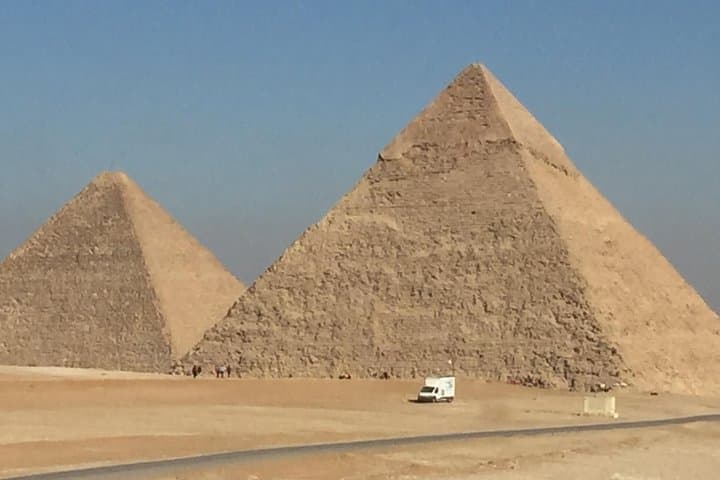
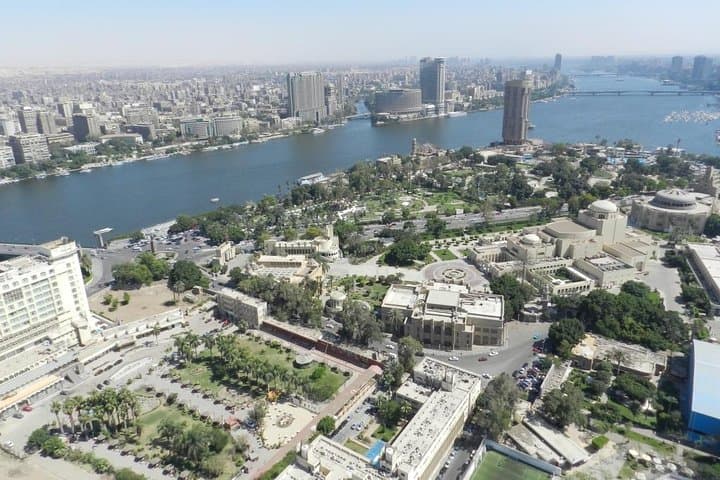
You step off the early-morning coach and the air changes—dry, sun-warmed, carrying the distant bustle of Cairo. The Egyptian Museum's sandstone façade rises ahead, then later the horizon opens to the Giza Plateau where the pyramids dominate the skyline like deliberate geometry carved out of desert light.
Verified experiences and guided adventures in the surrounding area.
Operated by Egypt Voyage · Giza, Giza Governorate
You step off the early-morning coach and the air changes—dry, sun-warmed, carrying the distant bustle of Cairo. The Egyptian Museum's sandstone façade rises ahead, then later the horizon opens to the Giza Plateau where the pyramids dominate the skyline like deliberate geometry carved out of desert light.
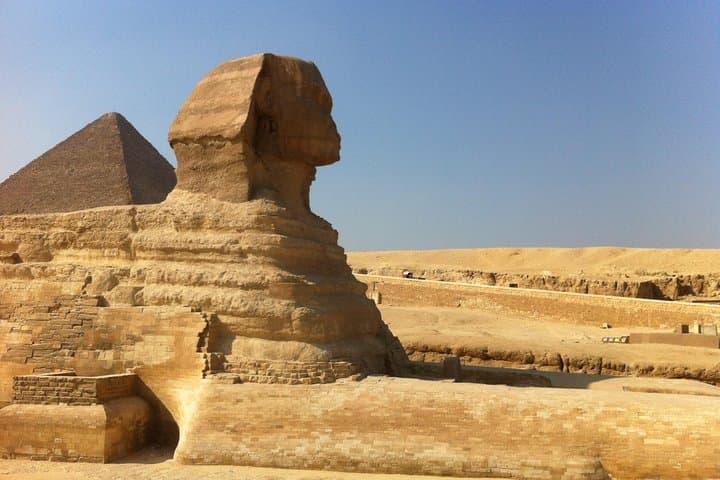
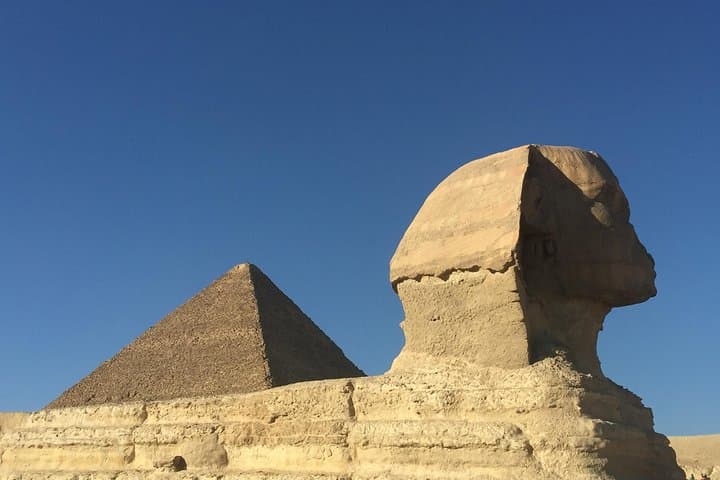
The day threads cultural history with geological context: the Museum houses artefacts spanning millennia, royal funerary goods and the material remains of dynasties that shaped the Nile valley. The pyramids themselves are limestone and granite monuments hewn from the same bedrock that once supported ancient quarries; the Sphinx, a single-carved beast, keeps watch over centuries of shifting sand and human curiosity.
Local culture seeps into the rhythm of the tour — bargaining at stalls, the scent of zataar and coffee, and guides who unpack royal lineage and practical hacks for forming a queue-free path through busy sites. Keep an ear for stories of workers, engineers and the modern Cairo that scaled these ancient feats.
Practical guidance: this is a long day with multiple transfers and urban walking on uneven surfaces. Bring sturdy shoes, sun protection and photocopies of travel documents; keep small bills for customary tips. Expect options for entering the pyramid interior at extra cost and for visits to the Mummy Room at the Museum. Timing matters — mornings are cooler and less crowded at outdoor sites, while afternoons suit the Museum and Nile-side lunch options. Hydrate steadily and pace your visits; the monuments reward presence more than speed.
moderate.
16-20 hours.
Good stamina for a long day of travel, standing and walking on uneven surfaces; not strenuous but tiring.
Yes—lunch at a local restaurant is included; optional upgrades like a Nile-boat meal are usually available at extra cost.
Entering one pyramid is often available but requires an additional ticket and involves tight, steep passages that may be unsuitable for those with mobility issues.
Expect approximately 6–7 hours each way by road depending on traffic and stops; times can vary by season and time of day.
Visa requirements depend on nationality—many travelers can obtain an eVisa or buy a visa on arrival; check current government guidance well before travel.
The Giza pyramids date to the Fourth Dynasty (c. 2600–2500 BCE); the Egyptian Museum in Tahrir holds one of the world’s largest collections of Pharaonic artifacts assembled during the 19th and 20th centuries.
Sites face erosion from foot traffic and urban pollution—stick to marked paths, avoid touching carved surfaces, and use licensed guides to support responsible site access.
Egypt Voyage operates guided outdoor trips and adventures with an emphasis on safety, stewardship, and memorable experiences.
You step off the early-morning coach and the air changes—dry, sun-warmed, carrying the distant bustle of Cairo. The Egyptian Museum's sandstone façade rises ahead, then later the horizon opens to the Giza Plateau where the pyramids dominate the skyline like deliberate geometry carved out of desert light.
You step off the early-morning coach and the air changes—dry, sun-warmed, carrying the distant bustle of Cairo. The Egyptian Museum's sandstone façade rises ahead, then later the horizon opens to the Giza Plateau where the pyramids dominate the skyline like deliberate geometry carved out of desert light.
The day threads cultural history with geological context: the Museum houses artefacts spanning millennia, royal funerary goods and the material remains of dynasties that shaped the Nile valley. The pyramids themselves are limestone and granite monuments hewn from the same bedrock that once supported ancient quarries; the Sphinx, a single-carved beast, keeps watch over centuries of shifting sand and human curiosity.
Local culture seeps into the rhythm of the tour — bargaining at stalls, the scent of zataar and coffee, and guides who unpack royal lineage and practical hacks for forming a queue-free path through busy sites. Keep an ear for stories of workers, engineers and the modern Cairo that scaled these ancient feats.
Practical guidance: this is a long day with multiple transfers and urban walking on uneven surfaces. Bring sturdy shoes, sun protection and photocopies of travel documents; keep small bills for customary tips. Expect options for entering the pyramid interior at extra cost and for visits to the Mummy Room at the Museum. Timing matters — mornings are cooler and less crowded at outdoor sites, while afternoons suit the Museum and Nile-side lunch options. Hydrate steadily and pace your visits; the monuments reward presence more than speed.