THE ADVENTURE COLLECTIVE® · Independent discovery and booking for outdoor travel

See Mamluk monuments, a cave church in the Mokattam, and the Egyptian Museum in a focused half‑day private car tour. Short walks, expert driver, and on‑site fees separate the highlights—ideal for time‑pressed travelers who want depth without logistics.
See Mamluk monuments, a cave church in the Mokattam, and the Egyptian Museum in a focused half‑day private car tour. Short walks, expert driver, and on‑site fees separate the highlights—ideal for time‑pressed travelers who want depth without logistics.
A low-slung car threads through Cairo traffic and eases onto open stretches of city where stone and faith mark time. In a single half-day private tour, passengers step from an air-conditioned vehicle into courtyards of monumental faith, climb into a carved cave church in the Mokattam Hills, and stand before cases of gold and cartonnage that map three millennia of the Nile’s civilizations.
Verified experiences and guided adventures in the surrounding area.
Operated by Incredible Egypt Tours · Cairo, Cairo Governorate
A low-slung car threads through Cairo traffic and eases onto open stretches of city where stone and faith mark time. In a single half-day private tour, passengers step from an air-conditioned vehicle into courtyards of monumental faith, climb into a carved cave church in the Mokattam Hills, and stand before cases of gold and cartonnage that map three millennia of the Nile’s civilizations.
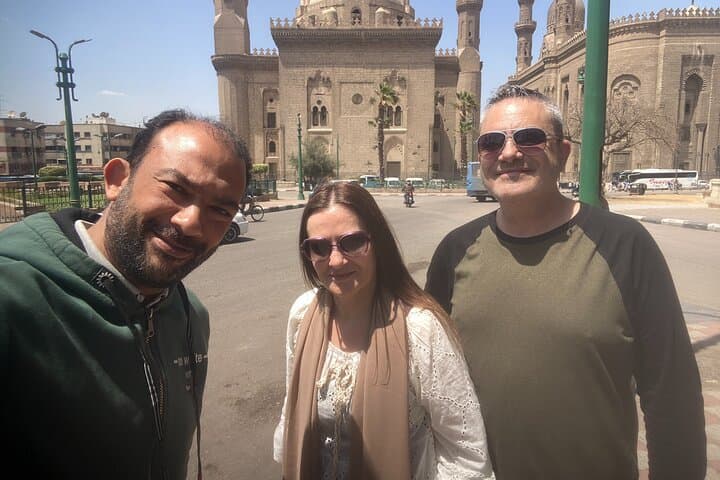
The route stitches together Mamluk Cairo and modern national memory. The Mosque‑Madrasa of Sultan Hassan, built in the 14th century, introduced the combined madrasa‑congregational plan that reshaped Islamic architecture across the region. Nearby, the Khanqah of Baybars II carries the details of medieval urban Cairo: stone muqarnas, narrow alleys and centuries of civic life. In the eastern limestone of the Mokattam, St. Simon the Tanner’s cave churches reveal a Christian presence carved into the hillside. The Egyptian Museum at Tahrir holds an unmatched concentration of Pharaonic artifacts, arranged since the late 19th century when Egypt began curating its own past.
Practicalities matter: the tour runs about 3–4 hours with short on‑site walks; entrance fees cited in the itinerary (approx. 80 EGP for Sultan Hassan, 200 EGP for the Egyptian Museum) are not included. Expect security checks and queues—mornings are cooler and lighter on traffic. Dress modestly for religious sites, carry cash in small denominations, and pack a bottle of water and sun protection. Drivers are experienced with Cairo’s rhythm; the private format compresses travel-time between distant sights so travelers can see more of the city’s layered history without navigating public transit.
easy.
3–4 hours.
Minimal fitness required; involves short periods of walking and some uneven steps at historic sites.
No—entrance fees listed in the itinerary (example: Sultan Hassan ~80 EGP, Egyptian Museum ~200 EGP) are typically paid on site by travelers.
Yes—this private tour includes hotel pickup and drop‑off within Cairo as listed in the inclusions.
Yes—infant seats are available and the tour is described as suitable for all fitness levels, but strollers can be difficult in historic sites with stairs.
Access varies—many historic monuments have steps and uneven ground; the vehicle minimizes walking but some sites are not fully wheelchair accessible.
Cairo’s Mamluk monuments date to a period (13th–16th centuries) when the city was a major Islamic capital; the Egyptian Museum, opened in the late 19th century, centralized the country’s foreign-dispersed antiquities.
Visitor pressure can strain fragile interiors and archaeological displays—follow signage, avoid touching exhibits, and use official walkways to minimize impact.
Incredible Egypt Tours operates guided outdoor trips and adventures with an emphasis on safety, stewardship, and memorable experiences.
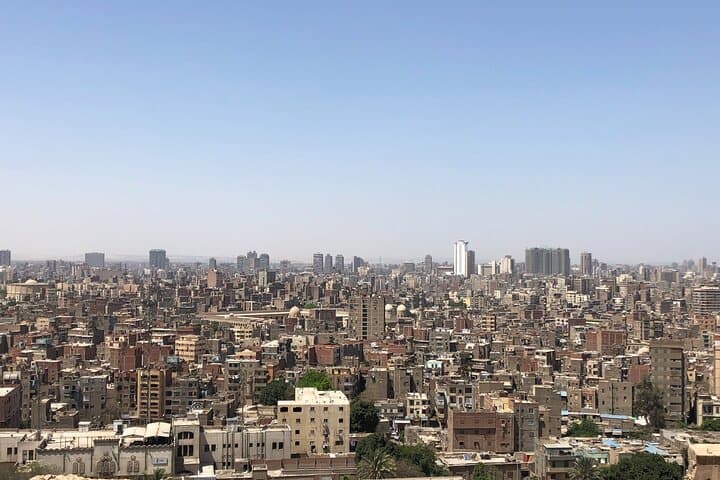
A low-slung car threads through Cairo traffic and eases onto open stretches of city where stone and faith mark time. In a single half-day private tour, passengers step from an air-conditioned vehicle into courtyards of monumental faith, climb into a carved cave church in the Mokattam Hills, and stand before cases of gold and cartonnage that map three millennia of the Nile’s civilizations.
A low-slung car threads through Cairo traffic and eases onto open stretches of city where stone and faith mark time. In a single half-day private tour, passengers step from an air-conditioned vehicle into courtyards of monumental faith, climb into a carved cave church in the Mokattam Hills, and stand before cases of gold and cartonnage that map three millennia of the Nile’s civilizations.
The route stitches together Mamluk Cairo and modern national memory. The Mosque‑Madrasa of Sultan Hassan, built in the 14th century, introduced the combined madrasa‑congregational plan that reshaped Islamic architecture across the region. Nearby, the Khanqah of Baybars II carries the details of medieval urban Cairo: stone muqarnas, narrow alleys and centuries of civic life. In the eastern limestone of the Mokattam, St. Simon the Tanner’s cave churches reveal a Christian presence carved into the hillside. The Egyptian Museum at Tahrir holds an unmatched concentration of Pharaonic artifacts, arranged since the late 19th century when Egypt began curating its own past.
Practicalities matter: the tour runs about 3–4 hours with short on‑site walks; entrance fees cited in the itinerary (approx. 80 EGP for Sultan Hassan, 200 EGP for the Egyptian Museum) are not included. Expect security checks and queues—mornings are cooler and lighter on traffic. Dress modestly for religious sites, carry cash in small denominations, and pack a bottle of water and sun protection. Drivers are experienced with Cairo’s rhythm; the private format compresses travel-time between distant sights so travelers can see more of the city’s layered history without navigating public transit.