THE ADVENTURE COLLECTIVE® · Independent discovery and booking for outdoor travel

Explore living Coptic history on a private 3-night, 4-day tour from Cairo to Assiut—visit Faggala and Maadi churches, the rock-carved Monastery of Simon the Tanner, and quieter Upper Egyptian churches while traveling by private car with local guides.
Explore living Coptic history on a private 3-night, 4-day tour from Cairo to Assiut—visit Faggala and Maadi churches, the rock-carved Monastery of Simon the Tanner, and quieter Upper Egyptian churches while traveling by private car with local guides.
You arrive in Cairo mid-morning: dust in the air, taxi horns skimming the Nile’s edge, and a guide waiting with a placard. The first day threads you through narrow lanes of Faggala and Maadi where stone churches open like cool wells — icons painted in oils, incense that clings to wooden pews, and parishioners moving through rituals that span centuries.
Verified experiences and guided adventures in the surrounding area.
Operated by travel to church · Cairo, Cairo Governorate
You arrive in Cairo mid-morning: dust in the air, taxi horns skimming the Nile’s edge, and a guide waiting with a placard. The first day threads you through narrow lanes of Faggala and Maadi where stone churches open like cool wells — icons painted in oils, incense that clings to wooden pews, and parishioners moving through rituals that span centuries.
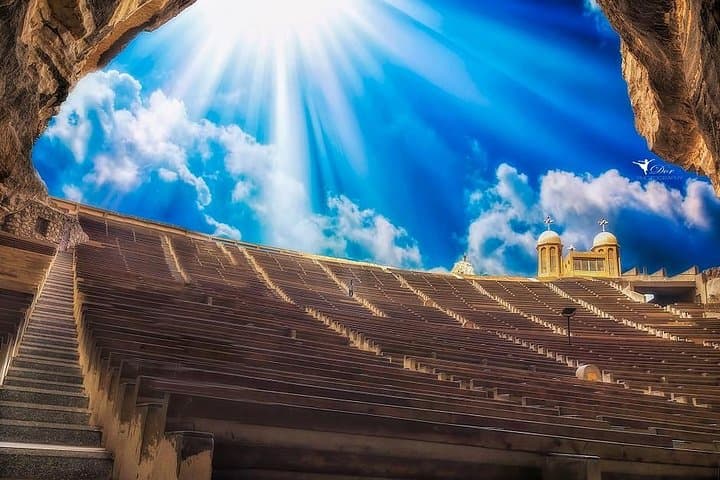
The journey moves beyond the city to Mokattam’s carved cliffs and the Monastery of Simon the Tanner, whose rock-cut chapels recall Egypt’s deep monastic roots. This is a landscape shaped by geology and faith: limestone outcrops that provided shelter for fourth-century hermits, and the Nile valley’s silt plain that supported the growth of Christian communities after the Roman era.
Coptic devotion and local culture are visible in the hand-painted icons, hymn-sung liturgies, and the modest hospitality of monastery kitchens. In Upper Egypt around Assiut you’ll notice a quieter light and older stonework — churches and caves that hosted solitary monks and small monastic cells.
Practical guide: the tour runs over three nights and four days with private car transfers, two nights in Cairo and one in Assiut, and included lunches and bottled water. Wear conservative, breathable clothing; sturdy shoes for uneven stone steps; and carry a refillable water bottle and sun protection. Photography is generally allowed but respect signs and worshippers; flash and tripod may be restricted inside sacred spaces. Mornings are best for comfortable temperatures and clearer light for photographs. Expect light walking, some stairs, and plenty of cultural context from a local guide — a manageable, immersive trip into Egypt’s living Coptic heritage.
easy.
3–4 days.
Light walking and the ability to manage stairs and uneven stone floors; suitable for most fitness levels.
Yes; the itinerary is classified as physically easy with vehicle transfers between sites, though stairs and uneven surfaces may require assistance for those with limited mobility.
Guides are typically English-speaking; request other languages at booking and confirm availability in advance.
Yes — two nights in Cairo and one in Assiut with breakfast are included, plus lunches at local restaurants as stated in the inclusion list.
No special permits are required for visitors; some sites request modest dress, and larger groups may need to coordinate entry times through the guide.
Egyptian monasticism dates to the 3rd–4th centuries AD; many monasteries grew out of hermit cells carved into limestone, creating enduring centers of Coptic practice.
Sites are vulnerable to humidity, light, and visitor wear — follow photography rules, avoid touching frescoes, and use refillable bottles to reduce plastic waste.
travel to church operates guided outdoor trips and adventures with an emphasis on safety, stewardship, and memorable experiences.
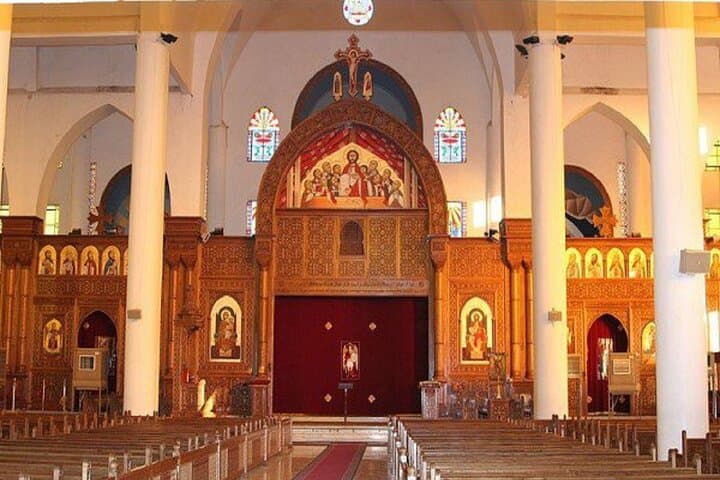
You arrive in Cairo mid-morning: dust in the air, taxi horns skimming the Nile’s edge, and a guide waiting with a placard. The first day threads you through narrow lanes of Faggala and Maadi where stone churches open like cool wells — icons painted in oils, incense that clings to wooden pews, and parishioners moving through rituals that span centuries.
You arrive in Cairo mid-morning: dust in the air, taxi horns skimming the Nile’s edge, and a guide waiting with a placard. The first day threads you through narrow lanes of Faggala and Maadi where stone churches open like cool wells — icons painted in oils, incense that clings to wooden pews, and parishioners moving through rituals that span centuries.
The journey moves beyond the city to Mokattam’s carved cliffs and the Monastery of Simon the Tanner, whose rock-cut chapels recall Egypt’s deep monastic roots. This is a landscape shaped by geology and faith: limestone outcrops that provided shelter for fourth-century hermits, and the Nile valley’s silt plain that supported the growth of Christian communities after the Roman era.
Coptic devotion and local culture are visible in the hand-painted icons, hymn-sung liturgies, and the modest hospitality of monastery kitchens. In Upper Egypt around Assiut you’ll notice a quieter light and older stonework — churches and caves that hosted solitary monks and small monastic cells.
Practical guide: the tour runs over three nights and four days with private car transfers, two nights in Cairo and one in Assiut, and included lunches and bottled water. Wear conservative, breathable clothing; sturdy shoes for uneven stone steps; and carry a refillable water bottle and sun protection. Photography is generally allowed but respect signs and worshippers; flash and tripod may be restricted inside sacred spaces. Mornings are best for comfortable temperatures and clearer light for photographs. Expect light walking, some stairs, and plenty of cultural context from a local guide — a manageable, immersive trip into Egypt’s living Coptic heritage.