THE ADVENTURE COLLECTIVE® · Independent discovery and booking for outdoor travel

See Cairo’s pyramids, the Egyptian Museum and Luxor’s Karnak and Valley of the Kings in a focused 48‑hour itinerary from Hurghada. This private multi‑day tour combines domestic flights, guided visits, and hotel accommodation in Luxor.
See Cairo’s pyramids, the Egyptian Museum and Luxor’s Karnak and Valley of the Kings in a focused 48‑hour itinerary from Hurghada. This private multi‑day tour combines domestic flights, guided visits, and hotel accommodation in Luxor.
You step out of your Hurghada hotel before dawn, the Red Sea’s heat still a promise, and climb into a private vehicle bound for the airport. In a few hours you’re at Giza: the pyramids loom in hard light, the Sphinx watches like an old judge, and the sandstone air smells faintly of dust and diesel.
Verified experiences and guided adventures in the surrounding area.
Operated by This Is Egypt Aswan · Hurghada, Red Sea Governorate
You step out of your Hurghada hotel before dawn, the Red Sea’s heat still a promise, and climb into a private vehicle bound for the airport. In a few hours you’re at Giza: the pyramids loom in hard light, the Sphinx watches like an old judge, and the sandstone air smells faintly of dust and diesel.
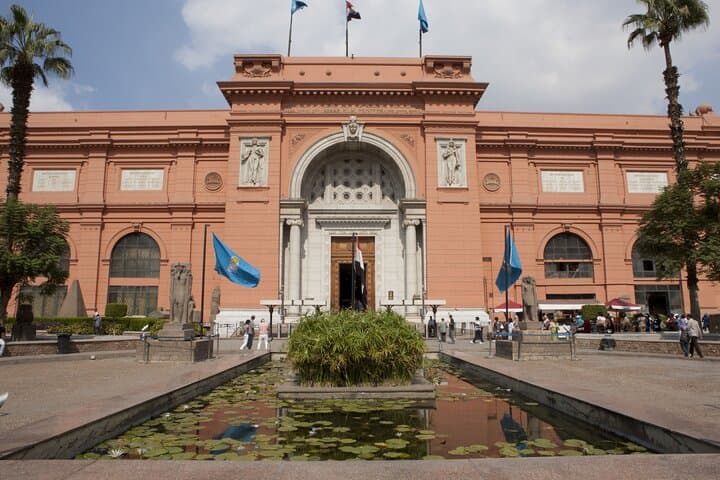
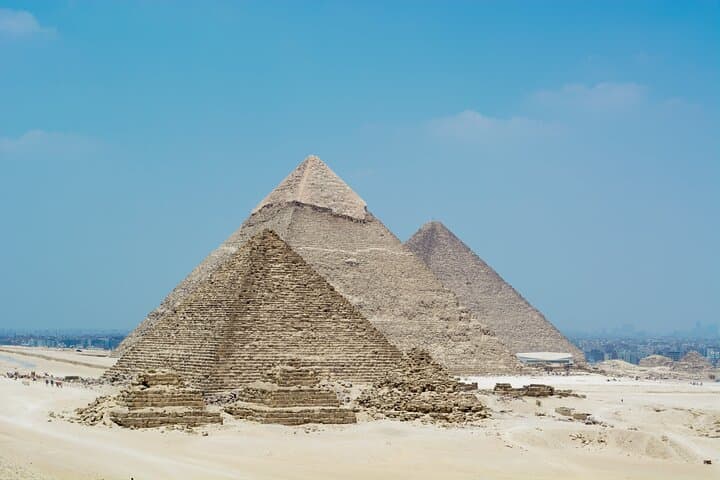
Day one moves fast — guided stops at Cheops, Chephren and Mykerinus, the Valley Temple, and the Egyptian Museum where rows of statuary and funerary masks condense millennia into a single corridor. A late afternoon through Khan El Khalili introduces the commerce and call-and-response of Cairo’s market life before an evening flight deposits you in Luxor.
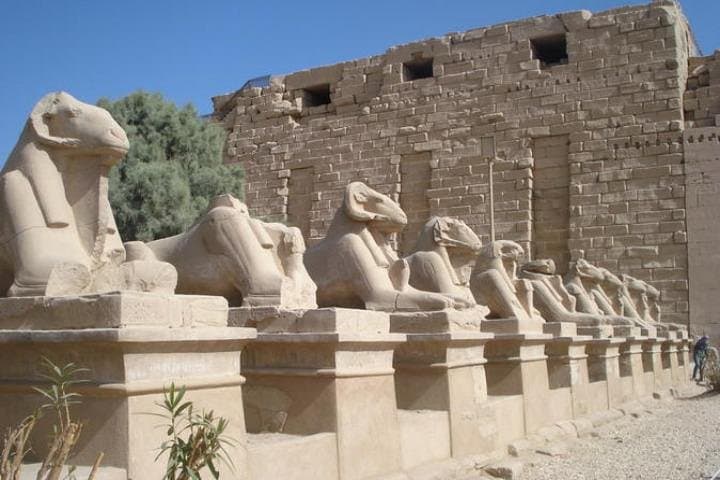
On day two the Nile’s wide slow curve sets the rhythm: Karnak’s hypostyle hall presses the chest with columns, the Colossi of Memnon stand guard, and Valley of the Kings opens into painted tomb chambers — three tombs are typical on this itinerary — capped by Hatshepsut’s austere terraces.
This tour stitches two distant archaeological cores into 48 hours: Ptolemaic and Pharaonic relics in city and river context, and the desert geology that preserved painted reliefs. Guides explain hieroglyphic syntax and funerary practice; local culture appears in lunches and the bazaar’s bargaining.
Practical edge: carry original passport and copies, wear sturdy walking shoes and sun protection, and plan for long days on foot with steps and uneven surfaces. Flights and select admissions are included, but pickups from outskirts may cost extra; keep water, a light layer for early mornings, and respect site rules (no touching reliefs). With brisk pacing, the tour is a compact, accessible way to see Egypt’s headline monuments in a single, intense weekend.
moderate.
2 days (≈48 hours).
Suitable for most fitness levels but expect multiple hours of standing and walking on uneven surfaces each day
Yes — the itinerary includes domestic flights (Hurghada–Cairo and Cairo–Luxor) as listed in the inclusions.
The standard program visits three tombs in the Valley of the Kings; Tutankhamen’s tomb is often excluded due to separate access rules and ticketing.
Pickups from central Hurghada and El Gouna are included; pickups from Safaga, Soma Bay, Makadi, Sahl Hasheesh or El Gouna may incur an extra charge as noted by the operator.
Expect several hours of walking each day with stairs and uneven surfaces at temples and tombs; the tour is described as suitable for all fitness levels but requires mobility for steps.
The route links Old Kingdom monuments at Giza with New Kingdom royal funerary complexes in Luxor; these sites reflect different eras of state religion and monument-building across 2,000+ years.
Monuments are fragile: follow guide instructions, avoid touching carved surfaces, and use designated paths. Support local conservation by choosing licensed guides and minimizing single‑use plastics.
This Is Egypt Aswan operates guided outdoor trips and adventures with an emphasis on safety, stewardship, and memorable experiences.
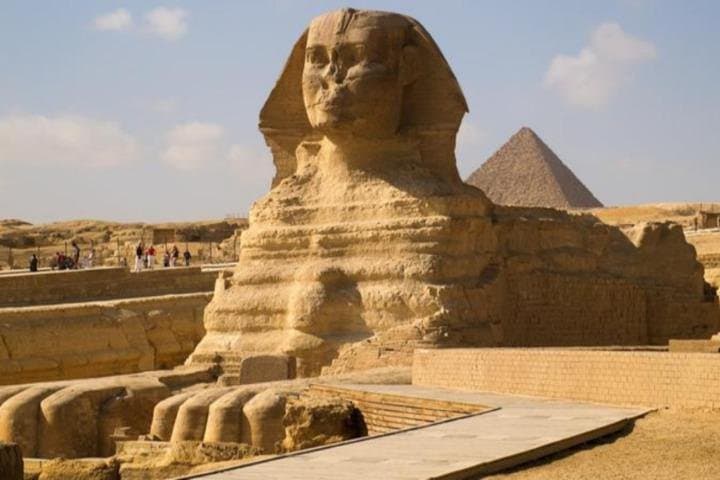
You step out of your Hurghada hotel before dawn, the Red Sea’s heat still a promise, and climb into a private vehicle bound for the airport. In a few hours you’re at Giza: the pyramids loom in hard light, the Sphinx watches like an old judge, and the sandstone air smells faintly of dust and diesel.
You step out of your Hurghada hotel before dawn, the Red Sea’s heat still a promise, and climb into a private vehicle bound for the airport. In a few hours you’re at Giza: the pyramids loom in hard light, the Sphinx watches like an old judge, and the sandstone air smells faintly of dust and diesel.
Day one moves fast — guided stops at Cheops, Chephren and Mykerinus, the Valley Temple, and the Egyptian Museum where rows of statuary and funerary masks condense millennia into a single corridor. A late afternoon through Khan El Khalili introduces the commerce and call-and-response of Cairo’s market life before an evening flight deposits you in Luxor.
On day two the Nile’s wide slow curve sets the rhythm: Karnak’s hypostyle hall presses the chest with columns, the Colossi of Memnon stand guard, and Valley of the Kings opens into painted tomb chambers — three tombs are typical on this itinerary — capped by Hatshepsut’s austere terraces.
This tour stitches two distant archaeological cores into 48 hours: Ptolemaic and Pharaonic relics in city and river context, and the desert geology that preserved painted reliefs. Guides explain hieroglyphic syntax and funerary practice; local culture appears in lunches and the bazaar’s bargaining.
Practical edge: carry original passport and copies, wear sturdy walking shoes and sun protection, and plan for long days on foot with steps and uneven surfaces. Flights and select admissions are included, but pickups from outskirts may cost extra; keep water, a light layer for early mornings, and respect site rules (no touching reliefs). With brisk pacing, the tour is a compact, accessible way to see Egypt’s headline monuments in a single, intense weekend.