THE ADVENTURE COLLECTIVE® · Independent discovery and booking for outdoor travel

Five nights moving from Cairo’s museums to Alexandria’s coast and Luxor’s pharaonic temples. This private tour pairs expert Egyptologist guiding with air‑conditioned transfers and focused site visits — ideal for first‑time explorers of ancient Egypt.
Five nights moving from Cairo’s museums to Alexandria’s coast and Luxor’s pharaonic temples. This private tour pairs expert Egyptologist guiding with air‑conditioned transfers and focused site visits — ideal for first‑time explorers of ancient Egypt.
The morning light on the Giza plateau feels sharp and exact — sun on limestone, wind carrying dust from the desert, and the Sphinx watching traffic below. On a five‑night sweep between Cairo, Alexandria and Luxor you move through layers of human time: bustling Nile banks and quiet rock-cut tombs, imperial temples and seaside corniches.
Verified experiences and guided adventures in the surrounding area.
Operated by travelconnection001 · Cairo, Cairo Governorate
The morning light on the Giza plateau feels sharp and exact — sun on limestone, wind carrying dust from the desert, and the Sphinx watching traffic below. On a five‑night sweep between Cairo, Alexandria and Luxor you move through layers of human time: bustling Nile banks and quiet rock-cut tombs, imperial temples and seaside corniches.
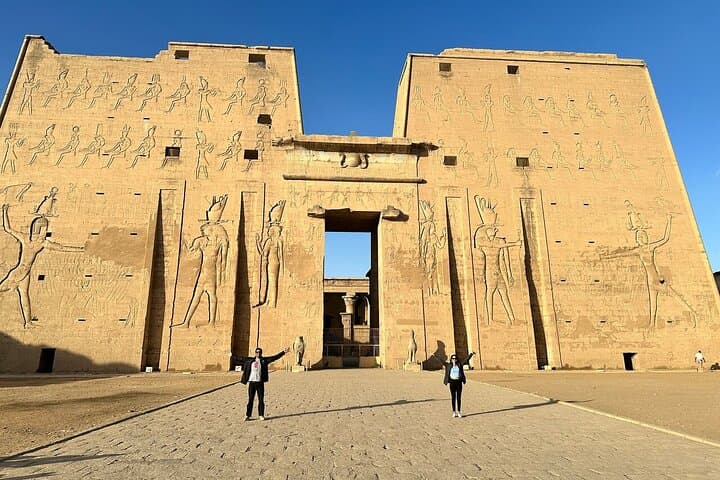
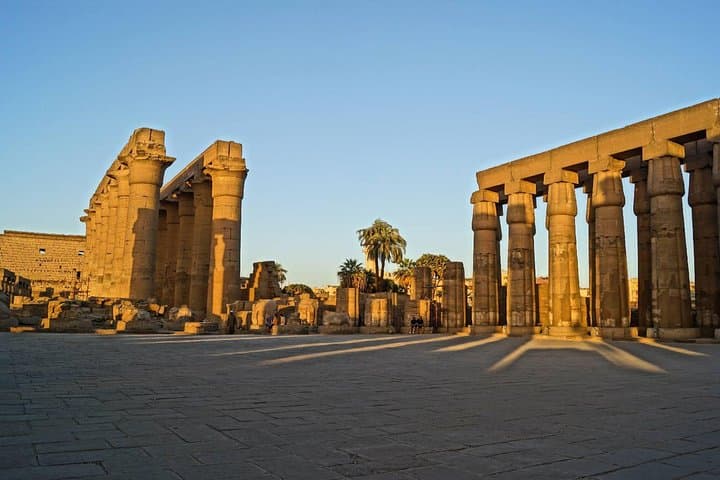
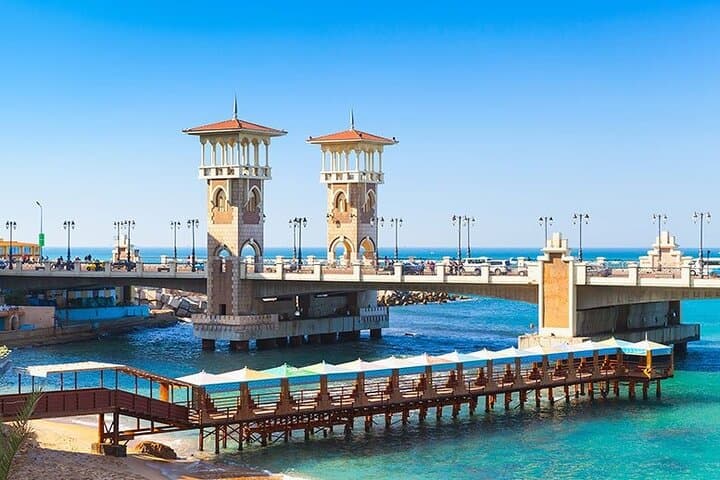
Cairo’s museums and Islamic quarters trace Ottoman and medieval urban life; Alexandria reorients you toward Hellenistic seafaring, the modern Bibliotheca and Qaitbay’s citadel standing where the Lighthouse once warned sailors. Luxor unfolds Egypt’s New Kingdom — Karnak’s avenues of ram-headed sphinxes, Luxor Temple’s monumental pylons, and the West Bank’s Valley of the Kings where painted tombs shelter pharaohs’ stories.
Geology is obvious: Nile silt feeds green bands against ochre desert; massive sandstone and limestone blocks were quarried and set to defy millennia. Local culture pulses in market stalls, mosque calls, and the practiced rhythm of guide and camel handler — expect readable English from licensed Egyptologists on this private itinerary.
Practical edge: the trip uses domestic flight transfers to Luxor, private air‑conditioned vehicles, and includes breakfasts and taxes. Walks at sites involve uneven stone, steps and sandy approaches — comfortable shoes and early starts beat heat and crowds. Carry water, sun protection and modest clothing for religious sites. Bring small local currency for tips and incidental entries; conservation rules prohibit touching reliefs and strict photo rules may apply in some tombs.
This tour balances intensive archaeology with manageable logistics: you’ll leave with clear impressions of how the Nile carved landscape and civilization alike, and practical memories — maps, guide notes and a steady sunburn if you forget the sunscreen.
easy.
5 days.
Basic walking fitness; able to stand and walk for several hours with frequent stops
The tour description includes breakfasts and taxes; some site admissions and optional extras may be included — confirm specific tickets with the operator at booking.
The tour is described as suitable for all physical fitness levels, but many sites have uneven terrain and steps; travelers with mobility limits should notify the operator for possible accommodations.
Yes — the itinerary uses a domestic flight to transfer you to Luxor for the East Bank visits; ground transfers in an air‑conditioned vehicle are provided elsewhere.
Modest clothing that covers shoulders and knees is recommended for mosques and conservative sites; women may be asked to cover hair at some locales.
This route spans Egypt’s Pharaonic heartland and Hellenistic Alexandria; Luxor was the religious capital of the New Kingdom and Cairo later became a medieval political and cultural center.
Archaeological sites are fragile — avoid touching reliefs, follow marked paths, and hire licensed guides to support responsible tourism and site preservation.
travelconnection001 operates guided outdoor trips and adventures with an emphasis on safety, stewardship, and memorable experiences.
The morning light on the Giza plateau feels sharp and exact — sun on limestone, wind carrying dust from the desert, and the Sphinx watching traffic below. On a five‑night sweep between Cairo, Alexandria and Luxor you move through layers of human time: bustling Nile banks and quiet rock-cut tombs, imperial temples and seaside corniches.
The morning light on the Giza plateau feels sharp and exact — sun on limestone, wind carrying dust from the desert, and the Sphinx watching traffic below. On a five‑night sweep between Cairo, Alexandria and Luxor you move through layers of human time: bustling Nile banks and quiet rock-cut tombs, imperial temples and seaside corniches.
Cairo’s museums and Islamic quarters trace Ottoman and medieval urban life; Alexandria reorients you toward Hellenistic seafaring, the modern Bibliotheca and Qaitbay’s citadel standing where the Lighthouse once warned sailors. Luxor unfolds Egypt’s New Kingdom — Karnak’s avenues of ram-headed sphinxes, Luxor Temple’s monumental pylons, and the West Bank’s Valley of the Kings where painted tombs shelter pharaohs’ stories.
Geology is obvious: Nile silt feeds green bands against ochre desert; massive sandstone and limestone blocks were quarried and set to defy millennia. Local culture pulses in market stalls, mosque calls, and the practiced rhythm of guide and camel handler — expect readable English from licensed Egyptologists on this private itinerary.
Practical edge: the trip uses domestic flight transfers to Luxor, private air‑conditioned vehicles, and includes breakfasts and taxes. Walks at sites involve uneven stone, steps and sandy approaches — comfortable shoes and early starts beat heat and crowds. Carry water, sun protection and modest clothing for religious sites. Bring small local currency for tips and incidental entries; conservation rules prohibit touching reliefs and strict photo rules may apply in some tombs.
This tour balances intensive archaeology with manageable logistics: you’ll leave with clear impressions of how the Nile carved landscape and civilization alike, and practical memories — maps, guide notes and a steady sunburn if you forget the sunscreen.