THE ADVENTURE COLLECTIVE® · Independent discovery and booking for outdoor travel

Leave Cairo for three days of jeep tracks, volcanic ridges and the surreal chalk sculptures of Egypt’s White Desert. This guided Bahariya Oasis safari pairs local Bedouin camping with short, accessible walks through dramatic, wind-carved landscapes.
Leave Cairo for three days of jeep tracks, volcanic ridges and the surreal chalk sculptures of Egypt’s White Desert. This guided Bahariya Oasis safari pairs local Bedouin camping with short, accessible walks through dramatic, wind-carved landscapes.
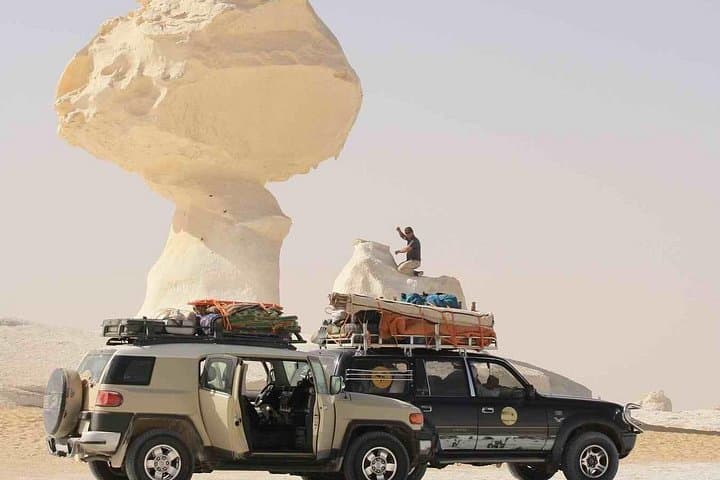
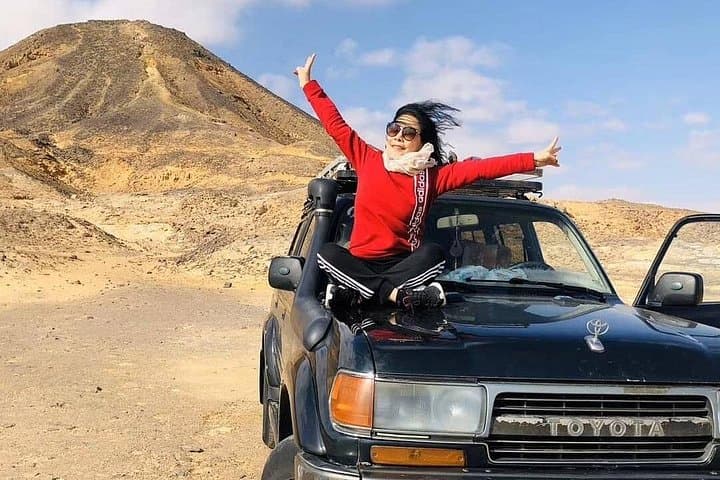
A thin wash of early light slides across the cracked plates of the Western Desert as the convoy of jeeps leaves Cairo behind. Dust lifts and the horizon flattens; travelers watch cultivated fields give way to open gypsum plains and the black volcanic outcrops that give the Black Desert its name.
Verified experiences and guided adventures in the surrounding area.
Operated by Hola Egipto · Bahariya Oasis, Giza Governorate
A thin wash of early light slides across the cracked plates of the Western Desert as the convoy of jeeps leaves Cairo behind. Dust lifts and the horizon flattens; travelers watch cultivated fields give way to open gypsum plains and the black volcanic outcrops that give the Black Desert its name.
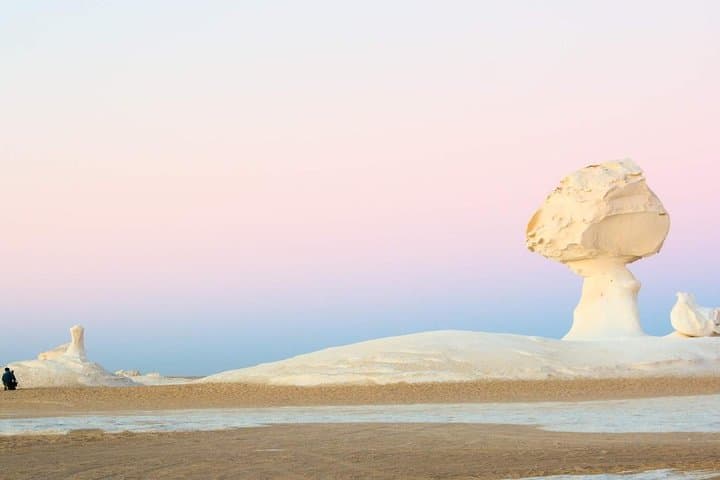
The route follows a long history of desert travel: oases like Bahariya have hosted caravans, Roman farms and ancient burial sites for millennia. Geologically the region is diverse—the Black Desert’s iron-rich cinder cones contrast with the White Desert’s wind-sculpted chalk mushrooms, products of wind and rare flash rains. Local culture is present in small ways: date palms in the oasis towns, Bedouin camp hospitality, and simple campfire meals beneath an enormous sky.
On day one, a guided jeep loop explores Bahariya’s salt flats, sand pyramids and cold springs; day two moves south through volcanic shoulders to Crystal Mountain and the valley formations before arriving in the White Desert for sunset and overnight desert camping. Day three brings a relaxed breakfast under the stars and a drive back to Cairo.
Practically, travelers should expect dusty roads, wide temperature swings between day and night, and mostly short walks on sand or rock. Modest fitness and stable footwear make moving between vehicles and camp easier. Guides provide tents, meals and water; personal layers, sun protection and a headlamp make the difference after dark. The trip rewards patience: in a landscape that feels slow and animate, the rock forms and desert light do much of the storytelling.
easy.
3 days (approx. 72 hours).
Suitable for travelers in basic physical condition; able to manage short walks on uneven sand and rock and to climb in and out of jeeps.
Pickup is provided from hotels in Cairo and Giza in the morning; exact pickup time is confirmed at booking and may vary by hotel location.
Overnight stays include a basic guesthouse or lodge at Bahariya Oasis on night one and a fully equipped Bedouin-style tent camp in the White Desert on night two; bedding and meals are included.
The tour is listed as suitable for a wide range of fitness levels, but vehicle access and sand/rock terrain can be challenging for some; contact the operator to discuss mobility needs before booking.
Guides and Bedouin camp staff manage sites, cooking and safety; weather cancellations are possible—follow guide instructions and bring basic first-aid supplies.
Bahariya Oasis has long been a human waypoint—ancient tombs and Greco-Roman artifacts attest to settled agriculture and caravan trade in the region.
The White Desert’s chalk formations are fragile—stay on established tracks, avoid climbing delicate structures and pack out all waste to protect the fragile desert crust.
Hola Egipto operates guided outdoor trips and adventures with an emphasis on safety, stewardship, and memorable experiences.
A thin wash of early light slides across the cracked plates of the Western Desert as the convoy of jeeps leaves Cairo behind. Dust lifts and the horizon flattens; travelers watch cultivated fields give way to open gypsum plains and the black volcanic outcrops that give the Black Desert its name.
A thin wash of early light slides across the cracked plates of the Western Desert as the convoy of jeeps leaves Cairo behind. Dust lifts and the horizon flattens; travelers watch cultivated fields give way to open gypsum plains and the black volcanic outcrops that give the Black Desert its name.
The route follows a long history of desert travel: oases like Bahariya have hosted caravans, Roman farms and ancient burial sites for millennia. Geologically the region is diverse—the Black Desert’s iron-rich cinder cones contrast with the White Desert’s wind-sculpted chalk mushrooms, products of wind and rare flash rains. Local culture is present in small ways: date palms in the oasis towns, Bedouin camp hospitality, and simple campfire meals beneath an enormous sky.
On day one, a guided jeep loop explores Bahariya’s salt flats, sand pyramids and cold springs; day two moves south through volcanic shoulders to Crystal Mountain and the valley formations before arriving in the White Desert for sunset and overnight desert camping. Day three brings a relaxed breakfast under the stars and a drive back to Cairo.
Practically, travelers should expect dusty roads, wide temperature swings between day and night, and mostly short walks on sand or rock. Modest fitness and stable footwear make moving between vehicles and camp easier. Guides provide tents, meals and water; personal layers, sun protection and a headlamp make the difference after dark. The trip rewards patience: in a landscape that feels slow and animate, the rock forms and desert light do much of the storytelling.