THE ADVENTURE COLLECTIVE® · Independent discovery and booking for outdoor travel

Learn core winter-hill skills in the Cairngorms with a local guide. This full-day, bespoke experience covers crampons, ice-axe technique, winter navigation and avalanche awareness tailored to conditions and group ability.
Learn core winter-hill skills in the Cairngorms with a local guide. This full-day, bespoke experience covers crampons, ice-axe technique, winter navigation and avalanche awareness tailored to conditions and group ability.
You step out of the minibus and the plateau stretches white and open, the air a clean edge against your face. Snow grinds under boots and the Cairngorm ridge seems to breathe — wind pushing, gullies holding powder — and your guide outlines the day: a practical, hands-on introduction to moving safely in mountain winter.
Verified experiences and guided adventures in the surrounding area.
Operated by Hillgoers · Aviemore, Highland
You step out of the minibus and the plateau stretches white and open, the air a clean edge against your face. Snow grinds under boots and the Cairngorm ridge seems to breathe — wind pushing, gullies holding powder — and your guide outlines the day: a practical, hands-on introduction to moving safely in mountain winter.
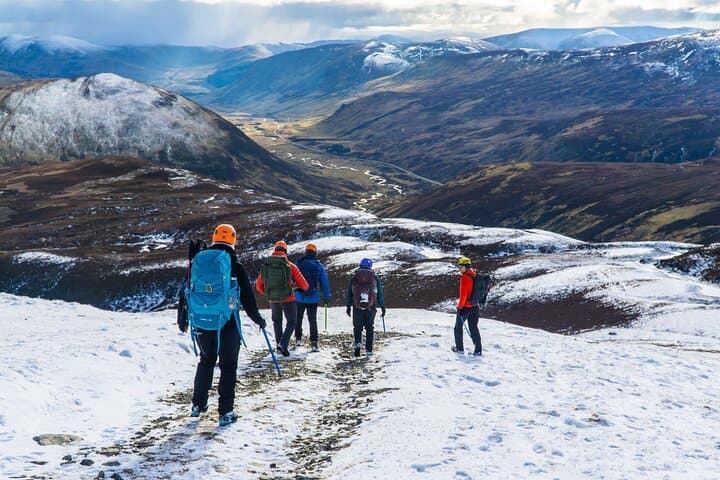
The Cairngorms are an ancient granite plateau shaped by ice; its broad corries and steep gullies drew early alpinists in the 19th century and later became a crucible for modern winter-mountaineering techniques. Local culture still carries a pragmatic respect for weather and route choice: maps, forecast, and a quiet, steady pace.
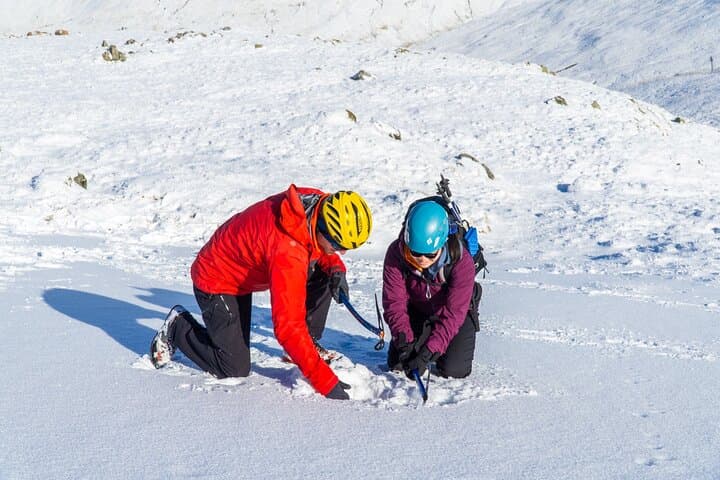
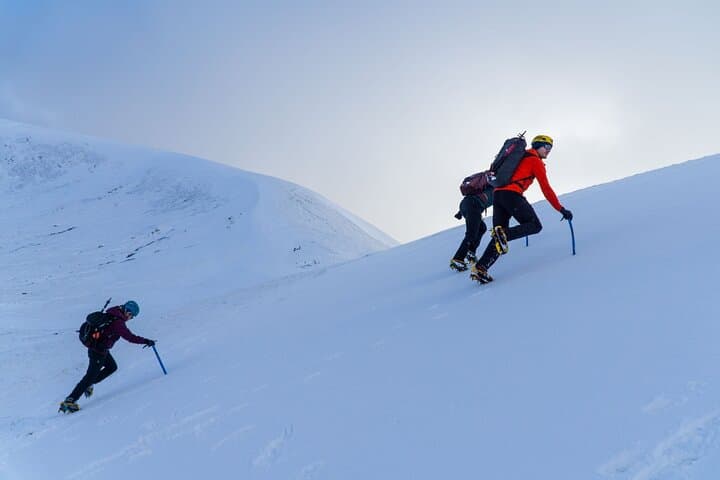
On a typical full-day session you’ll work on kit selection, personal movement on snow, crampon and ice-axe use, winter navigation, basic avalanche awareness, and emergency procedures. Guiding adapts to conditions — from gentle snow-plod on rounded summits to steeper, technical bits if the group is ready.
Practicalities: expect 6–8 hours on the hill with moderate to challenging exertion; the operator supplies technical kit (crampons, axes, helmets) but bring warm layers, waterproofs, sturdy boots, and a daypack. Hydrate and layer early; wind and temperature swing suddenly at altitude. Start times follow optimizing conditions — earlier for firmer snow, later for softer spring snow.
For those new to winter hills this day is a focused, confidence-building introduction; for competent walkers it’s a useful skills-topping session. Book with a local, qualified guide and leave the route-finding to someone who knows when the mountains will talk — and when to listen.
challenging.
6–8 hours.
Good cardiovascular fitness and stamina for sustained hill walking in snow; previous summer hill-walking experience recommended.
No — the operator supplies crampons, ice axes and helmets if required, though you must bring suitable boots and layers.
This course is aimed at people with summer hill-walking experience and a good fitness level; it’s an introduction to winter skills rather than an advanced course.
Expect a full-day session of roughly 6–8 hours including briefings, practical coaching and paced travel on snow.
Trips may be cancelled for safety if conditions are unsuitable; the provider notes they cancel in bad weather and will reschedule if possible.
The Cairngorms developed as a center for British winter mountaineering from the late 19th century, with local lodges and guides shaping modern techniques.
As part of Cairngorms National Park, routes are managed to limit erosion and disturbance; follow Leave No Trace principles and avoid sensitive wildlife areas, especially in winter.
Hillgoers operates guided outdoor trips and adventures with an emphasis on safety, stewardship, and memorable experiences.
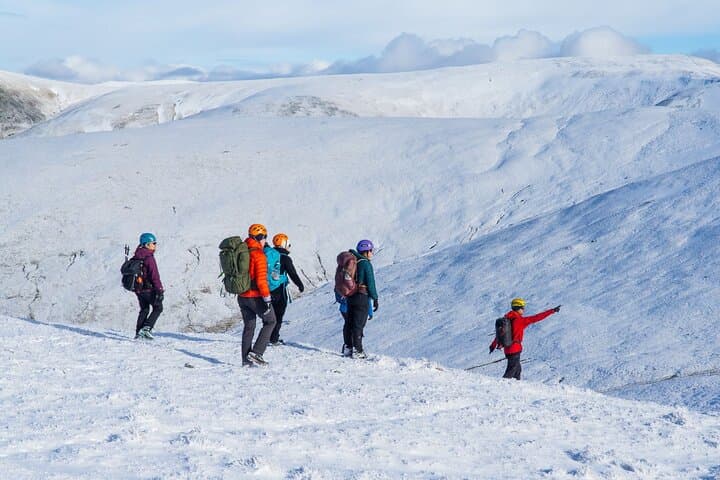
You step out of the minibus and the plateau stretches white and open, the air a clean edge against your face. Snow grinds under boots and the Cairngorm ridge seems to breathe — wind pushing, gullies holding powder — and your guide outlines the day: a practical, hands-on introduction to moving safely in mountain winter.
You step out of the minibus and the plateau stretches white and open, the air a clean edge against your face. Snow grinds under boots and the Cairngorm ridge seems to breathe — wind pushing, gullies holding powder — and your guide outlines the day: a practical, hands-on introduction to moving safely in mountain winter.
The Cairngorms are an ancient granite plateau shaped by ice; its broad corries and steep gullies drew early alpinists in the 19th century and later became a crucible for modern winter-mountaineering techniques. Local culture still carries a pragmatic respect for weather and route choice: maps, forecast, and a quiet, steady pace.
On a typical full-day session you’ll work on kit selection, personal movement on snow, crampon and ice-axe use, winter navigation, basic avalanche awareness, and emergency procedures. Guiding adapts to conditions — from gentle snow-plod on rounded summits to steeper, technical bits if the group is ready.
Practicalities: expect 6–8 hours on the hill with moderate to challenging exertion; the operator supplies technical kit (crampons, axes, helmets) but bring warm layers, waterproofs, sturdy boots, and a daypack. Hydrate and layer early; wind and temperature swing suddenly at altitude. Start times follow optimizing conditions — earlier for firmer snow, later for softer spring snow.
For those new to winter hills this day is a focused, confidence-building introduction; for competent walkers it’s a useful skills-topping session. Book with a local, qualified guide and leave the route-finding to someone who knows when the mountains will talk — and when to listen.