THE ADVENTURE COLLECTIVE® · Independent discovery and booking for outdoor travel

Rise with the river on a two-day Can Tho itinerary that pairs the early-morning chaos of Cai Rang floating market with a homestay on Son Islet. Expect boat rides through narrow canals, fruit orchards, hands-on local food experiences and a night in a simple homestay.
Rise with the river on a two-day Can Tho itinerary that pairs the early-morning chaos of Cai Rang floating market with a homestay on Son Islet. Expect boat rides through narrow canals, fruit orchards, hands-on local food experiences and a night in a simple homestay.
At 5:30 a.m. the river asserts itself: a slow ribbon of brown water threaded with boats, wooden poles and baskets stacked high with pineapples and dragon fruit. The Cai Rang floating market is rowdy and intimate—vendors shout, poles with goods bob like signposts, and coffee steam rises from a breakfast boat while sampans cut narrow veins into the canal.
Verified experiences and guided adventures in the surrounding area.
Operated by Fabulous Mekong Eco Tours · Can Tho, Can Tho Province
At 5:30 a.m. the river asserts itself: a slow ribbon of brown water threaded with boats, wooden poles and baskets stacked high with pineapples and dragon fruit. The Cai Rang floating market is rowdy and intimate—vendors shout, poles with goods bob like signposts, and coffee steam rises from a breakfast boat while sampans cut narrow veins into the canal.
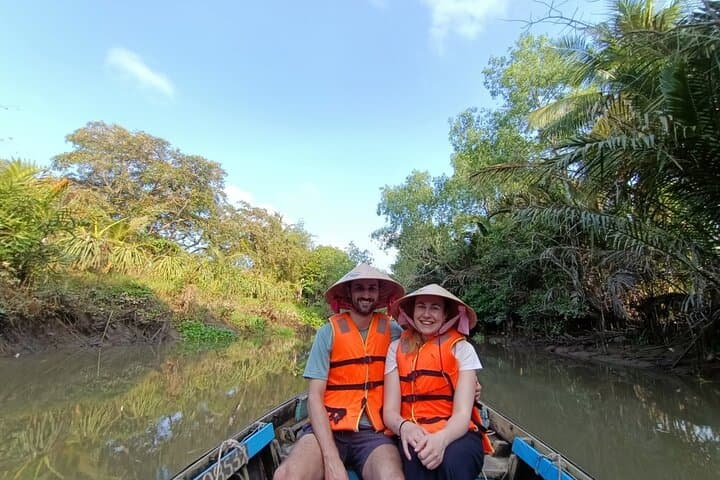
On day one the tour slips away from the main channel to Son Islet, where fish ponds rimmed by earthen dikes and mango orchards map how people have shaped the delta. Visitors walk village lanes, taste fruits straight from trees and learn to make local cakes in a traditional house; the homestay offers a close-up of daily rhythms that have persisted for generations.
Geologically the Mekong Delta is new land—sediment carried from inland builds islands and reshapes channels each year—so communities here adapt to shifting water and seasonal floods. Culturally, floating markets are a commercial language: boats trade produce, gossip and recipes. The route includes a cacao farm and the Lung Ngoc Hoang reserve, where reed-lined channels and rice paddies frame common wetland birds.
Practical guidance: plan early starts (market activity peaks before 8 a.m.), bring a lightweight rain jacket in monsoon months, and use insect repellent after dusk. Comfortable non-slip shoes, a dry bag for electronics, and small local currency for on-boat purchases make the trip smoother. Expect relaxed walking, multiple short boat legs, and basic homestay lodging; guides handle transfers from central Can Tho. This is a low-impact, sensory journey where the river keeps time and invites quiet attention.
easy.
2 days.
Suitable for travelers with basic mobility; involves short walks, boarding small boats and light activity at homestays.
Activity is busiest very early—most trading happens between about 5:30 and 8:00 a.m., after which traffic slows as boats disperse.
Basic breakfast and lunch are included; the tour offers a homestay-style overnight on Son Islet with simple amenities.
Yes—overall activity is low-impact, but boat boarding and uneven village paths may be difficult for some with limited mobility; notify the operator when booking.
Vegetarian options are available—advise the operator at booking; carrying snacks for dietary restrictions is recommended.
The Mekong Delta developed over centuries as river-borne sediment created fertile land; floating markets evolved as a practical response to communities living on and beside the water.
Seasonal flooding and agriculture shape the landscape; choose operators that minimize plastic waste, respect orchards and follow local guidance to protect wetlands.
Fabulous Mekong Eco Tours operates guided outdoor trips and adventures with an emphasis on safety, stewardship, and memorable experiences.



At 5:30 a.m. the river asserts itself: a slow ribbon of brown water threaded with boats, wooden poles and baskets stacked high with pineapples and dragon fruit. The Cai Rang floating market is rowdy and intimate—vendors shout, poles with goods bob like signposts, and coffee steam rises from a breakfast boat while sampans cut narrow veins into the canal.
At 5:30 a.m. the river asserts itself: a slow ribbon of brown water threaded with boats, wooden poles and baskets stacked high with pineapples and dragon fruit. The Cai Rang floating market is rowdy and intimate—vendors shout, poles with goods bob like signposts, and coffee steam rises from a breakfast boat while sampans cut narrow veins into the canal.
On day one the tour slips away from the main channel to Son Islet, where fish ponds rimmed by earthen dikes and mango orchards map how people have shaped the delta. Visitors walk village lanes, taste fruits straight from trees and learn to make local cakes in a traditional house; the homestay offers a close-up of daily rhythms that have persisted for generations.
Geologically the Mekong Delta is new land—sediment carried from inland builds islands and reshapes channels each year—so communities here adapt to shifting water and seasonal floods. Culturally, floating markets are a commercial language: boats trade produce, gossip and recipes. The route includes a cacao farm and the Lung Ngoc Hoang reserve, where reed-lined channels and rice paddies frame common wetland birds.
Practical guidance: plan early starts (market activity peaks before 8 a.m.), bring a lightweight rain jacket in monsoon months, and use insect repellent after dusk. Comfortable non-slip shoes, a dry bag for electronics, and small local currency for on-boat purchases make the trip smoother. Expect relaxed walking, multiple short boat legs, and basic homestay lodging; guides handle transfers from central Can Tho. This is a low-impact, sensory journey where the river keeps time and invites quiet attention.