THE ADVENTURE COLLECTIVE® · Independent discovery and booking for outdoor travel

Two full days from Salta cover Cafayate’s red-rock canyons, a winery tasting, and the high-white expanse of Salinas Grandes via Cuesta del Lipán. Expect long drives, high passes and spectacular light that rewards early starts.
Two full days from Salta cover Cafayate’s red-rock canyons, a winery tasting, and the high-white expanse of Salinas Grandes via Cuesta del Lipán. Expect long drives, high passes and spectacular light that rewards early starts.
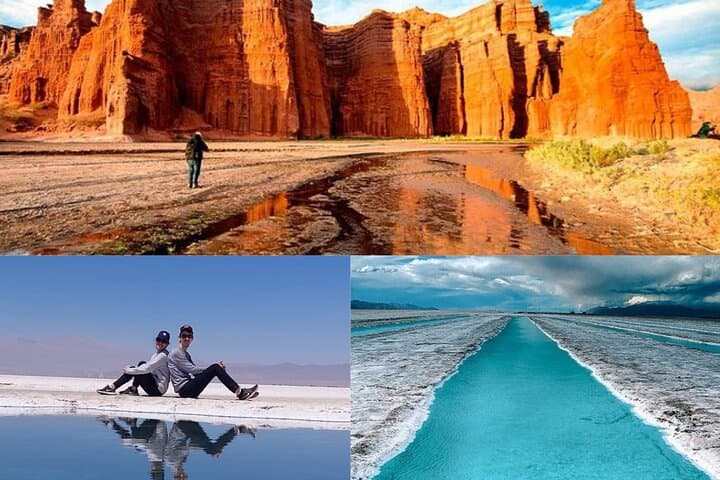
The bus pulls out of Salta before sunrise and the city shrinks into a ribbon of asphalt while the Andes begin to show their angles—red bands, chalky spires and wind-sculpted amphitheaters that seem to lean forward to be seen. On day one you drive the 360 km loop to Cafayate, through the Quebrada de las Conchas, where roadside formations like the Amphitheater and Garganta del Diablo stand like chapters in a geological book. On day two the road climbs dramatically toward Purmamarca and the Salinas Grandes; at Cuesta del Lipán you cross 4,070 m and feel the air thin and the landscape go suddenly white.
Verified experiences and guided adventures in the surrounding area.
Operated by AGENCIA DE TURISMO TIAMAR EVT · Salta, Salta
The bus pulls out of Salta before sunrise and the city shrinks into a ribbon of asphalt while the Andes begin to show their angles—red bands, chalky spires and wind-sculpted amphitheaters that seem to lean forward to be seen. On day one you drive the 360 km loop to Cafayate, through the Quebrada de las Conchas, where roadside formations like the Amphitheater and Garganta del Diablo stand like chapters in a geological book. On day two the road climbs dramatically toward Purmamarca and the Salinas Grandes; at Cuesta del Lipán you cross 4,070 m and feel the air thin and the landscape go suddenly white.
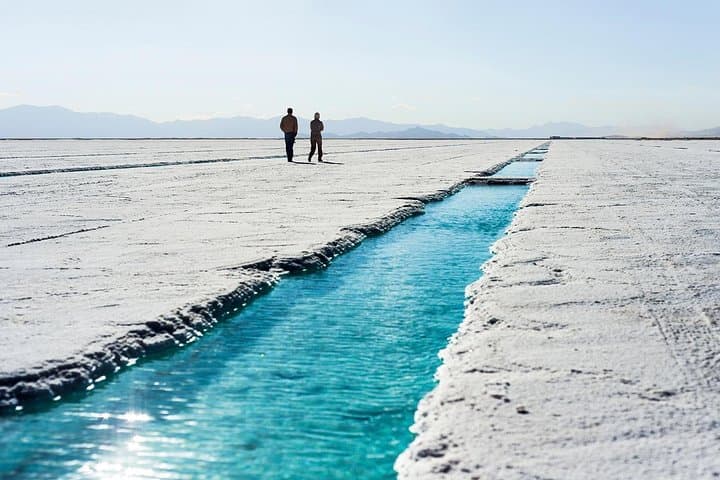
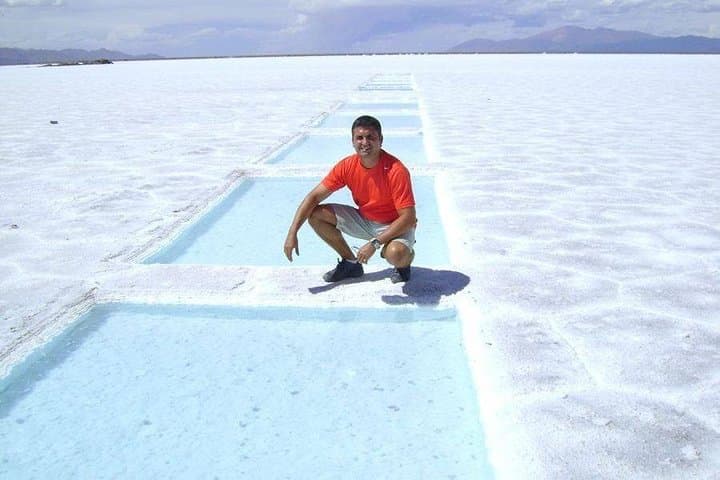
This two-day combo maps a concise history: the valleys are the old routes of the Calchaquí peoples and later colonial settlers, and the region’s viticulture—especially the aromatic Torrontés—took root in the Valles Calchaquíes because of its high-altitude sun and cool nights. Geologically, the Quebrada’s red layers are sedimentary beds twisted and exposed by tectonic uplift; the Salinas Grandes are the exposed floor of an evaporated Pleistocene lake, a high-altitude salt desert that reflects light with an almost unreal clarity.
Culturally the trip moves from winery patios and cathedral squares to market stalls selling handwoven textiles and llama-fur crafts. Cafayate’s town center gives you an hour to walk its plaza and visit a small cathedral, while many operators include a winery visit with tastings of local varieties.
Practical guidance: the days are long—expect 11–13 hours on the road each day with multiple stops for photos, short hikes and a winery visit. Altitude is the main variable: Salta sits around 1,200 m, Cafayate about 1,700 m and Cuesta del Lipán tops 4,070 m; plan for mild to moderate altitude effects (headache, shortness of breath) and carry water and altitude-friendly pacing. Wear sun protection and layers; the high desert sun is intense even when mornings feel cool. The tour is suitable for most fitness levels but involves long periods seated in the vehicle.
Logistics and tips: pickups are centralized in Salta’s Plaza 9 de Julio area; bring cash for snacks and small market purchases. If you’re sensitive to long drives, ask about vehicle comfort in advance—the route includes steep switchbacks on Route 52. On photography: plan for high-contrast scenes—bring a polarizer and neutral exposure settings for the salt flat reflections.
Why go: this combo compresses the best visual primers of northern Argentina—wine country, red canyons, salt deserts and high mountain passes—into two dense, accessible days that reward early wake-ups with sweeping views and offbeat cultural encounters.
moderate.
2 days (two full-day excursions, 11–13 hours each).
You should be comfortable with long days of travel and short walks at altitude; minimal hiking demands.
Expect roughly 11 hours and about 360 km on the Cafayate day, and up to 13 hours and roughly 520 km for the Salinas Grandes day—both include multiple stops.
Some travelers notice mild symptoms near Cuesta del Lipán (4,070 m). Hydrate, avoid alcohol before the pass, and tell guides if you feel worse than a headache or light breathlessness.
Lunch is usually not included; tours stop in towns where you can buy a meal—check operator details to confirm included items.
The itinerary lists a visit to a winery with included tasting on the Cafayate day, but offerings can vary by operator and season.
Yes—stops include towns and viewpoints with public or restaurant restrooms, but bring hand sanitizer and small change for facilities.
The tour is rated ‘physically easy’ by the operator, but long drives and altitude can be challenging; discuss mobility and health concerns when booking.
The Valles Calchaquíes were routes for pre-Columbian communities and later Spanish colonists; vineyards were established centuries ago at high elevation for their diurnal temperature swings.
The salt flats are fragile—stick to designated viewing areas and avoid disturbing salt crusts; support local artisans and small wineries to sustain traditional economies.
AGENCIA DE TURISMO TIAMAR EVT operates guided outdoor trips and adventures with an emphasis on safety, stewardship, and memorable experiences.
The bus pulls out of Salta before sunrise and the city shrinks into a ribbon of asphalt while the Andes begin to show their angles—red bands, chalky spires and wind-sculpted amphitheaters that seem to lean forward to be seen. On day one you drive the 360 km loop to Cafayate, through the Quebrada de las Conchas, where roadside formations like the Amphitheater and Garganta del Diablo stand like chapters in a geological book. On day two the road climbs dramatically toward Purmamarca and the Salinas Grandes; at Cuesta del Lipán you cross 4,070 m and feel the air thin and the landscape go suddenly white.
The bus pulls out of Salta before sunrise and the city shrinks into a ribbon of asphalt while the Andes begin to show their angles—red bands, chalky spires and wind-sculpted amphitheaters that seem to lean forward to be seen. On day one you drive the 360 km loop to Cafayate, through the Quebrada de las Conchas, where roadside formations like the Amphitheater and Garganta del Diablo stand like chapters in a geological book. On day two the road climbs dramatically toward Purmamarca and the Salinas Grandes; at Cuesta del Lipán you cross 4,070 m and feel the air thin and the landscape go suddenly white.
This two-day combo maps a concise history: the valleys are the old routes of the Calchaquí peoples and later colonial settlers, and the region’s viticulture—especially the aromatic Torrontés—took root in the Valles Calchaquíes because of its high-altitude sun and cool nights. Geologically, the Quebrada’s red layers are sedimentary beds twisted and exposed by tectonic uplift; the Salinas Grandes are the exposed floor of an evaporated Pleistocene lake, a high-altitude salt desert that reflects light with an almost unreal clarity.
Culturally the trip moves from winery patios and cathedral squares to market stalls selling handwoven textiles and llama-fur crafts. Cafayate’s town center gives you an hour to walk its plaza and visit a small cathedral, while many operators include a winery visit with tastings of local varieties.
Practical guidance: the days are long—expect 11–13 hours on the road each day with multiple stops for photos, short hikes and a winery visit. Altitude is the main variable: Salta sits around 1,200 m, Cafayate about 1,700 m and Cuesta del Lipán tops 4,070 m; plan for mild to moderate altitude effects (headache, shortness of breath) and carry water and altitude-friendly pacing. Wear sun protection and layers; the high desert sun is intense even when mornings feel cool. The tour is suitable for most fitness levels but involves long periods seated in the vehicle.
Logistics and tips: pickups are centralized in Salta’s Plaza 9 de Julio area; bring cash for snacks and small market purchases. If you’re sensitive to long drives, ask about vehicle comfort in advance—the route includes steep switchbacks on Route 52. On photography: plan for high-contrast scenes—bring a polarizer and neutral exposure settings for the salt flat reflections.
Why go: this combo compresses the best visual primers of northern Argentina—wine country, red canyons, salt deserts and high mountain passes—into two dense, accessible days that reward early wake-ups with sweeping views and offbeat cultural encounters.