THE ADVENTURE COLLECTIVE® · Independent discovery and booking for outdoor travel

A two-day loop from Salta into La Quebrada de las Conchas and the wine town of Cafayate, this trip pairs dramatic red-rock scenery with high-altitude wineries. Expect amphitheater-like formations, Torrontés tastings, and easy walks with big-picture geology explained by guides.
A two-day loop from Salta into La Quebrada de las Conchas and the wine town of Cafayate, this trip pairs dramatic red-rock scenery with high-altitude wineries. Expect amphitheater-like formations, Torrontés tastings, and easy walks with big-picture geology explained by guides.
You kick off before dawn in Salta, squeezing into an air-conditioned minivan as the city’s colonial facades shrink behind you. The road threads south through the Lerma Valley, past tiled farms and tobacco fields, then climbs into a corridor of red and ochre where wind and rain have carved stone into impossible shapes. La Quebrada de las Conchas opens like a natural gallery: arches, amphitheaters and fins of sandstone that catch late afternoon light like blown glass.
Verified experiences and guided adventures in the surrounding area.
Operated by AGENCIA DE TURISMO TIAMAR EVT · Cafayate, Salta
You kick off before dawn in Salta, squeezing into an air-conditioned minivan as the city’s colonial facades shrink behind you. The road threads south through the Lerma Valley, past tiled farms and tobacco fields, then climbs into a corridor of red and ochre where wind and rain have carved stone into impossible shapes. La Quebrada de las Conchas opens like a natural gallery: arches, amphitheaters and fins of sandstone that catch late afternoon light like blown glass.
By the time the van eases into Cafayate, the town’s low-slung adobe and whitewashed buildings take on a softer, cultivated air. Cafayate’s story is half geology and half vine. The formations you pass are Pleistocene and Miocene sandstones—sediments upturned then etched by seasonal floods—while the town’s vineyards are a product of altitude: terraces and narrow rows planted at 1,700 meters where diurnal shifts concentrate sugar and aromatics in the grapes. Indigenous Diaguita-Calchaquí communities once traversed these valleys; colonial and modern winemakers layered their practices onto the landscape, producing the region’s signature Torrontés and deeply colored Malbecs.
Day one is scenery and slow discovery: stops at viewpoints such as the Amphitheater and the Devil’s Throat, photo breaks where striped cliffs lean toward the sky, then a late-afternoon arrival to a small bodega where tasting rooms turn the day’s dust into golden cups of wine. Overnight lodging in Cafayate gives time to stroll the plaza, sample local empanadas and compare tasting notes under a sky so clear you can pick out constellations unaided.
The return leg is a reverse study in geology: different light, different faces of the same cliffs. Guides on this tour supply context—wine production at altitude, the way irrigation channels were rerouted over generations, and why Torrontés smells like grapefruit and jasmine even when planted on red stone.
Practical edge: bring layers for the temperature swing, sun protection for the low-humidity glare, and a reusable water bottle; the trip is easy on your legs but long in hours. Shoes should be sturdy enough for short walks on gravel and shallow trails at viewpoints. If you plan to shop at bodegas, bring cash—smaller producers sometimes prefer it—and save space in your luggage for a bottle or two.
The route is accessible for most travelers; pickup and drop-off from Salta hotels is usually included, and the group size keeps the pace steady. For photographers, aim for sunrise or late afternoon light to emphasize the cliffs’ striations. For anyone curious about Argentine viticulture, the combination of geology and grape will feel like two chapters of the same story.
easy.
2 days (approx. 8–10 hours per day).
Suitable for most fitness levels; requires mobility for short gravel walks and boarding the minivan.
The drive is roughly 3.5 to 4 hours each way depending on stops; the tour schedules scenic breaks, so expect a full day of travel the first day.
The tour includes one or two winery visits with tastings, but purchases and any additional private tours at bodegas are typically extra.
Yes—infants must sit on an adult’s lap; operators often provide infant seats, but check at booking for specifics.
A current valid passport is required on the day of travel, so bring it even for domestic travelers who may need ID for booking forms.
Yes; spring through fall are most comfortable. Winter is cooler but still accessible—check weather and layer accordingly.
No—most walking is short and on gravel or paved town streets; steep hikes are not part of the standard itinerary.
The Calchaquí Valley was populated by Diaguita-Calchaquí groups before Spanish colonization; viticulture expanded under colonial and post-colonial settlers, evolving into the high-altitude wineries of today.
The dry scrub and sandstone formations are fragile—stick to marked roads and viewpoints, avoid collecting rock samples, and support local bodegas that practice water-conscious viticulture.
AGENCIA DE TURISMO TIAMAR EVT operates guided outdoor trips and adventures with an emphasis on safety, stewardship, and memorable experiences.
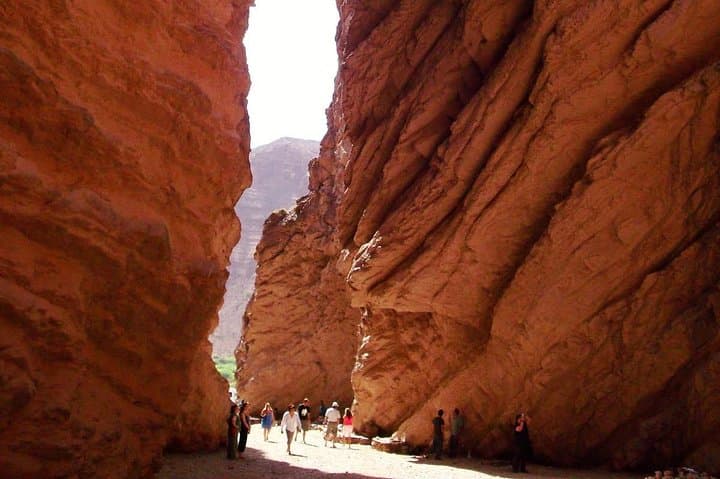
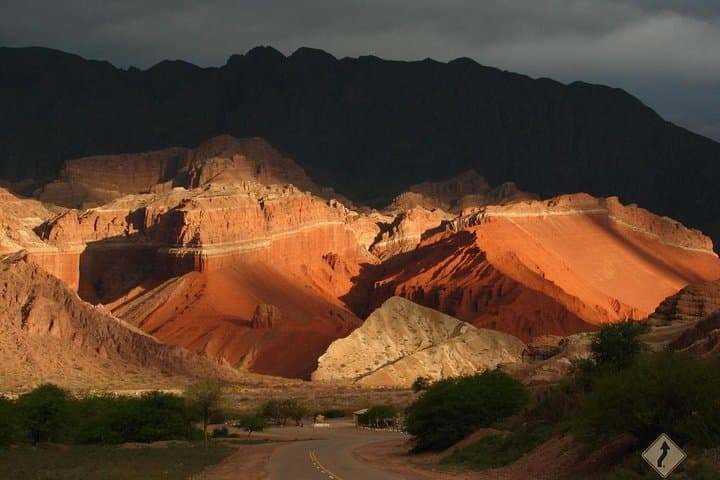
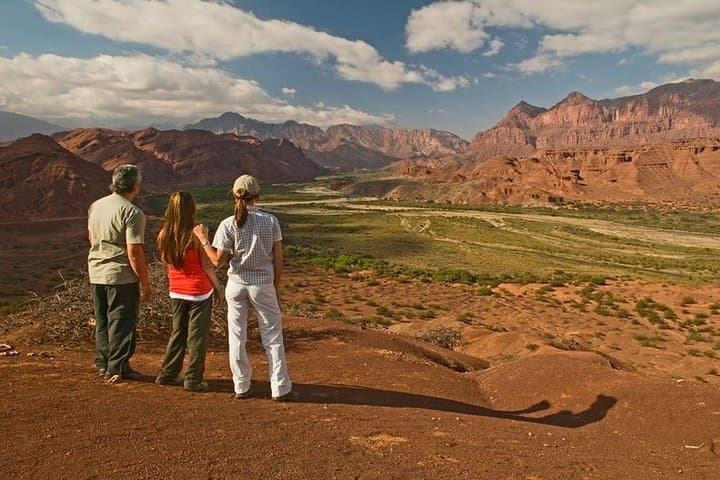
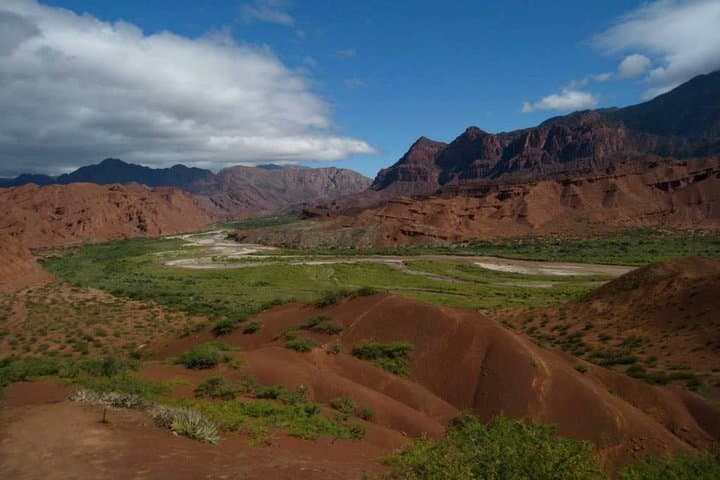
You kick off before dawn in Salta, squeezing into an air-conditioned minivan as the city’s colonial facades shrink behind you. The road threads south through the Lerma Valley, past tiled farms and tobacco fields, then climbs into a corridor of red and ochre where wind and rain have carved stone into impossible shapes. La Quebrada de las Conchas opens like a natural gallery: arches, amphitheaters and fins of sandstone that catch late afternoon light like blown glass.
You kick off before dawn in Salta, squeezing into an air-conditioned minivan as the city’s colonial facades shrink behind you. The road threads south through the Lerma Valley, past tiled farms and tobacco fields, then climbs into a corridor of red and ochre where wind and rain have carved stone into impossible shapes. La Quebrada de las Conchas opens like a natural gallery: arches, amphitheaters and fins of sandstone that catch late afternoon light like blown glass.
By the time the van eases into Cafayate, the town’s low-slung adobe and whitewashed buildings take on a softer, cultivated air. Cafayate’s story is half geology and half vine. The formations you pass are Pleistocene and Miocene sandstones—sediments upturned then etched by seasonal floods—while the town’s vineyards are a product of altitude: terraces and narrow rows planted at 1,700 meters where diurnal shifts concentrate sugar and aromatics in the grapes. Indigenous Diaguita-Calchaquí communities once traversed these valleys; colonial and modern winemakers layered their practices onto the landscape, producing the region’s signature Torrontés and deeply colored Malbecs.
Day one is scenery and slow discovery: stops at viewpoints such as the Amphitheater and the Devil’s Throat, photo breaks where striped cliffs lean toward the sky, then a late-afternoon arrival to a small bodega where tasting rooms turn the day’s dust into golden cups of wine. Overnight lodging in Cafayate gives time to stroll the plaza, sample local empanadas and compare tasting notes under a sky so clear you can pick out constellations unaided.
The return leg is a reverse study in geology: different light, different faces of the same cliffs. Guides on this tour supply context—wine production at altitude, the way irrigation channels were rerouted over generations, and why Torrontés smells like grapefruit and jasmine even when planted on red stone.
Practical edge: bring layers for the temperature swing, sun protection for the low-humidity glare, and a reusable water bottle; the trip is easy on your legs but long in hours. Shoes should be sturdy enough for short walks on gravel and shallow trails at viewpoints. If you plan to shop at bodegas, bring cash—smaller producers sometimes prefer it—and save space in your luggage for a bottle or two.
The route is accessible for most travelers; pickup and drop-off from Salta hotels is usually included, and the group size keeps the pace steady. For photographers, aim for sunrise or late afternoon light to emphasize the cliffs’ striations. For anyone curious about Argentine viticulture, the combination of geology and grape will feel like two chapters of the same story.