THE ADVENTURE COLLECTIVE® · Independent discovery and booking for outdoor travel

Walk the streets where Welsh history meets the sea. This self-guided Caernarfon tour loops the castle, waterfront and town walls in about 75–90 minutes, mixing architecture, local stories and easy viewpoints.
Walk the streets where Welsh history meets the sea. This self-guided Caernarfon tour loops the castle, waterfront and town walls in about 75–90 minutes, mixing architecture, local stories and easy viewpoints.
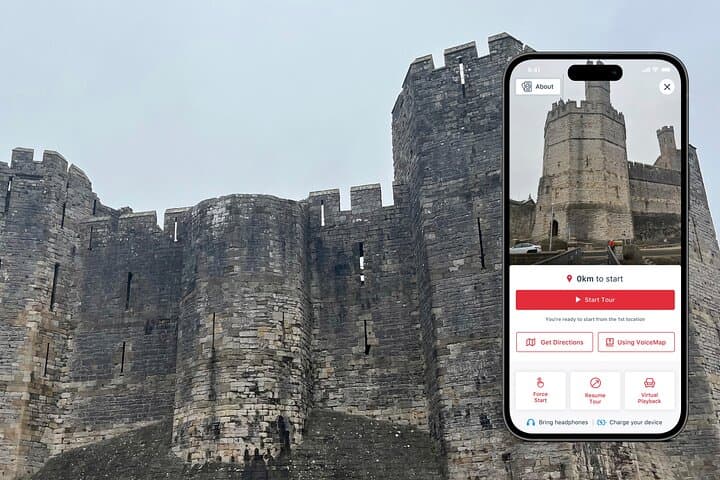
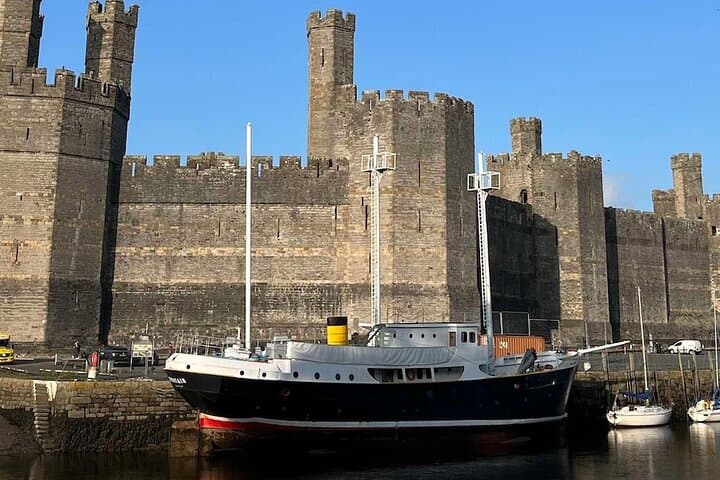
A salt-scented wind pushes across the Afon Seiont as you stand in Castle Square, the battlements of Caernarfon Castle slicing the skyline to the west. Cobbled streets fan out from the square; gulls wheel over the Pont Yr Aber swing bridge and the rhythm of Welsh spoken on doorways gives the place a distinct voice.
Verified experiences and guided adventures in the surrounding area.
Operated by VoiceMap Audio Tours · Caernarfon, Gwynedd
A salt-scented wind pushes across the Afon Seiont as you stand in Castle Square, the battlements of Caernarfon Castle slicing the skyline to the west. Cobbled streets fan out from the square; gulls wheel over the Pont Yr Aber swing bridge and the rhythm of Welsh spoken on doorways gives the place a distinct voice.
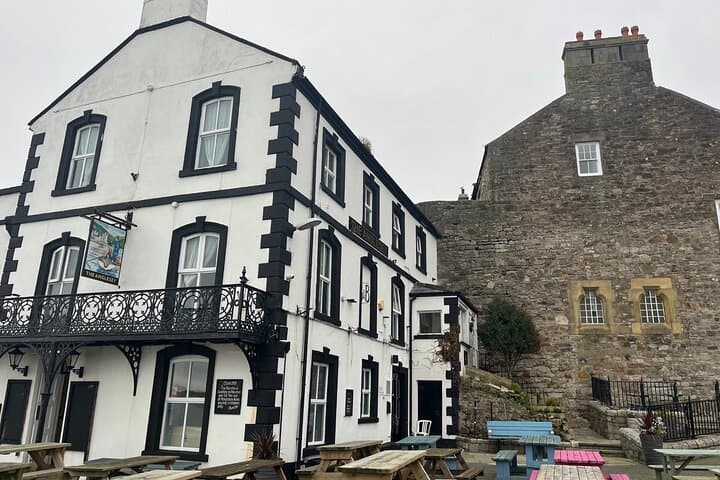
The town’s story is overt—Edward I’s late-13th-century fortress dominates the shore, built as a power statement during the conquest of Gwynedd. Underfoot, old quay stone and reclaimed slate point to a maritime and industrial past tied to the slate trade; the town walls, gateways and St Mary’s Church are tangible chapters in a compact urban geology. Cultural pride runs through Caernarfon: bilingual signage, local inns like the Black Boy, and the nearby Welsh Highland Railway recall a living civic history.
The self-guided route takes roughly 75–90 minutes, covering about 1.5–2.5 km on mostly flat, cobbled or paved surfaces with minimal elevation gain (under 50 m). Expect frequent viewpoints of the castle across the river, the station at Slate Quay, and market streets where independent shops and cafés invite stops.
Practically: start early for quieter streets and better light for photos, carry a waterproof layer—weather shifts fast—and bring a charged phone for the offline GPS route. Castle entry is not included but visible from multiple vantage points on the walk. This tour suits walkers of all levels who want history, harbour air and a manageable urban stroll rich in local character.
easy.
1–1.5 hours.
Suitable for most fitness levels; minimal hills and short walking distances make it accessible for casual walkers.
No. The self-guided tour shows viewpoints around the castle but castle admission and guided entry are separate and may require tickets.
The route takes about 75–90 minutes, covering roughly 1.5–2.5 km on mostly flat terrain with minimal elevation—easy for most walkers.
The tour listing notes wheelchair and stroller accessibility; however some cobbled sections and bridges can be uneven—check specific stretches if mobility is a concern.
Yes. Caernarfon is served by local buses and the town center where the tour starts is easy to reach on foot from transport stops.
Caernarfon Castle was constructed by Edward I in the late 13th century as part of a ring of fortresses; the town later grew around maritime trade and slate export.
High footfall around the walls and quays creates wear—stick to paths, avoid climbing on ruins, and support local conservation by using marked trails and patronising local businesses.
VoiceMap Audio Tours operates guided outdoor trips and adventures with an emphasis on safety, stewardship, and memorable experiences.

A salt-scented wind pushes across the Afon Seiont as you stand in Castle Square, the battlements of Caernarfon Castle slicing the skyline to the west. Cobbled streets fan out from the square; gulls wheel over the Pont Yr Aber swing bridge and the rhythm of Welsh spoken on doorways gives the place a distinct voice.
A salt-scented wind pushes across the Afon Seiont as you stand in Castle Square, the battlements of Caernarfon Castle slicing the skyline to the west. Cobbled streets fan out from the square; gulls wheel over the Pont Yr Aber swing bridge and the rhythm of Welsh spoken on doorways gives the place a distinct voice.
The town’s story is overt—Edward I’s late-13th-century fortress dominates the shore, built as a power statement during the conquest of Gwynedd. Underfoot, old quay stone and reclaimed slate point to a maritime and industrial past tied to the slate trade; the town walls, gateways and St Mary’s Church are tangible chapters in a compact urban geology. Cultural pride runs through Caernarfon: bilingual signage, local inns like the Black Boy, and the nearby Welsh Highland Railway recall a living civic history.
The self-guided route takes roughly 75–90 minutes, covering about 1.5–2.5 km on mostly flat, cobbled or paved surfaces with minimal elevation gain (under 50 m). Expect frequent viewpoints of the castle across the river, the station at Slate Quay, and market streets where independent shops and cafés invite stops.
Practically: start early for quieter streets and better light for photos, carry a waterproof layer—weather shifts fast—and bring a charged phone for the offline GPS route. Castle entry is not included but visible from multiple vantage points on the walk. This tour suits walkers of all levels who want history, harbour air and a manageable urban stroll rich in local character.