THE ADVENTURE COLLECTIVE® · Independent discovery and booking for outdoor travel

A full-day small-group tour from Girona that pairs the windswept coves of Cadaqués with a guided visit to the Romanesque monastery of Sant Pere de Rodes. Expect coastal panoramas, medieval architecture, and practical tips for making the most of a long day on the Costa Brava.
A full-day small-group tour from Girona that pairs the windswept coves of Cadaqués with a guided visit to the Romanesque monastery of Sant Pere de Rodes. Expect coastal panoramas, medieval architecture, and practical tips for making the most of a long day on the Costa Brava.
You arrive midmorning at the edge of Cap de Creus and the sea opens like a slow exhale — wind-sculpted granite cliffs and salt-bright air that pushes your attention seaward. The van leaves Girona behind and the road climbs into a coastline that feels older than its towns, where Cadaqués’ white houses lean toward the bay and the monastery of Sant Pere de Rodes crowns a ridge like a deliberate gesture.
Verified experiences and guided adventures in the surrounding area.
Operated by Girona Experience Tours · Girona, Catalonia
You arrive midmorning at the edge of Cap de Creus and the sea opens like a slow exhale — wind-sculpted granite cliffs and salt-bright air that pushes your attention seaward. The van leaves Girona behind and the road climbs into a coastline that feels older than its towns, where Cadaqués’ white houses lean toward the bay and the monastery of Sant Pere de Rodes crowns a ridge like a deliberate gesture.
The abbey dates to medieval Catalonia, once a spiritual hub for the county of Empúries; its Romanesque cloister and portal — carved by the Master of Cabestany — speak to a long history of pilgrimage and maritime power. Geologically, Cap de Creus is the easternmost outcrop of the Pyrenees, granite and schist torqued by ancient tectonics and then polished by mistral winds and relentless salt.
Culture here is compact: fishing families, artisans, and a modernist legacy after Dalí, who made Cadaqués a summer haunt. Small coves with crystalline water invite inspection; narrow streets reward slow walking and cafés reward slower conversation.
Practicalities: expect a full 10‑hour day with guided time in Cadaqués and a detailed visit to Sant Pere de Rodes. Wear sturdy walking shoes for uneven village streets and monastery paths, pack sun protection and a light layer against the wind, and bring water — bottled water is provided but refills are useful. Tours run year-round but check seasonal daylight and local ferry or road conditions. Groups are capped small (up to 6), so booking ahead is recommended for peak season.
easy.
10 hours.
Suitable for most fitness levels; involves moderate walking on uneven surfaces and short stair sections at the monastery.
The tour starts and ends at Plaça Sant Feliu beside River Caffè in Girona; exact pickup details are provided at booking.
The guided visit to Sant Pere de Rodes is included; however, some inner areas may have separate access restrictions depending on conservation works.
Yes — the itinerary includes free time in Cadaqués for lunch; bring cash or card as some small establishments are cash-only.
Yes; infants and small children can use strollers and infant seats are available, but expect uneven terrain in village and monastery areas.
Sant Pere de Rodes served as a major religious center from the 11th to 14th centuries and shows notable Romanesque sculpture attributed to the Master of Cabestany.
Cap de Creus is a protected natural park; stick to marked paths, avoid collecting shells or rocks, and support local businesses to help maintain low-impact tourism.
Girona Experience Tours operates guided outdoor trips and adventures with an emphasis on safety, stewardship, and memorable experiences.
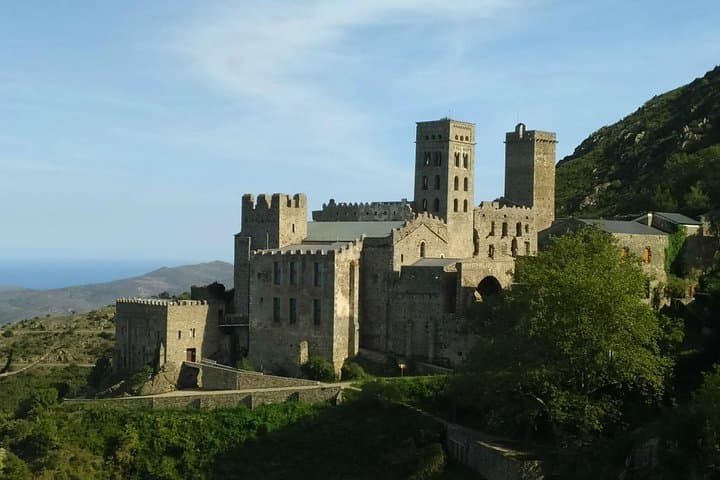


You arrive midmorning at the edge of Cap de Creus and the sea opens like a slow exhale — wind-sculpted granite cliffs and salt-bright air that pushes your attention seaward. The van leaves Girona behind and the road climbs into a coastline that feels older than its towns, where Cadaqués’ white houses lean toward the bay and the monastery of Sant Pere de Rodes crowns a ridge like a deliberate gesture.
You arrive midmorning at the edge of Cap de Creus and the sea opens like a slow exhale — wind-sculpted granite cliffs and salt-bright air that pushes your attention seaward. The van leaves Girona behind and the road climbs into a coastline that feels older than its towns, where Cadaqués’ white houses lean toward the bay and the monastery of Sant Pere de Rodes crowns a ridge like a deliberate gesture.
The abbey dates to medieval Catalonia, once a spiritual hub for the county of Empúries; its Romanesque cloister and portal — carved by the Master of Cabestany — speak to a long history of pilgrimage and maritime power. Geologically, Cap de Creus is the easternmost outcrop of the Pyrenees, granite and schist torqued by ancient tectonics and then polished by mistral winds and relentless salt.
Culture here is compact: fishing families, artisans, and a modernist legacy after Dalí, who made Cadaqués a summer haunt. Small coves with crystalline water invite inspection; narrow streets reward slow walking and cafés reward slower conversation.
Practicalities: expect a full 10‑hour day with guided time in Cadaqués and a detailed visit to Sant Pere de Rodes. Wear sturdy walking shoes for uneven village streets and monastery paths, pack sun protection and a light layer against the wind, and bring water — bottled water is provided but refills are useful. Tours run year-round but check seasonal daylight and local ferry or road conditions. Groups are capped small (up to 6), so booking ahead is recommended for peak season.