THE ADVENTURE COLLECTIVE® · Independent discovery and booking for outdoor travel

Escape the Cabo crowds for a full-day, two-tank wreck dive at Isla Espíritu Santo. Explore the Fang Ming, Salvatierra or C59 wrecks, spot turtles and playful baby sea lions, and finish with a picnic on a secluded beach.
Escape the Cabo crowds for a full-day, two-tank wreck dive at Isla Espíritu Santo. Explore the Fang Ming, Salvatierra or C59 wrecks, spot turtles and playful baby sea lions, and finish with a picnic on a secluded beach.
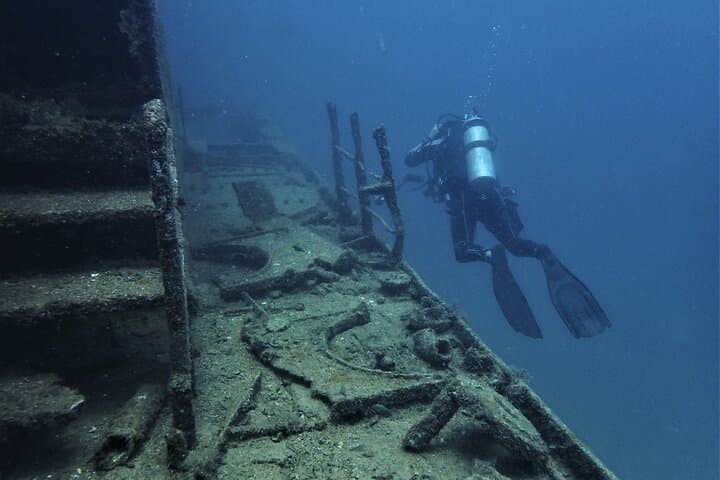
You slide into the predawn dark while the van hums north along the Baja spine — the lights of Cabo shrinking behind you as the sea grows larger in the windshield. Two hours later, Marina La Paz yawns awake under a pink horizon and a 28-foot panga waits, engines low and gear already lashed. By the time the sun clears the island ridgelines, you’re cutting toward Isla Espíritu Santo, where rusted ribs of three famous wrecks rise like stories from the bottom: the Fang Ming, the Salvatierra and the C59.
Verified experiences and guided adventures in the surrounding area.
Operated by Cabo Private Guide · La Paz, Baja California Sur
You slide into the predawn dark while the van hums north along the Baja spine — the lights of Cabo shrinking behind you as the sea grows larger in the windshield. Two hours later, Marina La Paz yawns awake under a pink horizon and a 28-foot panga waits, engines low and gear already lashed. By the time the sun clears the island ridgelines, you’re cutting toward Isla Espíritu Santo, where rusted ribs of three famous wrecks rise like stories from the bottom: the Fang Ming, the Salvatierra and the C59.
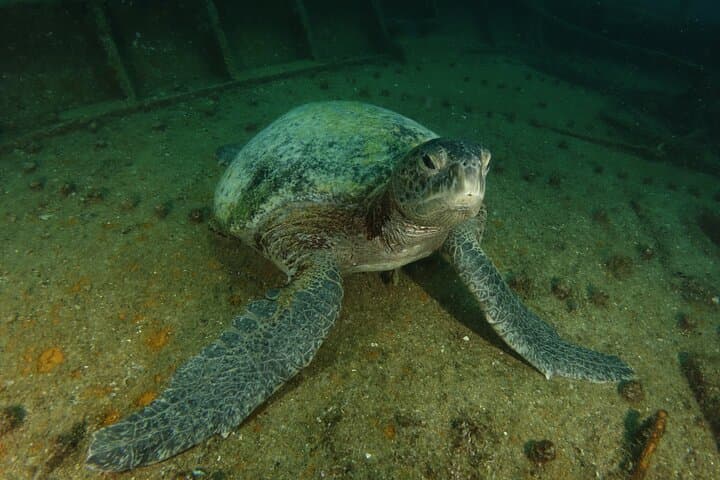
The Gulf of California, designated as Islands and Protected Areas of the Gulf of California by UNESCO, is geologically young and violent — a pulling-apart of the North American and Pacific plates. That tectonic restlessness created steep drop-offs, sheltered coves and nutrient-rich currents that now feed dense reefs and schools of fish. The wrecks around Espíritu Santo sit on those lee slopes, perches for turtles, rays and the curious surge of baby sea lions known to play in the shallows.
Historically the area has been a working seascape: small-scale fishing, pearl harvesting and the occasional commercial ship passing to La Paz. Today local dive operators balance tourism with protection; excursions run to strict depth limits and emphasize reef-safe sunscreen and no-touch policies.
On this full-day outing you’ll make two guided dives: expect 50-minute bottom times at 18–22 m (60–70 ft) on both profiles, with a surface interval on the boat and a picnic lunch on a quiet, rocky-sand beach. The panga is compact; setup and briefings are efficient. Snacks and drinks are provided, and the schedule gets you back to Marina La Paz around 3 pm and into Cabo by roughly 6 pm — plan dinner for after 7:30 pm if you’re on the Cabo side.
Practical edge: bring a dive computer and logbook, carry a small waterproof bag for your phone and ID, and wear reef boots for the beach landing. Water temperatures vary seasonally; a 3–5 mm suit is common but check local temps before you pack. If you’re comfort-limited in currents, tell your guide — current can make descents lively but also concentrates the wildlife.
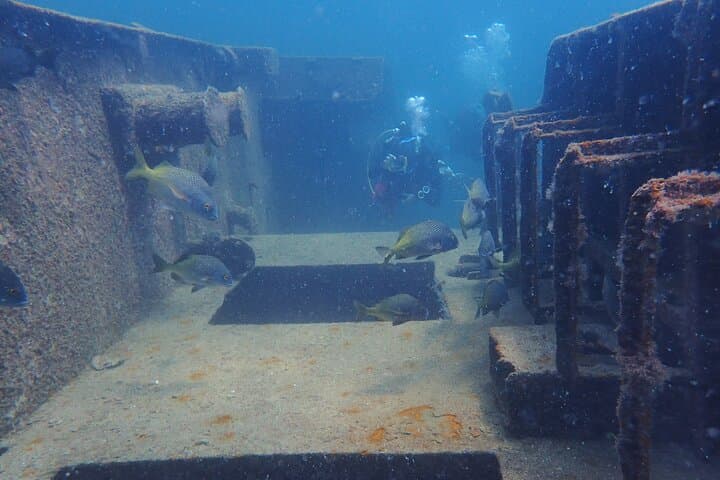
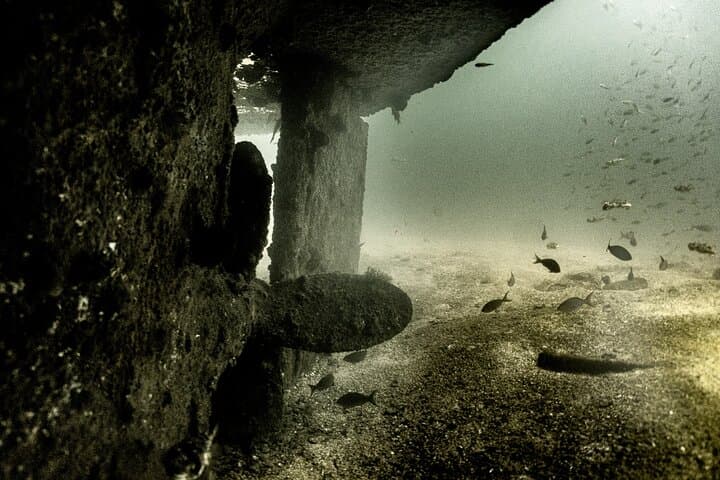
This trip is ideal for certified divers with some experience of open-ocean entries and descents around wreck structures. The reward is immediate: tilting shafts of light through blue water, ribboned schools of baitfish, the lazy glide of a ray and, if luck favors you, a clownish pup sea lion rolling toward the camera. It’s an efficient, wildlife-forward day that gets you out of the Cabo crowds and into one of Baja’s most active underwater neighborhoods.
moderate.
12 hours.
Moderate fitness—able to manage boat entries, surface swims and 50-minute dives at 60–70 ft
Yes — participants must hold a SCUBA certification (Open Water or higher) and bring a certification card.
Typical maximum depths are 18–22 m (60–70 ft) with guided bottom times around 50 minutes per dive, adjusted for no-decompression limits.
Yes — expect schools of fish, turtles, rays and frequently playful juvenile sea lions near shallow wrecks and reefs.
The trip uses a 28-foot panga; entries are mostly giant strides or seated entries from the side, so be prepared for simple, open-boat procedures.
The operator provides snacks, soda and a picnic lunch; bring extra water and any personal dietary items you need.
This specific tour is focused on certified divers; check with the operator for snorkel or passenger options on the same route.
Isla Espíritu Santo and the surrounding Gulf are part of the UNESCO-listed Islands and Protected Areas of the Gulf of California, long used for fishing and pearl harvesting.
Operators emphasize no-touch diving and reef-safe sunscreen; staying within guide limits reduces anchor and diver impact on delicate reef and wreck habitats.
Cabo Private Guide operates guided outdoor trips and adventures with an emphasis on safety, stewardship, and memorable experiences.
You slide into the predawn dark while the van hums north along the Baja spine — the lights of Cabo shrinking behind you as the sea grows larger in the windshield. Two hours later, Marina La Paz yawns awake under a pink horizon and a 28-foot panga waits, engines low and gear already lashed. By the time the sun clears the island ridgelines, you’re cutting toward Isla Espíritu Santo, where rusted ribs of three famous wrecks rise like stories from the bottom: the Fang Ming, the Salvatierra and the C59.
You slide into the predawn dark while the van hums north along the Baja spine — the lights of Cabo shrinking behind you as the sea grows larger in the windshield. Two hours later, Marina La Paz yawns awake under a pink horizon and a 28-foot panga waits, engines low and gear already lashed. By the time the sun clears the island ridgelines, you’re cutting toward Isla Espíritu Santo, where rusted ribs of three famous wrecks rise like stories from the bottom: the Fang Ming, the Salvatierra and the C59.
The Gulf of California, designated as Islands and Protected Areas of the Gulf of California by UNESCO, is geologically young and violent — a pulling-apart of the North American and Pacific plates. That tectonic restlessness created steep drop-offs, sheltered coves and nutrient-rich currents that now feed dense reefs and schools of fish. The wrecks around Espíritu Santo sit on those lee slopes, perches for turtles, rays and the curious surge of baby sea lions known to play in the shallows.
Historically the area has been a working seascape: small-scale fishing, pearl harvesting and the occasional commercial ship passing to La Paz. Today local dive operators balance tourism with protection; excursions run to strict depth limits and emphasize reef-safe sunscreen and no-touch policies.
On this full-day outing you’ll make two guided dives: expect 50-minute bottom times at 18–22 m (60–70 ft) on both profiles, with a surface interval on the boat and a picnic lunch on a quiet, rocky-sand beach. The panga is compact; setup and briefings are efficient. Snacks and drinks are provided, and the schedule gets you back to Marina La Paz around 3 pm and into Cabo by roughly 6 pm — plan dinner for after 7:30 pm if you’re on the Cabo side.
Practical edge: bring a dive computer and logbook, carry a small waterproof bag for your phone and ID, and wear reef boots for the beach landing. Water temperatures vary seasonally; a 3–5 mm suit is common but check local temps before you pack. If you’re comfort-limited in currents, tell your guide — current can make descents lively but also concentrates the wildlife.
This trip is ideal for certified divers with some experience of open-ocean entries and descents around wreck structures. The reward is immediate: tilting shafts of light through blue water, ribboned schools of baitfish, the lazy glide of a ray and, if luck favors you, a clownish pup sea lion rolling toward the camera. It’s an efficient, wildlife-forward day that gets you out of the Cabo crowds and into one of Baja’s most active underwater neighborhoods.