THE ADVENTURE COLLECTIVE® · Independent discovery and booking for outdoor travel

Board a 2.5-hour discovery cruise from Cabo San Lucas to seek humpback and gray whales, with a panoramic run past El Arco, the Sea Lion Colony, and Lover’s Beach. Brunch or dinner and an open bar are included—best sightings usually December–April.
Board a 2.5-hour discovery cruise from Cabo San Lucas to seek humpback and gray whales, with a panoramic run past El Arco, the Sea Lion Colony, and Lover’s Beach. Brunch or dinner and an open bar are included—best sightings usually December–April.
You step onto the deck as the marina shrinks behind you, salt wind pulling at your jacket and the skyline of Cabo San Lucas sliding into a low, rocky horizon. The captain eases into open water toward El Arco, where the Pacific and the Sea of Cortez meet and the sea begins to show its teeth—pods of dolphins cutting wake, then the taller arc of a humpback breaching.
Verified experiences and guided adventures in the surrounding area.
Operated by WISEST TRAVEL · Cabo San Lucas, Baja California Sur
You step onto the deck as the marina shrinks behind you, salt wind pulling at your jacket and the skyline of Cabo San Lucas sliding into a low, rocky horizon. The captain eases into open water toward El Arco, where the Pacific and the Sea of Cortez meet and the sea begins to show its teeth—pods of dolphins cutting wake, then the taller arc of a humpback breaching.
That meeting of seas carved the granite headlands that make Land’s End iconic; over millennia waves and tectonics scoured the shoreline into arches, coves, and steep reefs that concentrate food and draw whales. Humpback and gray whales are the most commonly sighted here during the winter migration, and local fishing culture has long read these marine patterns—today’s whale-watching tours combine that practical knowledge with regulated approaches to protect the animals.
Expect a roughly 2.5-hour outing (the operator lists 150 minutes) with a panoramic loop that includes The Arch, the Sea Lion Colony, and Lover’s Beach. Cruises often include an open bar and a brunch or dinner option; small groups (shared tours capped near 15) make for intimate viewing but follow the skipper’s instructions on distance and boat positioning.
Plan for cool mornings and wind after sunrise—dress in layers, bring sunscreen, binoculars, and seasickness prevention if you’re prone. Peak whale season runs December through April, with the most consistent sightings January–March. Respect local wildlife rules: stay quiet during approach, avoid sudden throttle changes, and let the animals set the pace—this is their ocean, you’re the visitor.
easy.
2–3 hours.
Suitable for most fitness levels; requires boarding a small vessel and standing/walking on deck during the cruise.
Peak season runs December–April, with the most reliable sightings from January to March during the humpback and gray whale migrations.
Yes—this cruise includes an open bar plus a brunch or dinner selection depending on the departure time; confirm your chosen menu when booking.
Children are generally welcome, but the operator advises that pregnant travelers and those with spinal or serious heart conditions should not join.
Captains follow Mexican regulations and local best practices—boats approach cautiously and keep regulated distances; sometimes whales come close on their own, but skippers will never force proximity.
Cabo’s maritime history centers on fishing and the strategic junction of the Pacific and the Gulf of California; El Arco is a geological landmark formed by wave erosion of granite headlands.
Operators adhere to Mexico’s marine wildlife guidelines—minimize noise, limit approaches, and avoid feeding; choose companies that follow local regulations to reduce disturbance.
WISEST TRAVEL operates guided outdoor trips and adventures with an emphasis on safety, stewardship, and memorable experiences.
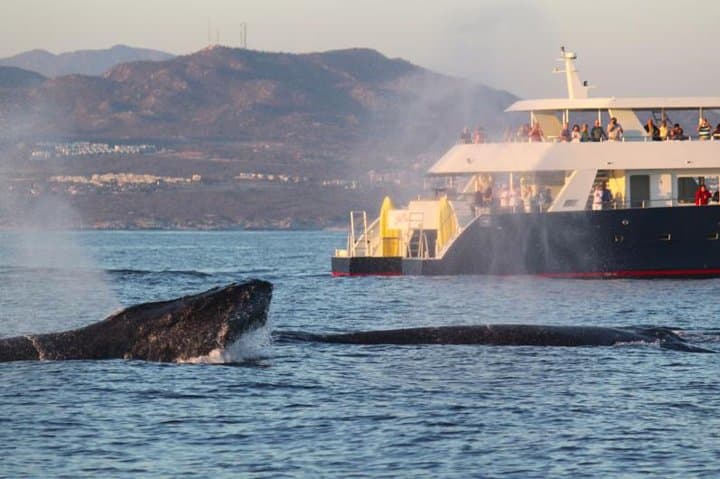
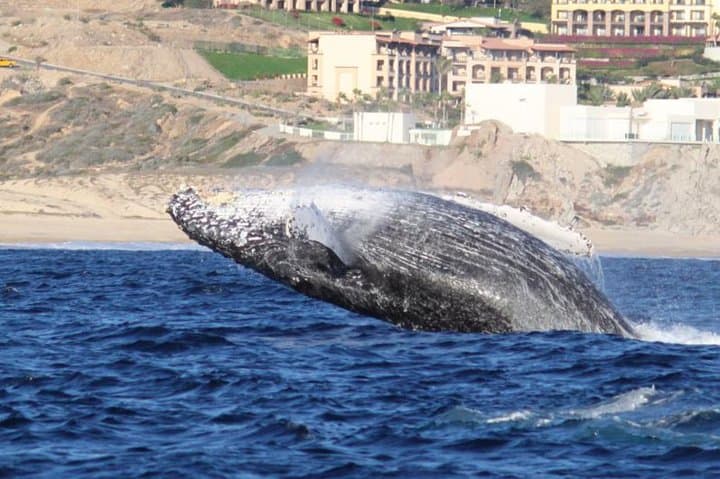
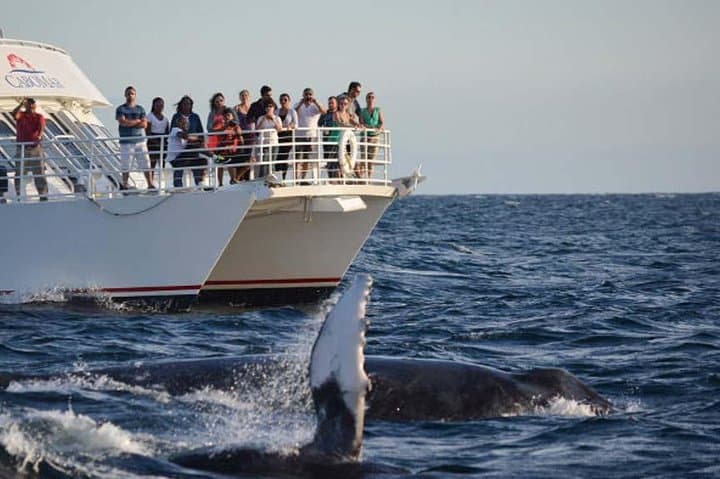
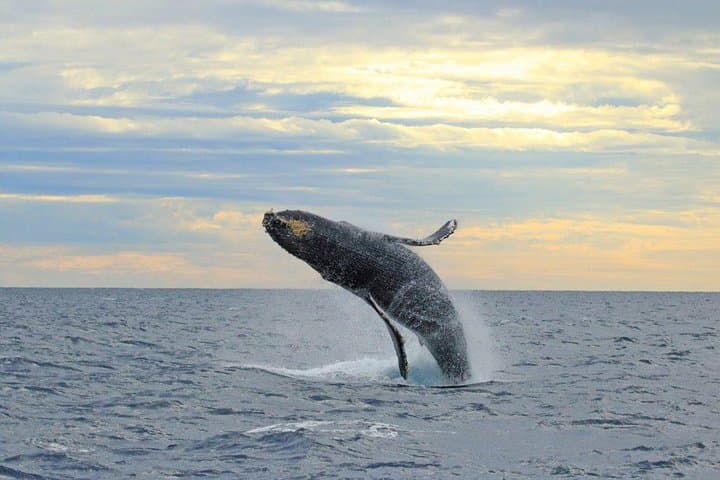
You step onto the deck as the marina shrinks behind you, salt wind pulling at your jacket and the skyline of Cabo San Lucas sliding into a low, rocky horizon. The captain eases into open water toward El Arco, where the Pacific and the Sea of Cortez meet and the sea begins to show its teeth—pods of dolphins cutting wake, then the taller arc of a humpback breaching.
You step onto the deck as the marina shrinks behind you, salt wind pulling at your jacket and the skyline of Cabo San Lucas sliding into a low, rocky horizon. The captain eases into open water toward El Arco, where the Pacific and the Sea of Cortez meet and the sea begins to show its teeth—pods of dolphins cutting wake, then the taller arc of a humpback breaching.
That meeting of seas carved the granite headlands that make Land’s End iconic; over millennia waves and tectonics scoured the shoreline into arches, coves, and steep reefs that concentrate food and draw whales. Humpback and gray whales are the most commonly sighted here during the winter migration, and local fishing culture has long read these marine patterns—today’s whale-watching tours combine that practical knowledge with regulated approaches to protect the animals.
Expect a roughly 2.5-hour outing (the operator lists 150 minutes) with a panoramic loop that includes The Arch, the Sea Lion Colony, and Lover’s Beach. Cruises often include an open bar and a brunch or dinner option; small groups (shared tours capped near 15) make for intimate viewing but follow the skipper’s instructions on distance and boat positioning.
Plan for cool mornings and wind after sunrise—dress in layers, bring sunscreen, binoculars, and seasickness prevention if you’re prone. Peak whale season runs December through April, with the most consistent sightings January–March. Respect local wildlife rules: stay quiet during approach, avoid sudden throttle changes, and let the animals set the pace—this is their ocean, you’re the visitor.