THE ADVENTURE COLLECTIVE® · Independent discovery and booking for outdoor travel

Boat out past the arch, peer under a blue surface and find sea lions, turtles and reef gardens. This guide explains where dives run, what marine life you’ll meet, and how to prepare for Pelican Rock, the Corridor, and La Paz marine parks.
Boat out past the arch, peer under a blue surface and find sea lions, turtles and reef gardens. This guide explains where dives run, what marine life you’ll meet, and how to prepare for Pelican Rock, the Corridor, and La Paz marine parks.
You step off the marina dock and the Pacific wind tightens your hood as the captain pilots toward the arch; sea lions bark like sentries as the boat slips into the marine park. The water ahead glints turquoise—by summer it can feel almost Caribbean—inviting you into kelp forests, rocky pinnacles and wide sandy bays where rays wheel like inked kites.
Verified experiences and guided adventures in the surrounding area.
Operated by Cabo Trek · Cabo San Lucas, Baja California Sur
You step off the marina dock and the Pacific wind tightens your hood as the captain pilots toward the arch; sea lions bark like sentries as the boat slips into the marine park. The water ahead glints turquoise—by summer it can feel almost Caribbean—inviting you into kelp forests, rocky pinnacles and wide sandy bays where rays wheel like inked kites.
Baja California Sur is a young, rifted margin: tectonic forces carved the Gulf of California and created varied dive terrain from the granite towers at Land's End to the volcanic reefs of the Corridor and the living coral of Cabo Pulmo. Fishing traditions, conservation fights and local tourism have all shaped access—today many sites sit inside protected marine parks with fees that fund patrols and research.
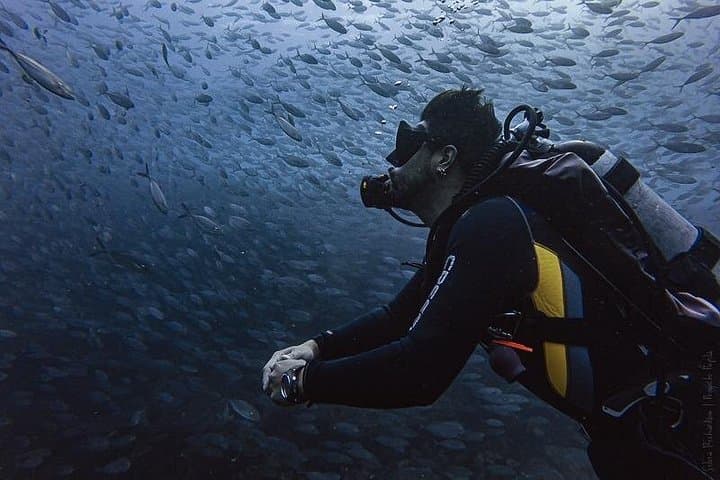
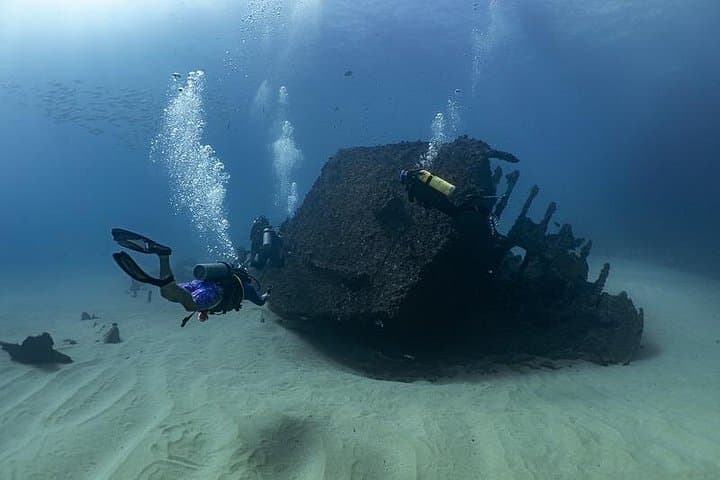
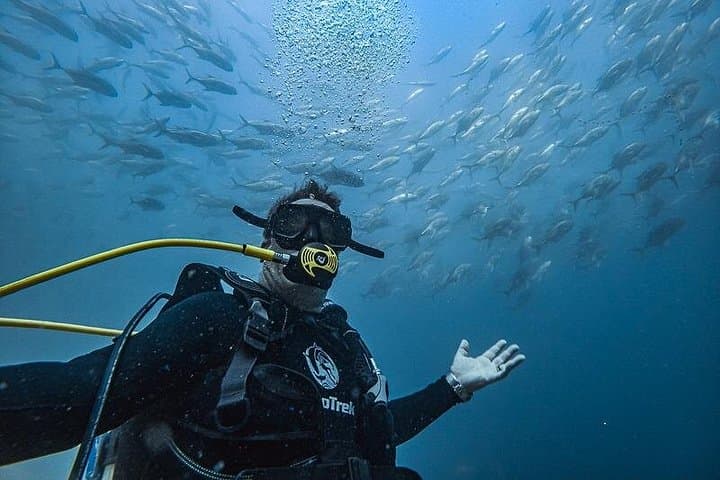
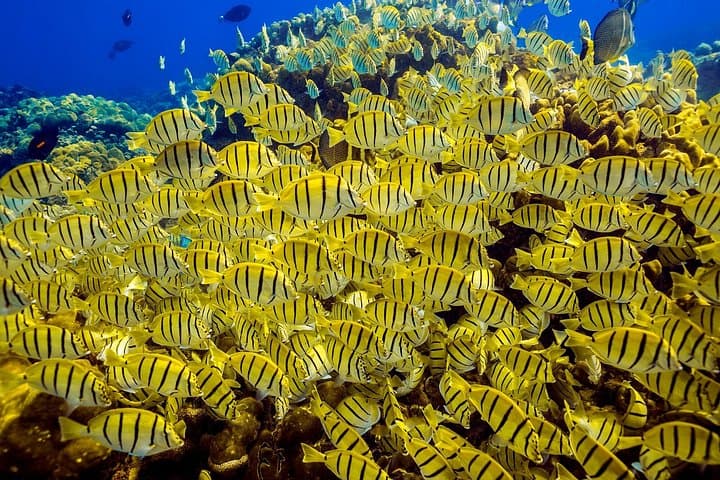
Expect short boat runs from Cabo San Lucas to sites such as Pelican Rock and Land's End; longer trips reach Santa María, Chileno, and the Corridor or La Paz. Visibility ranges widely—best in summer and fall when 18 m (60 ft) visibility and water in the low 30s °C (upper 80s–90°F) are possible. Marine life is the headline: sea lions, green sea turtles, mobulas and reef fish like angelfish and moorish idols, plus occasional reef and pelagic sharks. Certified divers will enjoy multi-site dives; first-timers can try supervised discover-scuba options with a PADI pro guide.
Practical tips: bring your certification card, reef-safe sunscreen, and a lightweight wind layer for the ride. Listen to briefings, respect marine park rules, and plan dives during calmer tidal windows for the clearest water.
moderate.
4 hours.
Participants should be in moderate physical condition, able to swim and climb a ladder on and off the boat.
Yes—operators offer supervised discover-scuba experiences for first-timers; certified dives require showing proof of certification.
Summer and fall bring the warmest water (high 20s–low 30s °C / upper 70s–90s °F) and best visibility up to ~18 m (60 ft); winter/spring can be cooler and murkier.
You may see reef-associated sharks and pelagics depending on site and season; encounters are typically non-aggressive—follow guide instructions.
Typical excursions run multiple shallow-to-moderate dives within a 4-hour window; confirm number of dives and surface intervals when booking.
The Gulf of California formed by rifting along the Pacific plate, creating diverse reef and rock habitats; local fishers and scientists led conservation efforts that established marine parks here.
Many sites are inside protected marine parks with entry fees and regulations; divers should avoid touching reef, use reef-safe products, and choose local operators that follow park rules.
Cabo Trek operates guided outdoor trips and adventures with an emphasis on safety, stewardship, and memorable experiences.
You step off the marina dock and the Pacific wind tightens your hood as the captain pilots toward the arch; sea lions bark like sentries as the boat slips into the marine park. The water ahead glints turquoise—by summer it can feel almost Caribbean—inviting you into kelp forests, rocky pinnacles and wide sandy bays where rays wheel like inked kites.
You step off the marina dock and the Pacific wind tightens your hood as the captain pilots toward the arch; sea lions bark like sentries as the boat slips into the marine park. The water ahead glints turquoise—by summer it can feel almost Caribbean—inviting you into kelp forests, rocky pinnacles and wide sandy bays where rays wheel like inked kites.
Baja California Sur is a young, rifted margin: tectonic forces carved the Gulf of California and created varied dive terrain from the granite towers at Land's End to the volcanic reefs of the Corridor and the living coral of Cabo Pulmo. Fishing traditions, conservation fights and local tourism have all shaped access—today many sites sit inside protected marine parks with fees that fund patrols and research.
Expect short boat runs from Cabo San Lucas to sites such as Pelican Rock and Land's End; longer trips reach Santa María, Chileno, and the Corridor or La Paz. Visibility ranges widely—best in summer and fall when 18 m (60 ft) visibility and water in the low 30s °C (upper 80s–90°F) are possible. Marine life is the headline: sea lions, green sea turtles, mobulas and reef fish like angelfish and moorish idols, plus occasional reef and pelagic sharks. Certified divers will enjoy multi-site dives; first-timers can try supervised discover-scuba options with a PADI pro guide.
Practical tips: bring your certification card, reef-safe sunscreen, and a lightweight wind layer for the ride. Listen to briefings, respect marine park rules, and plan dives during calmer tidal windows for the clearest water.