THE ADVENTURE COLLECTIVE® · Independent discovery and booking for outdoor travel

Two-tank dives out of Cabo San Lucas take you from shallow reefs to the dramatic Corridor walls where nutrient-rich currents attract sea lions, rays and schools of snapper. Learn what to expect, when to go, and how to prepare for clear-water encounters.
Two-tank dives out of Cabo San Lucas take you from shallow reefs to the dramatic Corridor walls where nutrient-rich currents attract sea lions, rays and schools of snapper. Learn what to expect, when to go, and how to prepare for clear-water encounters.
Surface chop skitters across the marina as the dive boat eases away from Cabo’s busy docks. Salt air tugs at your hood and, within half an hour, the skyline softens into open blue—here the sea dares you to look deeper.
Verified experiences and guided adventures in the surrounding area.
Operated by See Creatures · Cabo San Lucas, Baja California Sur
Surface chop skitters across the marina as the dive boat eases away from Cabo’s busy docks. Salt air tugs at your hood and, within half an hour, the skyline softens into open blue—here the sea dares you to look deeper.
The dive sites off Cabo San Lucas lie where the Sea of Cortez meets the Pacific. Tectonic uplift and volcanic flows created sheer walls that drop quickly into deep water, and those underwater cliffs funnel nutrients that attract everything from schooling snappers to larger pelagic visitors. The town’s fishing and pearl-diving past shaped the harbor, and today parts of this coastline are protected as the Cabo San Lucas Marine Park to safeguard reefs and resident sea lions.
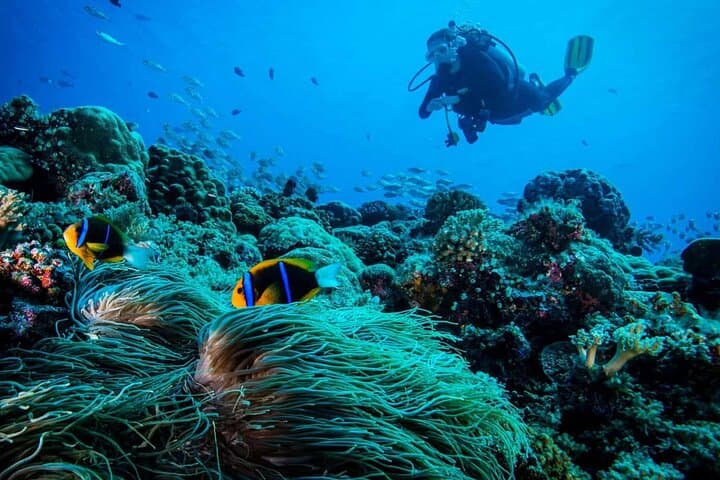
On a typical two-tank trip you’ll visit sheltered reef tops and, if conditions permit, the Corridor’s dramatic walls. Expect dives that range from shallow reef work (10–40 ft) to deeper wall explorations, with visibility that shifts by season and upwelling. Marine life frequently seen includes snapper, grunts, morays, curious sea lions and, in season, mobula or eagle rays slicing the blue.
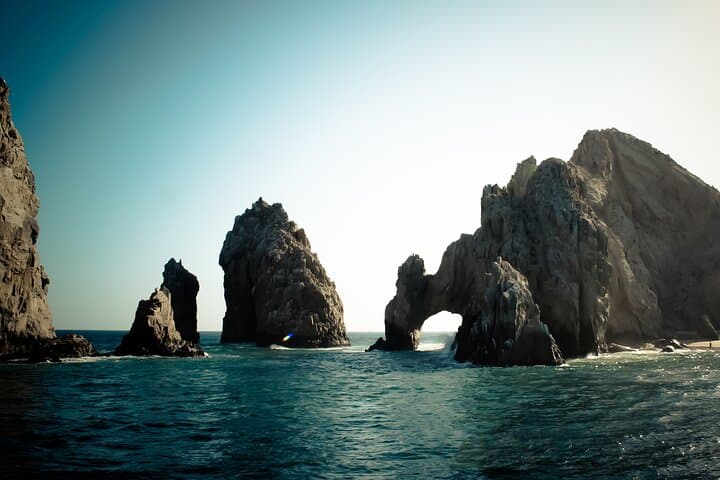
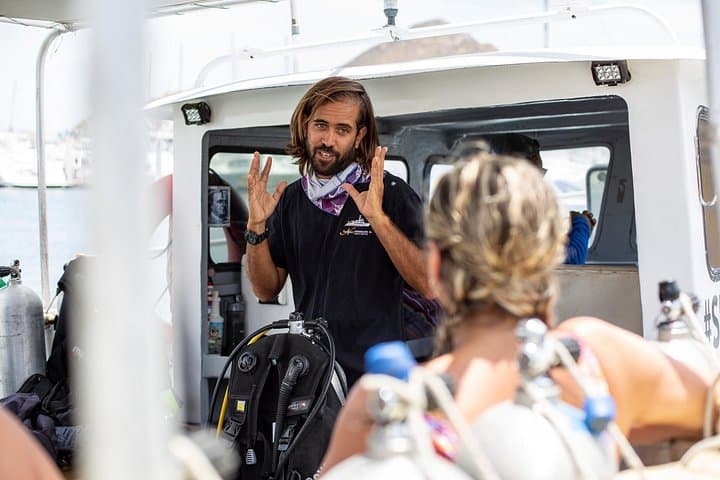
Practical guidance: arrive hydrated, eat lightly before diving, and secure cameras with tethers. Certification or prior guided-dive experience is recommended; operators supply rental gear and briefings. Morning departures usually offer calmer seas and the best light for photography, and operators typically stop at El Arco during surface intervals for a quick photo opportunity.
moderate.
4 hours.
Moderate fitness: able to carry gear, perform water entries/exits, and manage multiple dives with surface intervals.
Most operators require Open Water certification or proof of recent dive experience; contact the operator if you need an introductory option.
Shared trips often carry up to 10 divers; boat rides are usually 15–45 minutes depending on whether visiting the Marine Park or the Corridor.
Large animals are seasonal and never guaranteed, but guided local knowledge increases chances—mobula and eagle rays are more common during specific months.
Divers must meet standard medical fitness for scuba; those with respiratory, cardiac or spinal issues should consult a physician before booking.
The junction of the Sea of Cortez and the Pacific created steep underwater relief exploited historically by local fishers; modern regulations established the Marine Park to protect this productive coastline.
Respect no-touch rules, use reef-safe sunscreen, and follow guide briefings to minimize impact on corals and resident wildlife.
See Creatures operates guided outdoor trips and adventures with an emphasis on safety, stewardship, and memorable experiences.
Surface chop skitters across the marina as the dive boat eases away from Cabo’s busy docks. Salt air tugs at your hood and, within half an hour, the skyline softens into open blue—here the sea dares you to look deeper.
Surface chop skitters across the marina as the dive boat eases away from Cabo’s busy docks. Salt air tugs at your hood and, within half an hour, the skyline softens into open blue—here the sea dares you to look deeper.
The dive sites off Cabo San Lucas lie where the Sea of Cortez meets the Pacific. Tectonic uplift and volcanic flows created sheer walls that drop quickly into deep water, and those underwater cliffs funnel nutrients that attract everything from schooling snappers to larger pelagic visitors. The town’s fishing and pearl-diving past shaped the harbor, and today parts of this coastline are protected as the Cabo San Lucas Marine Park to safeguard reefs and resident sea lions.
On a typical two-tank trip you’ll visit sheltered reef tops and, if conditions permit, the Corridor’s dramatic walls. Expect dives that range from shallow reef work (10–40 ft) to deeper wall explorations, with visibility that shifts by season and upwelling. Marine life frequently seen includes snapper, grunts, morays, curious sea lions and, in season, mobula or eagle rays slicing the blue.
Practical guidance: arrive hydrated, eat lightly before diving, and secure cameras with tethers. Certification or prior guided-dive experience is recommended; operators supply rental gear and briefings. Morning departures usually offer calmer seas and the best light for photography, and operators typically stop at El Arco during surface intervals for a quick photo opportunity.