THE ADVENTURE COLLECTIVE® · Independent discovery and booking for outdoor travel

Head out from Cabo’s marina for a focused two‑hour whale watching cruise that passes El Arco and searches the Pacific near Pedregal for humpbacks. Expect close viewing, interpretive commentary, and practical comforts like bottled water and onboard restrooms.
Head out from Cabo’s marina for a focused two‑hour whale watching cruise that passes El Arco and searches the Pacific near Pedregal for humpbacks. Expect close viewing, interpretive commentary, and practical comforts like bottled water and onboard restrooms.
You step aboard as the marina loosens its mooring lines and the city’s heat gives way to a salt breeze. The boat eases past glassy bays and soon the Arch at Land’s End appears—a broken granite gate where Pacific swell meets the Sea of Cortez. Within 20–40 minutes of leaving the pier, the Pacific opens and the water begins to rise and fall with the rhythm of migrating giants.
Verified experiences and guided adventures in the surrounding area.
Operated by Pochos Cabos Activities · Cabo San Lucas, Baja California Sur
You step aboard as the marina loosens its mooring lines and the city’s heat gives way to a salt breeze. The boat eases past glassy bays and soon the Arch at Land’s End appears—a broken granite gate where Pacific swell meets the Sea of Cortez. Within 20–40 minutes of leaving the pier, the Pacific opens and the water begins to rise and fall with the rhythm of migrating giants.
Baja California Sur sits on a tectonic theatre of uplifted granite and volcanic outcrops; the Arch is the most visible result. For centuries the area was fished and navigated by indigenous Seri people and later by Spanish vessels; today it’s a protected seasonal nursery for eastern Pacific humpbacks, which migrate here from colder feeding grounds to calve and mate between December and April.
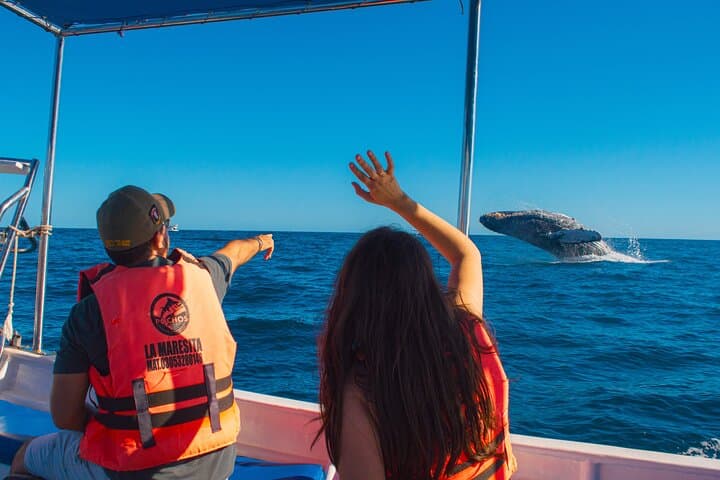
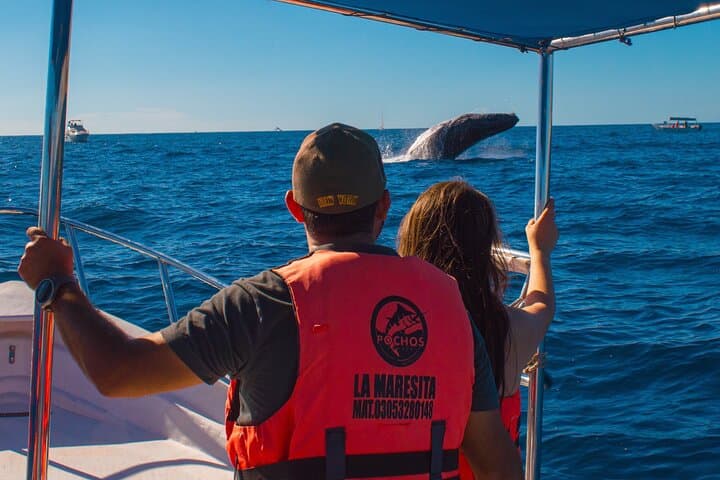
On a typical two‑hour run from Cabo, guides focus on respectful viewing distances and will narrate animal behavior — breaches, pectoral slaps, and mothers with calves — while pointing out Pelican and frigatebird activity near rocky points like Pedregal. The vessel includes bottled water and an onboard restroom, and crews are usually experienced at finding whales without crowding them.
Practical guidance: bring binoculars, a windproof layer, sun protection and motion‑sickness prep if needed. Morning departures often offer calmer seas and softer light for photography; winter months are busiest but also the most reliable for sightings. Follow crew instructions for safety, keep voices low when animals are near, and leave no trash behind—these choices help keep whales returning to Baja’s shores.
easy.
2 hours.
Suitable for most fitness levels; requires ability to step on/off a small vessel and stand for observation periods.
Peak season for humpback sightings runs roughly December through April when whales migrate to Baja’s warmer waters to breed and calf.
Regulations and operator policies keep respectful viewing distances; crews approach slowly to observe behaviors without harassing animals, and exact distance can vary by sighting.
The tour welcomes families and is rated physically easy; however, boarding a small vessel requires stepping over a low rail and standing—check with the operator regarding specific mobility accommodations.
Bring layered clothing, sun protection, motion‑sickness remedies if needed, a camera with a zoom, and reusable water bottle (bottled water is usually provided).
Cabo’s Land’s End granite formed through uplift and erosion; the area has long been a maritime route used by indigenous peoples and later by European sailors. Whale migrations to Baja are a seasonal pattern noted by locals for generations.
Operators in the region follow whale‑watching guidelines to minimize disturbance; visitors should avoid flash photography aimed at calves, never attempt to touch marine life, and dispose of waste responsibly.
Pochos Cabos Activities operates guided outdoor trips and adventures with an emphasis on safety, stewardship, and memorable experiences.
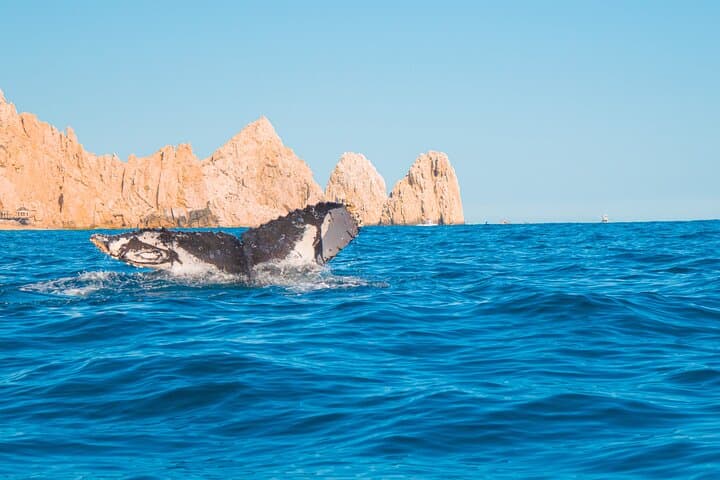
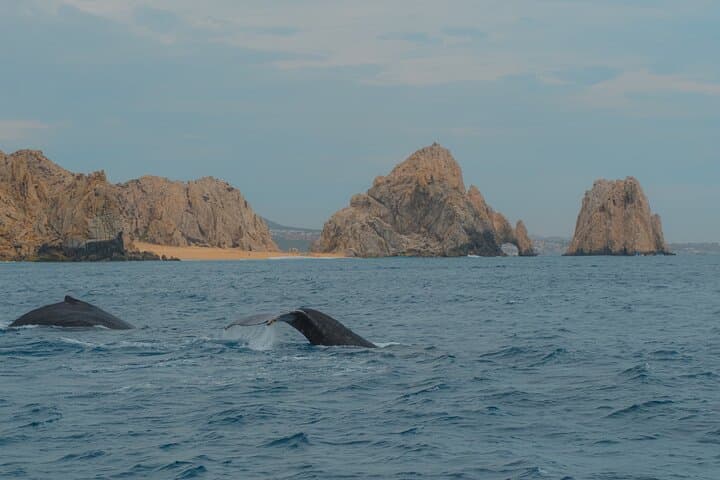
You step aboard as the marina loosens its mooring lines and the city’s heat gives way to a salt breeze. The boat eases past glassy bays and soon the Arch at Land’s End appears—a broken granite gate where Pacific swell meets the Sea of Cortez. Within 20–40 minutes of leaving the pier, the Pacific opens and the water begins to rise and fall with the rhythm of migrating giants.
You step aboard as the marina loosens its mooring lines and the city’s heat gives way to a salt breeze. The boat eases past glassy bays and soon the Arch at Land’s End appears—a broken granite gate where Pacific swell meets the Sea of Cortez. Within 20–40 minutes of leaving the pier, the Pacific opens and the water begins to rise and fall with the rhythm of migrating giants.
Baja California Sur sits on a tectonic theatre of uplifted granite and volcanic outcrops; the Arch is the most visible result. For centuries the area was fished and navigated by indigenous Seri people and later by Spanish vessels; today it’s a protected seasonal nursery for eastern Pacific humpbacks, which migrate here from colder feeding grounds to calve and mate between December and April.
On a typical two‑hour run from Cabo, guides focus on respectful viewing distances and will narrate animal behavior — breaches, pectoral slaps, and mothers with calves — while pointing out Pelican and frigatebird activity near rocky points like Pedregal. The vessel includes bottled water and an onboard restroom, and crews are usually experienced at finding whales without crowding them.
Practical guidance: bring binoculars, a windproof layer, sun protection and motion‑sickness prep if needed. Morning departures often offer calmer seas and softer light for photography; winter months are busiest but also the most reliable for sightings. Follow crew instructions for safety, keep voices low when animals are near, and leave no trash behind—these choices help keep whales returning to Baja’s shores.