THE ADVENTURE COLLECTIVE® · Independent discovery and booking for outdoor travel

Paddle under volcanic cliffs and stop to snorkel over seagrass meadows on a guided 3‑hour kayak route through Cabo de Gata Natural Park. Learn local geology, coastal history and marine ecology while floating past coves only visible from the sea.
Paddle under volcanic cliffs and stop to snorkel over seagrass meadows on a guided 3‑hour kayak route through Cabo de Gata Natural Park. Learn local geology, coastal history and marine ecology while floating past coves only visible from the sea.
A pale wind pushes salt across a low horizon as two-person kayaks peel away from a small sandy cove. The cliffs of Cabo de Gata—raw volcanic ribs and honeycombed coves—rise directly from clear water, and the guide’s voice points out slices of rock that reveal the park’s violent geological past.
Verified experiences and guided adventures in the surrounding area.
Operated by Cabo De Gata Activo. Kayak & snorkel · San José, Andalucía
A pale wind pushes salt across a low horizon as two-person kayaks peel away from a small sandy cove. The cliffs of Cabo de Gata—raw volcanic ribs and honeycombed coves—rise directly from clear water, and the guide’s voice points out slices of rock that reveal the park’s violent geological past.
Cabo de Gata-Níjar is one of Spain’s most protected coastal areas: volcanic headlands, salt flats, and isolated beaches shaped by lava flows and marine erosion. Human history here blends fishing hamlets, 19th-century mining scars and watchtowers that once scanned for corsairs. From the water you see this layered past and a seabed that supports Posidonia meadows and small reef fish.
The trip is straightforward and practical: a short safety briefing, a guided paddle along sheltered coves, and stops for snorkeling where the guides explain local geology, flora, and marine life. Expect calm to moderate seas, occasional wind gusts, and paddling distances suited to people with a basic fitness level. Guides supply kayaks, vests, snorkel gear, a support boat and a digital photo report.
Plan for sun, salty spray and sensitive ecosystems—anchoring and trampling are restricted. Morning departures offer glassy water and clearer snorkeling; later in the day wind picks up. Bring reef-safe sunscreen, a water shoe, and a small dry bag. For travelers who want direct access to cliffs, shallow caves and clear water without owning a boat, this guided kayak-and-snorkel route is an efficient and rewarding way to meet Cabo de Gata from the sea.
moderate.
2–3 hours.
Moderate cardiovascular fitness and ability to paddle continuously for short bursts; comfortable in open water.
No advanced experience is required; guides provide a safety briefing and basic instruction—participants should be comfortable in water and able to swim.
Wear a swimsuit or quick‑dry clothing, a hat, reef‑safe sunscreen, water shoes and bring a small towel and your ID; guides supply kayaks, vests and snorkel gear.
Yes—operators cancel or reschedule in strong winds, heavy rain or unsafe sea conditions; you’ll usually get a full refund if canceled 24 hours in advance.
Tours typically allow children in shared kayaks and have weight/size restrictions for safety; travelers over operator weight limits or with spinal/heart issues may be advised not to join.
The coastline is volcanic in origin and marked by historic fishing villages and watchtowers; mining activity in the 19th century also shaped the region’s human footprint.
Cabo de Gata is highly protected—avoid anchoring on seagrass beds, follow guide instructions, and use reef-safe products to limit your impact.
Cabo De Gata Activo. Kayak & snorkel operates guided outdoor trips and adventures with an emphasis on safety, stewardship, and memorable experiences.
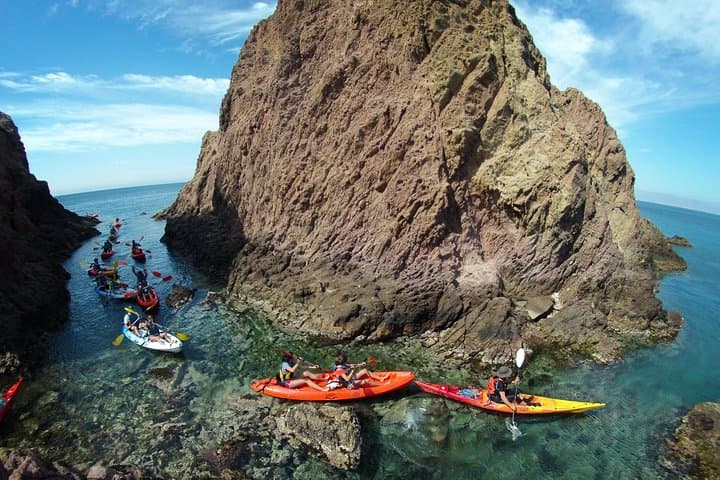
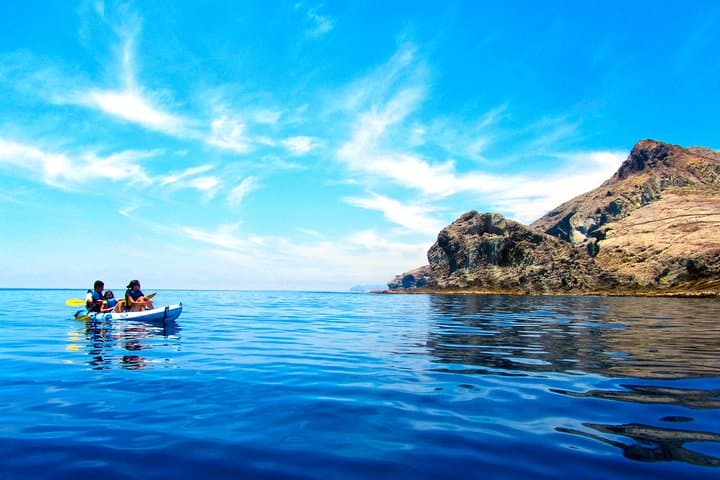
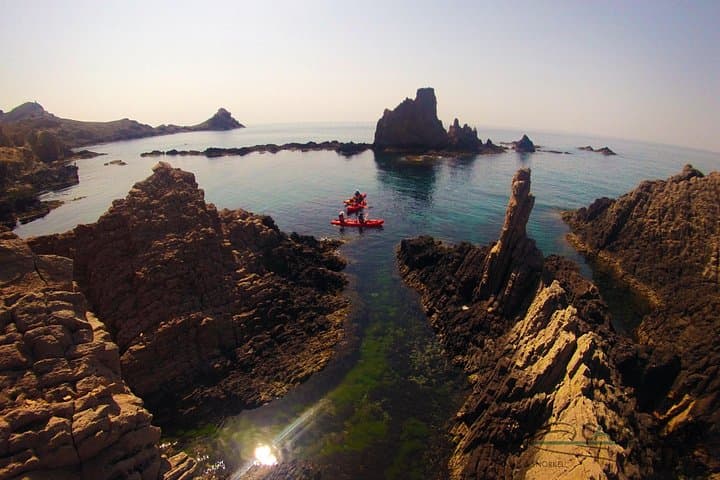
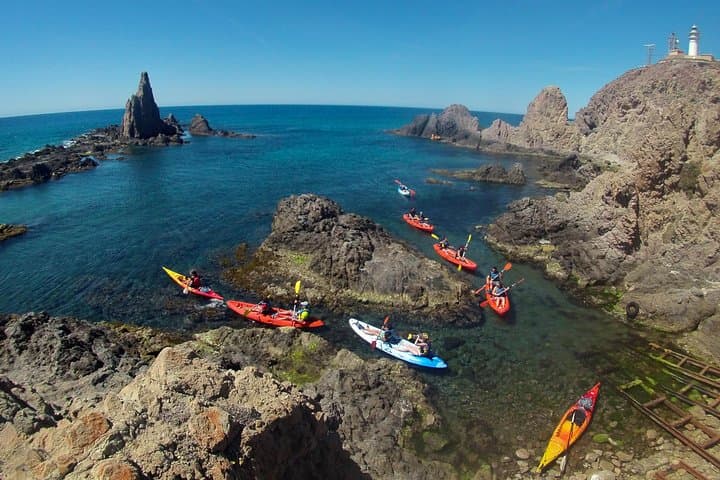
A pale wind pushes salt across a low horizon as two-person kayaks peel away from a small sandy cove. The cliffs of Cabo de Gata—raw volcanic ribs and honeycombed coves—rise directly from clear water, and the guide’s voice points out slices of rock that reveal the park’s violent geological past.
A pale wind pushes salt across a low horizon as two-person kayaks peel away from a small sandy cove. The cliffs of Cabo de Gata—raw volcanic ribs and honeycombed coves—rise directly from clear water, and the guide’s voice points out slices of rock that reveal the park’s violent geological past.
Cabo de Gata-Níjar is one of Spain’s most protected coastal areas: volcanic headlands, salt flats, and isolated beaches shaped by lava flows and marine erosion. Human history here blends fishing hamlets, 19th-century mining scars and watchtowers that once scanned for corsairs. From the water you see this layered past and a seabed that supports Posidonia meadows and small reef fish.
The trip is straightforward and practical: a short safety briefing, a guided paddle along sheltered coves, and stops for snorkeling where the guides explain local geology, flora, and marine life. Expect calm to moderate seas, occasional wind gusts, and paddling distances suited to people with a basic fitness level. Guides supply kayaks, vests, snorkel gear, a support boat and a digital photo report.
Plan for sun, salty spray and sensitive ecosystems—anchoring and trampling are restricted. Morning departures offer glassy water and clearer snorkeling; later in the day wind picks up. Bring reef-safe sunscreen, a water shoe, and a small dry bag. For travelers who want direct access to cliffs, shallow caves and clear water without owning a boat, this guided kayak-and-snorkel route is an efficient and rewarding way to meet Cabo de Gata from the sea.